Is Orvieto Worth Visiting? 7 Reasons to Visit

by Luca | Last Updated October 23, 2026
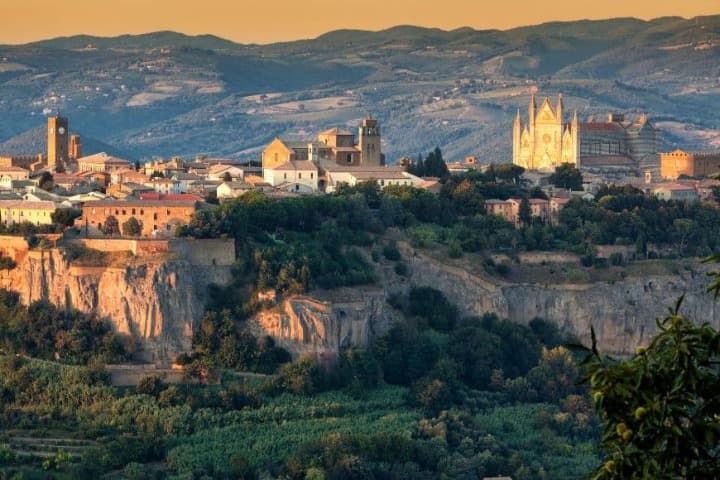
Orvieto is the kind of place that can easily slip through the cracks when you’re planning a trip to Italy. Rome and Florence usually dominate itineraries through central Italy, while travelers looking for smaller destinations often turn toward Tuscany. But sitting almost directly between the two is a historic Umbrian hill town that deserves considerably more attention.
Perched dramatically on a plateau of volcanic rock, Orvieto combines medieval streets, sweeping countryside views, underground passages, and a cathedral that is impressive enough to justify the journey on its own.
But what makes Orvieto particularly interesting isn’t just what you can see once you arrive. It’s also remarkably easy to fit into a wider Italy itinerary.
You can visit from Rome, stop on your way toward Florence, spend the night, or explore the town without renting a car—something that isn’t always easy with Italy’s smaller hill towns.
So, is Orvieto worth visiting? For most travelers, I’d say yes. It’s especially worthwhile if you want to experience a beautiful Italian hill town without adding complicated transportation or a major detour to your trip.
In this guide, we’ll look at what makes Orvieto worth visiting, how much time you actually need, whether a day trip is enough, and when adding it to your Italy itinerary makes the most sense.
Last-Minute Italy Trip Planning
Still finalizing your trip? These are the essentials I’d sort out before you go:
- 🏨 Book your accommodation: Compare hotels and apartments on Booking.com or Hotels.com, especially if you’re staying overnight in popular smaller towns.
- 🚆 Plan trains and transfers: Use Omio to compare train and bus connections between major cities and nearby towns.
- 🚗 Reserve a rental car: DiscoverCars is useful for comparing rental options if you’re exploring Tuscany, Puglia, the Dolomites or Sardinia.
- 📱 Get connected: Set up an Airalo eSIM before arrival so you have mobile data for maps, parking apps and reservations.
- 🎟️ Book popular experiences: Check Viator for tours, day trips and activities that may sell out during the busiest months.
Planning your Italy vacation?
Try our Italy trip planner to create a smart itinerary between cities with real travel routes and transport options.
Is Orvieto Worth Visiting?
Yes, Orvieto is worth visiting, particularly if you want to experience one of central Italy’s historic hill towns without making your itinerary unnecessarily complicated.
What I like about Orvieto is the balance. It’s small enough to explore comfortably in a day, but there’s enough to see that it doesn’t feel like you’ve traveled there simply to photograph one famous landmark and leave. The cathedral may be the headline attraction, but the medieval streets, viewpoints, underground spaces, and setting above the Umbrian countryside give the town much more character.
Orvieto also works particularly well from a practical point of view. You can reach it by train from Rome or Florence, which makes it a much easier addition than many rural towns that require a rental car or several transport connections.
I’d especially recommend Orvieto if you:
- Want an easy day trip from Rome
- Are traveling between Rome and Florence
- Prefer smaller historic towns to another day in a major city
- Are exploring Italy without a car
- Enjoy medieval architecture, viewpoints, and slower-paced sightseeing
If you only have a few days in Italy and haven’t yet visited Rome or Florence, I wouldn’t sacrifice either city simply to squeeze Orvieto into the itinerary. But if you have the time for one smaller destination in central Italy, Orvieto makes a very strong case.
7 Reasons Orvieto Is Worth Visiting
1. The Orvieto Cathedral Is Extraordinary
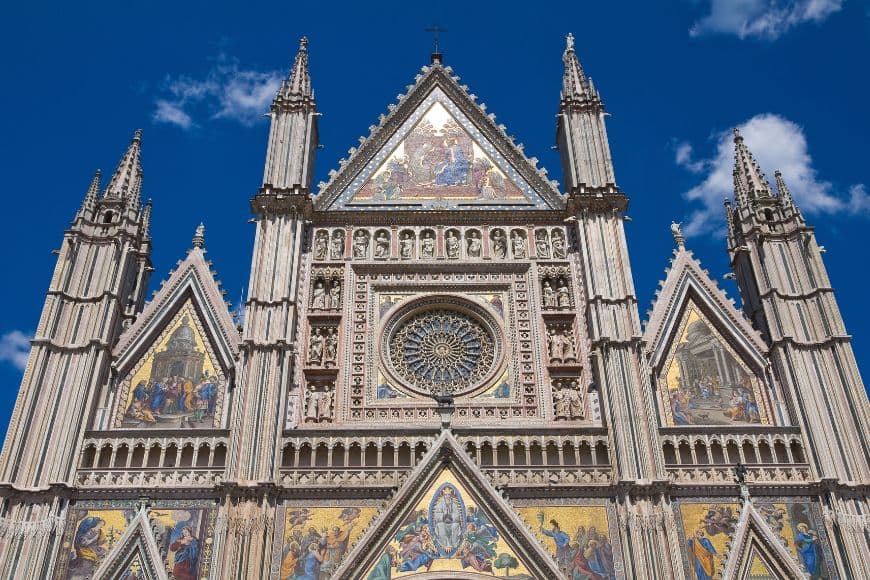
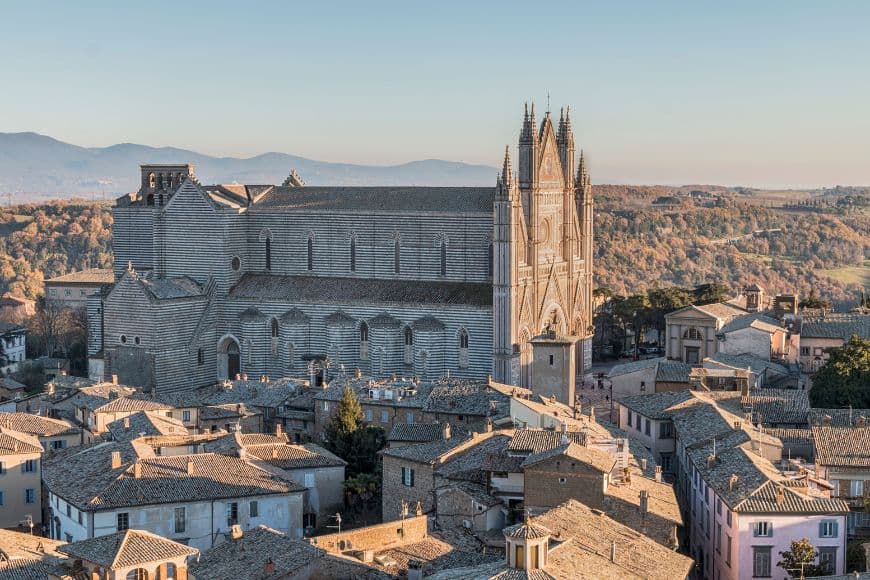
You don’t have to spend long in Piazza del Duomo to understand why the cathedral is Orvieto’s most famous landmark.
The Duomo di Orvieto dominates the square with an elaborate façade covered in mosaics, sculptures, decorative details, and alternating bands of stone. It’s the kind of building that’s difficult to appreciate properly from photographs because there’s always another detail to notice once you’re standing in front of it.
And don’t stop at the façade. Step inside to see the cathedral’s vast interior and the Cappella di San Brizio, known for its remarkable Renaissance frescoes. Even if churches aren’t normally the main focus of your travels in Italy, this is one I’d make time for.
The cathedral alone gives Orvieto a major attraction, but importantly, it isn’t the only reason to visit—which is where the town becomes much more interesting.
2. The Hilltop Setting Is Part of the Experience
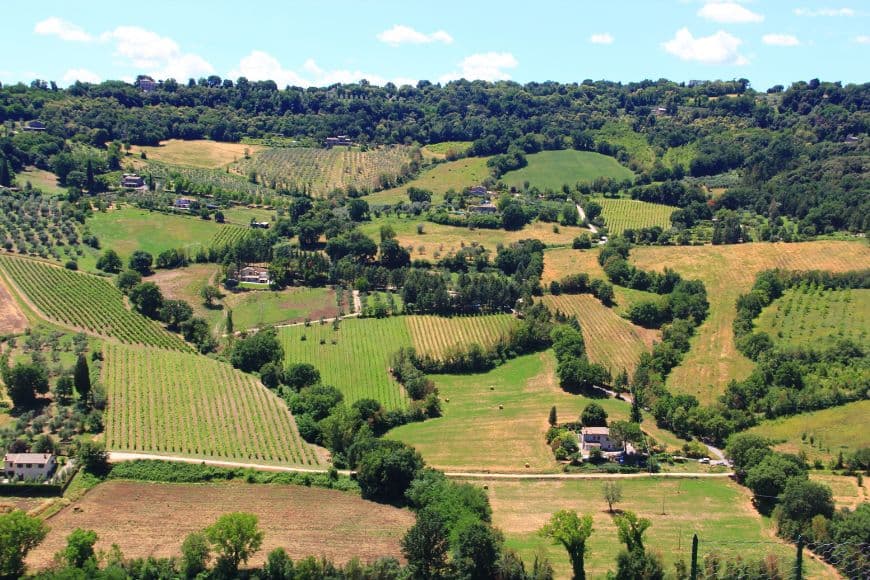
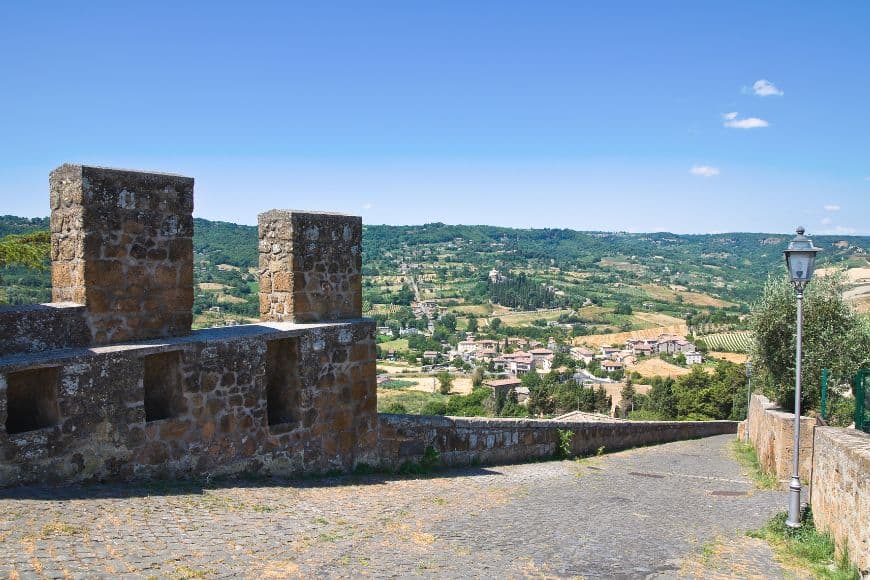
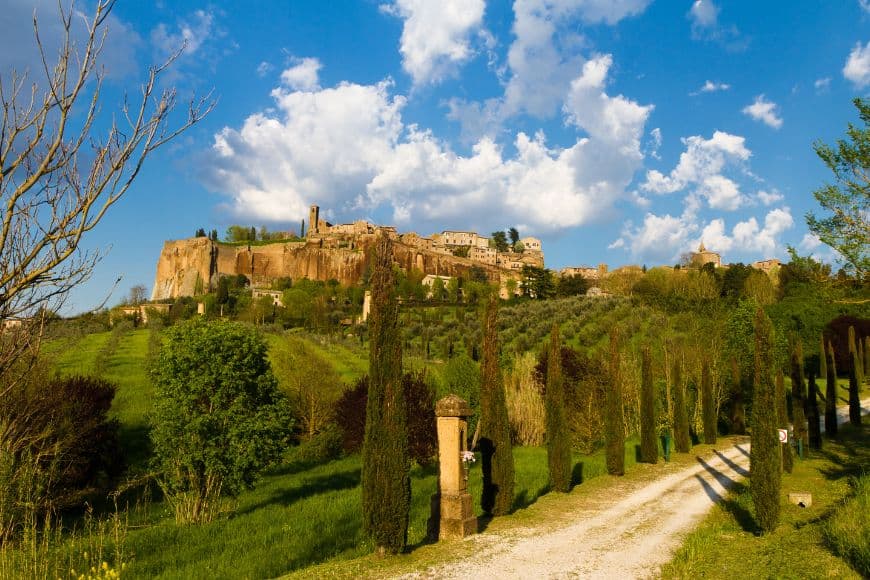
Orvieto doesn’t simply sit in the Umbrian countryside—it rises dramatically above it. The historic center is built on a plateau of volcanic rock, with steep cliffs separating the old town from the landscape below. That elevated position gives Orvieto a completely different character from cities such as Rome or Florence.
As you explore the edges of the historic center, you’ll find viewpoints stretching across vineyards, fields, and the rolling hills of Umbria.
It’s one of those places where the setting matters almost as much as the individual attractions.
3. The Historic Center Is Made for Wandering
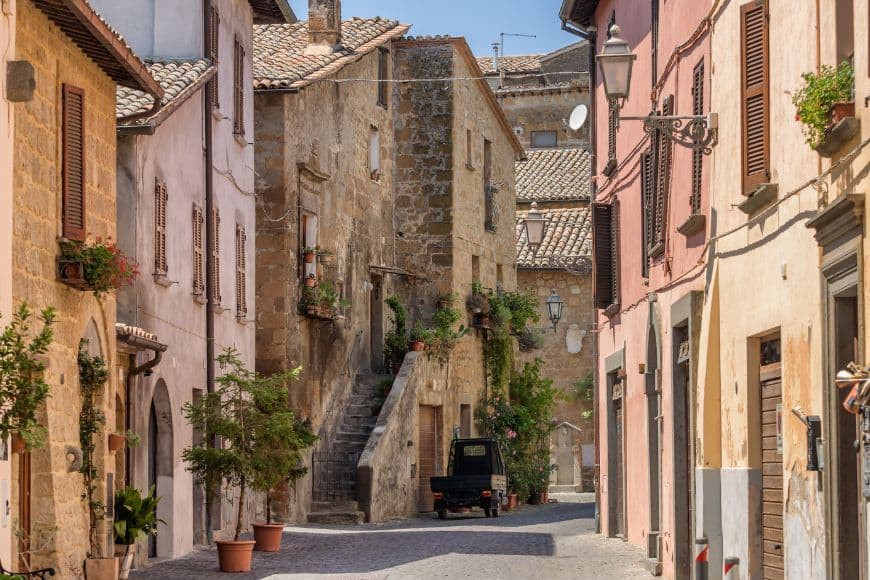
Orvieto is compact enough that you don’t need an elaborate sightseeing plan. Away from Piazza del Duomo, narrow medieval streets lead between stone buildings, small squares, cafés, shops, and quieter residential corners. Corso Cavour forms one of the main routes through town, but I’d deliberately wander away from it occasionally. That’s part of Orvieto’s appeal.
You can see the major sights and still leave yourself enough time to walk without constantly checking what attraction comes next. For me, that slower pace is one of the main reasons to include a smaller town like Orvieto in an itinerary dominated by Italy’s major cities.
4. There Is Another Orvieto Underground
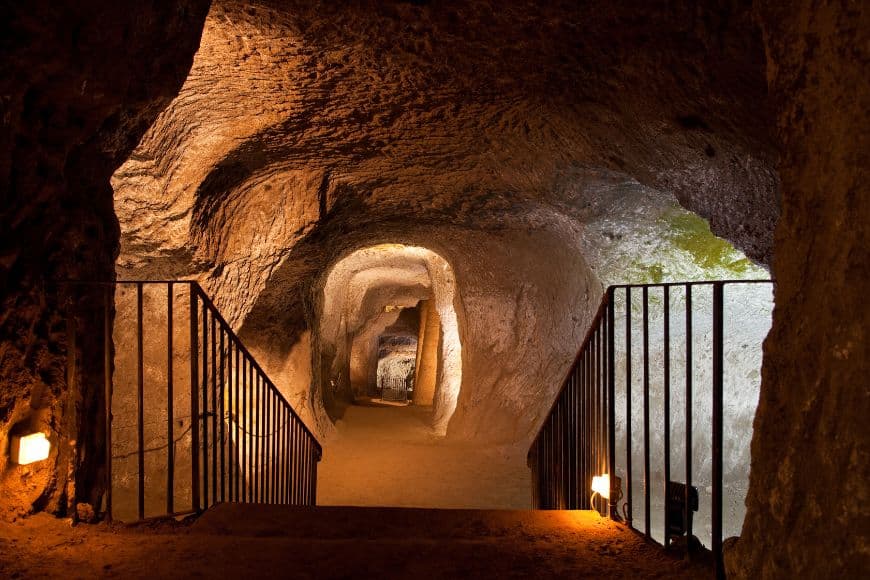
Some of Orvieto’s most interesting history is hidden beneath the streets.
The volcanic rock beneath the town has been excavated over centuries, creating a network of caves, tunnels, wells, storage spaces, and passages. Exploring some of these underground spaces reveals a side of Orvieto that you would never guess existed while walking through the historic center above.
One of the best-known ways to experience this is through Orvieto Underground, where guided visits explore part of the network beneath the town.
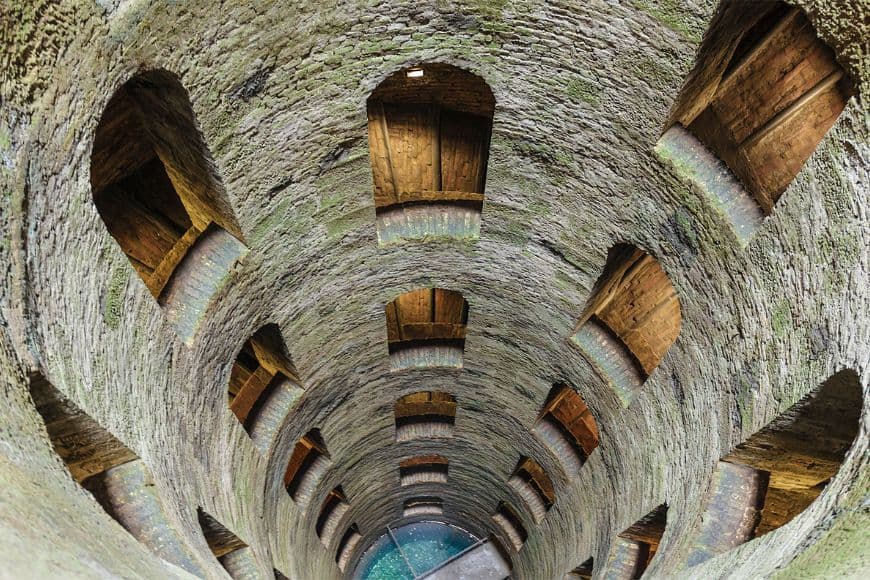
There’s also St. Patrick’s Well (Pozzo di San Patrizio), famous for its ingenious double-helix staircase designed so people and animals could move up and down without crossing paths.
Together, they add something genuinely different to a visit rather than simply another church or piazza.
5. You Can Experience an Umbrian Hill Town Without a Car
This may not sound as exciting as a cathedral or an underground cave, but from an itinerary-planning perspective, it’s one of Orvieto’s biggest advantages.
Many of the beautiful hill towns scattered across central Italy become considerably easier to visit once you have a rental car. Orvieto is different.
The town has a railway station below the historic center, and you can continue uphill using the local connection into town. That makes Orvieto without a car completely realistic.
It’s particularly useful if your Italy itinerary already relies on trains between the major cities. Instead of renting a car solely to experience a smaller hill town, you can add Orvieto while keeping the rest of your journey relatively simple.
For travelers who want a break from Rome or Florence without suddenly turning their trip into a road trip, that’s a considerable advantage.
6. Orvieto Is an Easy Day Trip From Rome
If you’re staying in Rome and want to see somewhere smaller without spending most of the day traveling, Orvieto is an excellent option.
The journey is straightforward enough to leave Rome in the morning, spend most of the day exploring Orvieto, and return in the evening. Once you arrive, the compact historic center means you can cover a surprising amount without rushing between attractions.
A day gives you enough time to visit the Duomo, wander through the medieval streets, explore one of the underground attractions, stop for lunch, and enjoy some of the viewpoints over the Umbrian countryside.
More importantly, Orvieto feels genuinely different from Rome.
After several days of major monuments, busy streets, and packed sightseeing schedules, spending a day in a smaller hill town can provide a welcome change of pace.
If your Rome itinerary has enough flexibility, a Rome to Orvieto day trip is one of the easiest ways to add a taste of Umbria without changing hotels. If you’re comparing different day trips from Rome, our guide covers 12 options to help you decide.
7. Orvieto Fits Naturally Into a Longer Italy Itinerary
You don’t necessarily have to visit Orvieto as a return day trip. Its location makes it particularly useful if you’re already traveling through central Italy, especially on a route connecting Rome and Florence.
Instead of traveling directly between the two cities, you can break up the journey with a stop in Orvieto—or stay overnight and continue north the following day.
A simple route could look like: Rome → Orvieto → Florence
That works particularly well because Orvieto adds something different to both cities. You’re not simply adding another major destination filled with museums and famous landmarks; you’re introducing a smaller historic town and a slower day into the itinerary.
Orvieto can also work as a starting point for exploring more of Umbria if you have additional time.
This is ultimately one of the biggest reasons I think Orvieto is worth visiting: you don’t have to redesign your entire Italy itinerary to include it. It can simply become a very worthwhile stop along a journey you were probably already making.
Looking for more places with a similar atmosphere? Our guide to the best small towns in Italy includes 20 beautiful destinations across Tuscany, Umbria, the Italian lakes, Puglia, Sicily, and beyond.
How Long Do You Need in Orvieto?
For most travelers, one full day in Orvieto is enough to experience the town without feeling rushed. The historic center is compact, so you can comfortably visit the Duomo, explore the medieval streets, see one or two underground attractions, stop for lunch, and still have time to enjoy the viewpoints.
A rough guide would be:
- Half a day: Enough for the Duomo, historic center, and a quick walk around town.
- One full day: The best choice for most visitors.
- One night: Ideal if you prefer slower travel and want to experience Orvieto after many day visitors have left.
I wouldn’t add several nights unless you’re using Orvieto as a base for exploring more of Umbria. For a first visit, a full day or one overnight stay hits the sweet spot.
If you’re putting several destinations together, our Italy Trip Planner can help you build a practical itinerary without trying to squeeze too many stops into one trip.
Orvieto Day Trip or Overnight Stay?
For most Italy itineraries, visiting Orvieto as a day trip works extremely well. If you’re based in Rome, you can travel to Orvieto in the morning, spend the day exploring, and return without changing accommodation. This is probably the simplest option if you’re already spending several nights in the capital.
Staying overnight, however, gives you a different experience. Once some of the day visitors leave, you have more time to wander the historic center, enjoy dinner without watching the clock, and see the town at a quieter pace.
I’d choose a day trip if you’re short on time or don’t want another hotel change. I’d choose one night in Orvieto if you’re traveling between Rome and Florence and prefer slower itineraries.
Either works—the better choice depends less on Orvieto itself and more on how the town fits into the rest of your route.
How to Get to Orvieto
Orvieto is easy to reach from several major Italian cities. Trains connect Orvieto with Rome and Florence, while drivers can reach the town via the A1 motorway. The train station sits below the historic center, with local transport providing convenient access to the hilltop town.
Rome to Orvieto
Traveling from Rome to Orvieto by train is the easiest option for most visitors. Trains depart from Rome toward Orvieto throughout the day, making it practical to travel in the morning and return later if you’re planning a day trip.
Orvieto’s railway station sits below the historic hilltop center. From there, you can continue uphill using the local connection rather than facing a long climb with your luggage.
Because schedules can change, I’d check the current train options shortly before traveling rather than building your itinerary around an old timetable.

Florence to Orvieto
You can also reach Orvieto from Florence by train, which makes the town particularly useful when traveling between Florence and Rome. Rather than treating Orvieto only as an excursion from Rome, consider using it as a stop between the two cities.
If you’re traveling with luggage, an overnight stay is often more comfortable than trying to squeeze sightseeing into a short stop before continuing onward.
For a wider look at trains, buses, ferries, and rental cars, see our Getting Around Italy guide before deciding how you’ll travel between destinations.
Visiting Orvieto by Car
Driving gives you more flexibility if Orvieto is part of a wider Umbria road trip, but you don’t need a car simply to explore the town.
The historic center isn’t somewhere you’ll want to drive around looking for attractions anyway. If you arrive by car, the sensible approach is to park outside the most restricted central areas and continue on foot or using local transport.
If Orvieto is your only smaller-town stop between Rome and Florence, I’d generally stick with the train. If you’re continuing into rural Umbria and visiting several towns, having a car becomes considerably more useful.
Planning to explore more of Umbria by road? Our Driving in Italy guide covers ZTLs, toll roads, parking, rental cars, and the driving rules worth knowing before you set off.

Who Should Visit Orvieto?
Orvieto isn’t somewhere I’d automatically add to every Italy itinerary, but it works exceptionally well for certain trips.
I’d particularly recommend it if you:
- Want to experience an Italian hill town without renting a car
- Have an extra day in Rome and want somewhere different
- Are traveling between Rome and Florence
- Enjoy medieval architecture and historic centers
- Prefer destinations that can be explored comfortably on foot
- Want to include Umbria without building an entire trip around the region
It’s also a good choice if your itinerary feels dominated by large cities. A day in Orvieto introduces a completely different pace without requiring a major detour.
On the other hand, if you only have five or six days in Italy and it’s your first visit, I wouldn’t sacrifice essential time in Rome or Florence simply to fit it in. Orvieto works best when you have space for it, rather than when you’re forcing another destination into an already crowded itinerary.
Plan Your Trip with Our Favorite Travel Resources
Compare tours, transportation, hotels, car rentals, travel insurance, eSIMs, and practical travel resources used by travelers around the world.
Day trips, experiences & tickets
Road trips & flexible travel
Hotels, apartments & stays
Compare transport routes
Day trips, experiences & tickets
Gear, luggage & road trip tools
Plan Your Trip with Our Favorite Travel Resources
Compare tours, transportation, hotels, car rentals, travel insurance, eSIMs, and practical travel resources used by travelers around the world.
Best Time to Visit Orvieto
For most travelers, spring and early autumn are excellent times to visit Orvieto. April, May, September, and October generally suit a trip focused on walking through the historic center and enjoying the surrounding countryside, while avoiding some of the intensity of peak summer.
Summer is certainly possible, but expect hotter conditions and more visitors, particularly around the major attractions during the middle of the day.
Winter brings a quieter atmosphere and fewer crowds, although shorter days and reduced seasonal activity may make the experience different from visiting during spring or autumn.
Whatever the season, if you're visiting Orvieto as a day trip, I'd arrive reasonably early. That gives you time to explore the town before worrying about the journey back—and makes the day feel like a visit to Orvieto rather than a race against the next train.
For a broader look at seasonal differences around the country, see our guide to the best time to visit Italy before choosing your travel dates.
Is Orvieto Worth Visiting? FAQs
Is Orvieto worth visiting from Rome?
Yes. Orvieto is particularly well suited to a day trip from Rome because you can reach it by train and explore the compact historic center without needing a car. It also gives you a very different experience from another day of sightseeing in the capital.
How many hours do you need in Orvieto?
Allow at least 5–6 hours if you're visiting for the day. That's enough time for the Duomo, historic streets, viewpoints, lunch, and at least one of Orvieto's underground attractions. A full day is better if you prefer a relaxed pace.
Can you visit Orvieto without a car?
Absolutely. Orvieto is one of the easier Italian hill towns to visit without a car. The railway station is below the historic center, with local transport helping you reach the town above. Once there, most of your sightseeing can be done on foot.
Is Orvieto walkable?
Yes. Orvieto's historic center is compact and very walkable, although you should expect some slopes, uneven surfaces, and medieval streets. Comfortable walking shoes are a good idea.
Is it better to stay in Orvieto or take a day trip?
For most visitors staying in Rome, a day trip to Orvieto is enough. Staying overnight makes more sense if you're traveling onward toward Florence or exploring Umbria and want to experience the town at a slower pace.
Final Thoughts
So, is Orvieto worth visiting? For most travelers with enough room in their itinerary, yes.
Orvieto gives you many of the things people look for in a smaller Italian destination: medieval streets, beautiful countryside, impressive architecture, excellent viewpoints, and enough history to fill a day without requiring a long list of attractions.
But its biggest advantage may be how easy it is to include. You can visit Orvieto from Rome, stop while traveling toward Florence, or spend a night before continuing through Umbria. And unlike many of Italy's rural hill towns, you don't need to rent a car simply to get there.
I wouldn't squeeze Orvieto into an already overcrowded first trip to Italy. But if you have a free day in Rome or want to break up the journey between two major cities, Orvieto is absolutely worth the stop.
About Luca
Explore More
-
 Best Day Trips from Rome: 12 Amazing Places to Explore
 -
 Small Towns in Italy to Visit: 20 Beautiful Places Worth the Trip
 -
 Is Bergamo Worth Visiting? An Honest Traveler’s Opinion
 -
 Where to Stay in Bergamo: Best Areas & Hotels for Every Traveler


Book Your Tour
Rent Car

💬 We’d love to hear from you!
Have questions, tips, or personal travel stories to share? Drop them in the comments below — your insights help fellow travelers plan their adventures too.