Small Towns in Italy to Visit: 20 Beautiful Places Worth the Trip

by Asia A. | Last Updated October 10, 2026
Planning your Italy vacation?
Try our Italy trip planner to create a smart itinerary between cities with real travel routes and transport options.
20 Beautiful Small Towns in Italy to Visit
Italy’s biggest cities tend to dominate first-time itineraries. Rome has the ancient landmarks, Florence has Renaissance art, Venice has its canals, and Milan brings an entirely different side of the country. But some of my favorite Italian experiences happen on a much smaller scale.
They’re the places where you can walk from one side of the historic center to the other without checking a map, stop for lunch without having planned the restaurant three weeks earlier, and spend an afternoon wandering streets that are often more memorable than whatever attraction you originally came to see. That’s why I think leaving room for a few small towns in Italy to visit can completely change an Italian itinerary.
The challenge is choosing them. Italy has thousands of small towns and villages, from medieval hill towns surrounded by Tuscan countryside to colorful communities beside the lakes and tiny settlements overlooking the Mediterranean. Trying to include every beautiful place you see online is a very quick way to ruin an otherwise sensible trip.
For this guide, I’ve selected 20 of the best small towns in Italy that are genuinely worth considering when planning your journey. We’ll travel from the lakes and mountains of northern Italy through Tuscany and Umbria before continuing south to Puglia, the Amalfi Coast, Sicily, and Sardinia.
More importantly, I’ll show you how each place fits into a real trip: why you should visit, how long you need, what larger destination it pairs well with, and whether you can reach it without a car.
You certainly don’t need to visit all 20—and I wouldn’t try. Choose the Italian small towns that fit naturally into the route you’re already taking, give them enough time to enjoy properly, and let the rest become reasons to come back to Italy.
Last-Minute Italy Trip Planning
Still finalizing your trip? These are the essentials I’d sort out before you go:
- 🏨 Book your accommodation: Compare hotels and apartments on Booking.com or Hotels.com, especially if you’re staying overnight in popular smaller towns.
- 🚆 Plan trains and transfers: Use Omio to compare train and bus connections between major cities and nearby towns.
- 🚗 Reserve a rental car: DiscoverCars is useful for comparing rental options if you’re exploring Tuscany, Puglia, the Dolomites or Sardinia.
- 📱 Get connected: Set up an Airalo eSIM before arrival so you have mobile data for maps, parking apps and reservations.
- 🎟️ Book popular experiences: Check Viator for tours, day trips and activities that may sell out during the busiest months.
20 Best Small Towns in Italy to Visit
Choosing just 20 wasn’t easy. Italy is packed with beautiful small towns, and you could build an entire trip around Tuscany, the Italian lakes, Puglia, or Sicily without running out of places worth stopping.
Rather than ranking these towns from “best” to “worst,” I’ve organized them geographically. That makes the list much more useful when you’re actually planning an itinerary—you can quickly see which places fit naturally with destinations you’re already visiting. We’ll start with some of the most beautiful small towns in northern Italy before gradually working our way south.
Small Towns in Northern Italy
Northern Italy gives us a particularly interesting mix. Some towns sit directly beside Lake Como or Lake Garda, while others take us into the mountains of the Dolomites. They’re also among the easiest places on this list to combine with Milan, Verona, Venice, or a northern Italy road trip.
1. Varenna, Lake Como
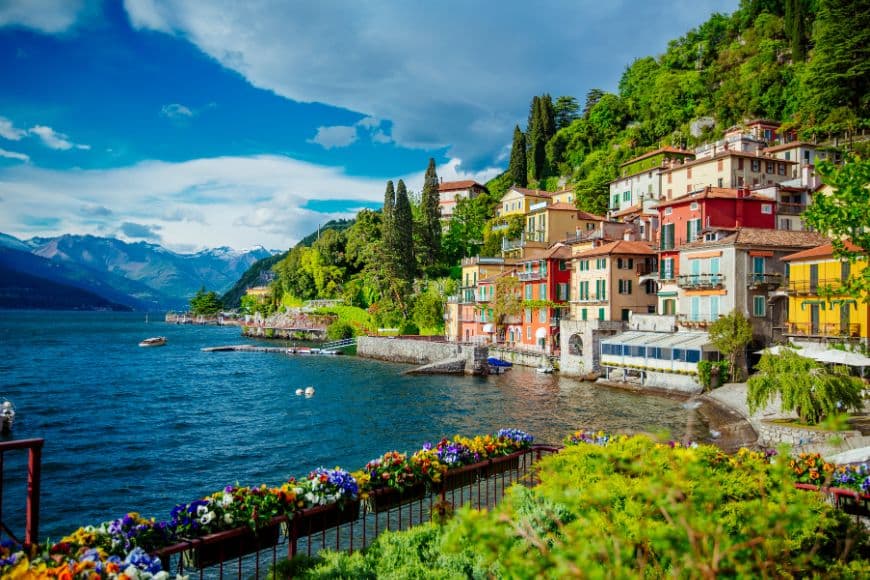
If I had to choose one Lake Como town for someone visiting the lake for the first time, Varenna would be very difficult to beat. Set directly on the eastern shore of Lake Como, Varenna has colorful waterfront buildings, narrow stone lanes, small cafés, gardens, and mountain views across the water. It’s beautiful without requiring a complicated sightseeing plan—you can simply arrive and start walking.
One of my favorite parts is the short waterfront promenade known as the Passeggiata degli Innamorati. From there, you can wander into the historic center, visit the gardens of Villa Monastero, or take the uphill walk toward Castello di Vezio for broader views over the lake.
Varenna is also extremely practical. Unlike many Italian small towns, it has a railway station, making it one of the easiest Lake Como destinations to reach from Milan by train. Ferries then connect it with other towns around the lake, including Bellagio. That makes Varenna particularly good if you’re exploring Italy without a car.
Best for: Lake views, couples, first-time Lake Como visitors
How long: Half a day to 1 night
Pair it with: Milan, Bellagio and the rest of Lake Como
Car needed: No
2. Bellagio, Lake Como
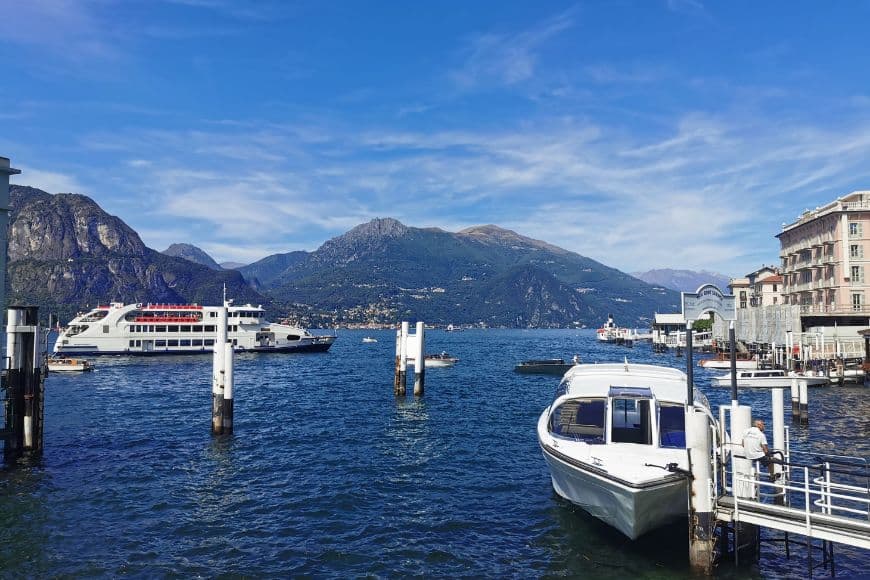
Across the water from Varenna sits Bellagio, one of the most recognizable towns on Lake Como. Its location is what makes it special. Bellagio sits around the point where the lake divides into its famous branches, giving you water and mountain views in several directions.
The historic center climbs uphill from the waterfront through narrow lanes and stone staircases lined with cafés, restaurants and small shops. You’ll inevitably encounter Salita Serbelloni, but I’d also spend some time wandering away from the busiest streets rather than treating Bellagio as a collection of photo stops.
Villa Melzi is another reason to stay longer. Its gardens stretch along the lakeshore and offer a much calmer experience than the busiest parts of the center. Bellagio and Varenna also work exceptionally well together. Regular ferry connections make it possible to experience both without turning the day into a complicated transport exercise.
Best for: Romantic scenery, lake views and ferry-based exploring
How long: Half a day to 1 night
Pair it with: Varenna, Como and Milan
Car needed: No — ferry connections are usually more useful than driving for this part of Lake Como
3. Sirmione, Lake Garda
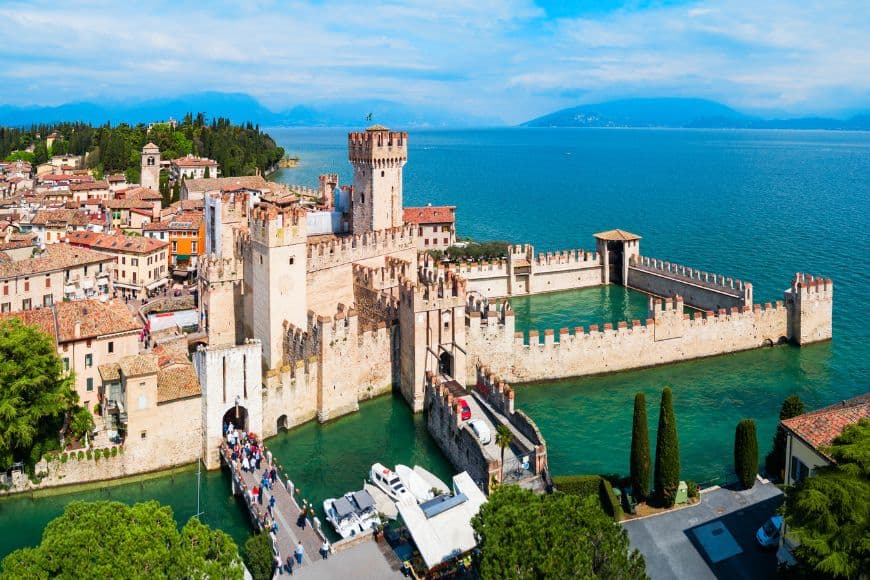
Sirmione is one of those towns whose geography does half the work. The historic center occupies a narrow peninsula extending into Lake Garda, and you enter beside the remarkably well-preserved Scaligero Castle. Water surrounds much of the old town, while narrow streets lead toward restaurants, lakefront paths and viewpoints farther along the peninsula.
Continue toward the northern end, and you’ll reach the archaeological site of the Grotte di Catullo, where the remains of a Roman villa sit above the lake. Sirmione gets extremely busy during the day, particularly in summer. If your itinerary allows it, staying overnight gives you a chance to experience the historic center after many day visitors have left. Its location also makes Sirmione easy to incorporate into a Lake Garda road trip or a journey between Milan and Verona.
Best for: History, Lake Garda scenery and road trips
How long: Half a day to 1 night
Pair it with: Verona, Lake Garda and Milan
Car needed: No, although a car is useful for a wider Lake Garda itinerary
4. Malcesine, Lake Garda
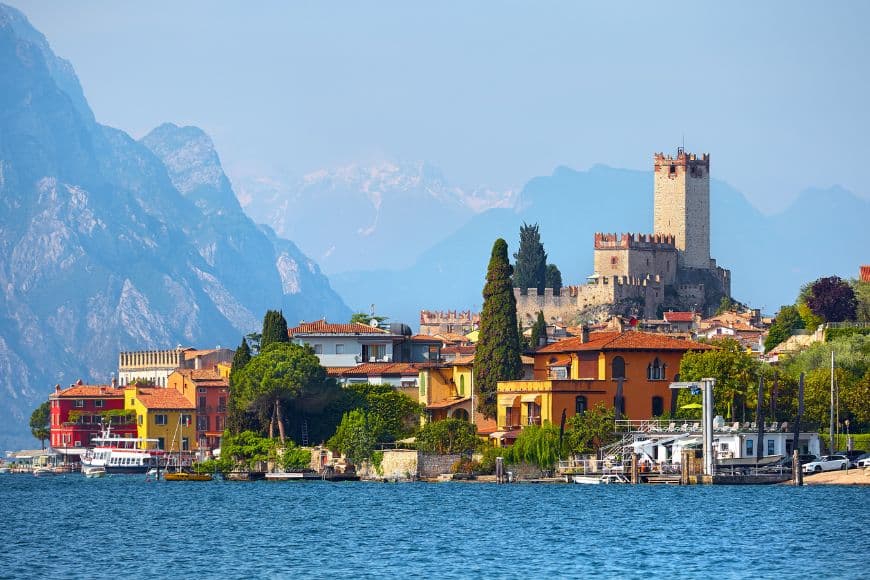
If Sirmione combines Lake Garda with Roman and medieval history, Malcesine brings the mountains much more dramatically into the picture. The town sits beneath Monte Baldo on the eastern shore of the lake, with a compact historic center gathered around narrow streets, a small harbor and Castello Scaligero.
The castle alone is worth exploring, but the real advantage of Malcesine is how easily you can combine the lake with mountain scenery. The cable car toward Monte Baldo takes you high above Lake Garda, where the landscape feels completely different from the waterfront below. I’d give Malcesine at least half a day rather than treating it as another quick photo stop while driving around the lake.
Best for: Mountain views, Lake Garda and outdoor activities
How long: Half a day to 1 night
Pair it with: Lake Garda, Verona and the Dolomites
Car needed: Helpful, but not essential
5. Ortisei, Dolomites
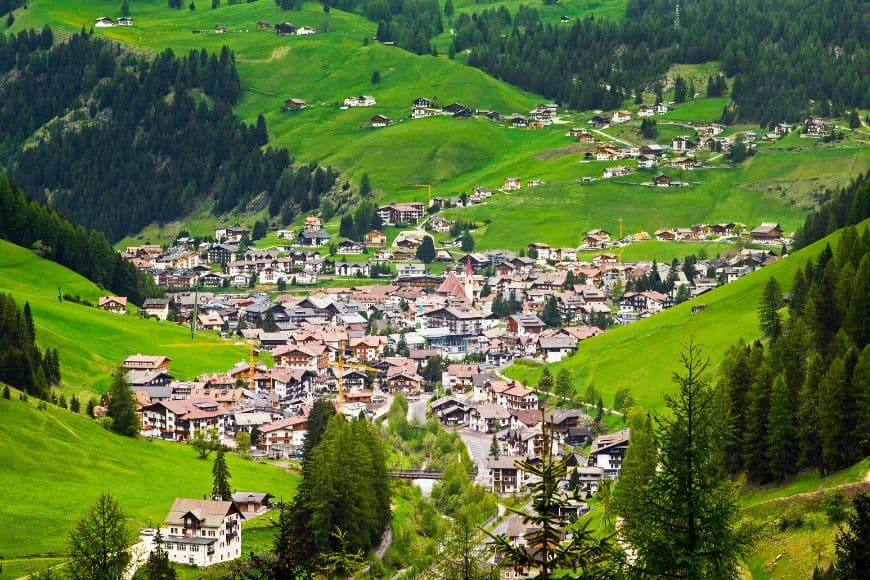
Ortisei is different from the medieval hill towns and lakeside villages elsewhere on this list—and that’s precisely why I wanted it here. Located in Val Gardena in the Dolomites, Ortisei makes an excellent base for travelers who want spectacular mountain scenery without staying somewhere completely isolated.
The town itself has a polished Alpine character, but its biggest advantage is access to the surrounding mountains. Cable cars and lifts connect the area with landscapes around Seceda and Alpe di Siusi, putting some of the Dolomites’ most recognizable scenery within easy reach.
Unlike towns where half a day is enough, I wouldn’t come to Ortisei simply to walk around the center and leave. The surrounding landscape is the destination. Give yourself at least two nights—and preferably more if hiking or mountain scenery is one of the main reasons for your trip.
Best for: Dolomites, hiking and Alpine scenery
How long: 2–3 nights
Pair it with: Dolomites road trip, Bolzano or Verona
Car needed: Helpful for a wider Dolomites trip, but not essential for enjoying Ortisei itself
Beautiful Small Towns in Central Italy
This is where medieval towns in Italy really come into their own. Tuscany and Umbria are filled with hilltop communities surrounded by vineyards, olive groves, valleys, and countryside that often makes the journey between towns just as enjoyable as the destinations themselves. This is also the part of the country where having a car can make the biggest difference. Some towns are accessible by public transport, but a car gives you much more freedom to combine several places without building your day around bus schedules.
6. San Gimignano, Tuscany
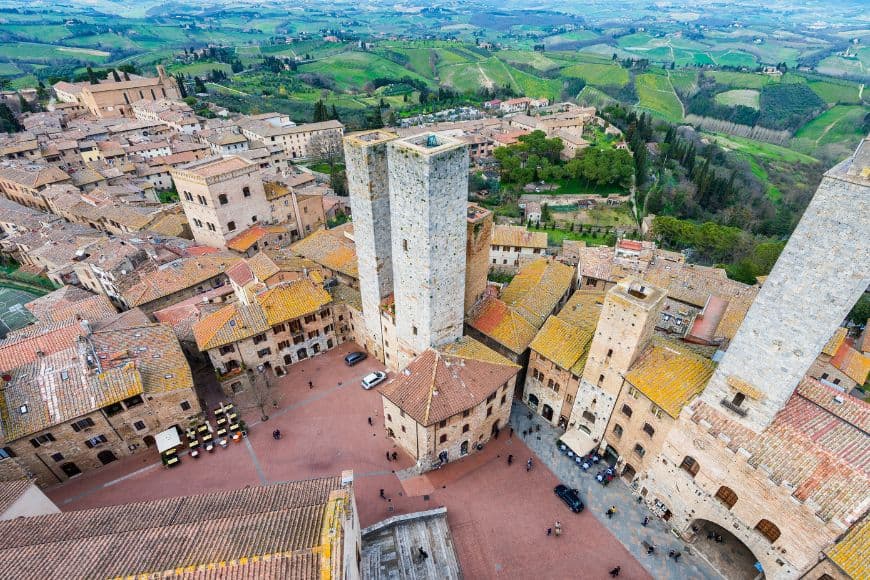
San Gimignano may no longer qualify as a hidden gem, but that doesn’t make its medieval skyline any less remarkable. The town is famous for the stone towers rising above its historic center. Wealthy families once built dozens of them as symbols of status and power, and the surviving towers give San Gimignano a silhouette unlike anywhere else in Tuscany.
Once inside the walls, I’d spend less time trying to follow a checklist and more time exploring the streets around Piazza della Cisterna and Piazza del Duomo. Walk beyond the busiest central squares and you’ll quickly find quieter lanes and viewpoints over the surrounding Tuscan countryside.
San Gimignano can become crowded with day-trippers, so arriving earlier or staying into the evening makes a noticeable difference. It also fits naturally between Florence and Siena, which makes it one of the easiest small towns in Tuscany to add to a broader itinerary.
Best for: Medieval architecture, Tuscany scenery and first-time visitors
How long: Half a day to 1 night
Pair it with: Florence, Siena and a Tuscany road trip
Car needed: Helpful, but not essential
7. Pienza, Tuscany
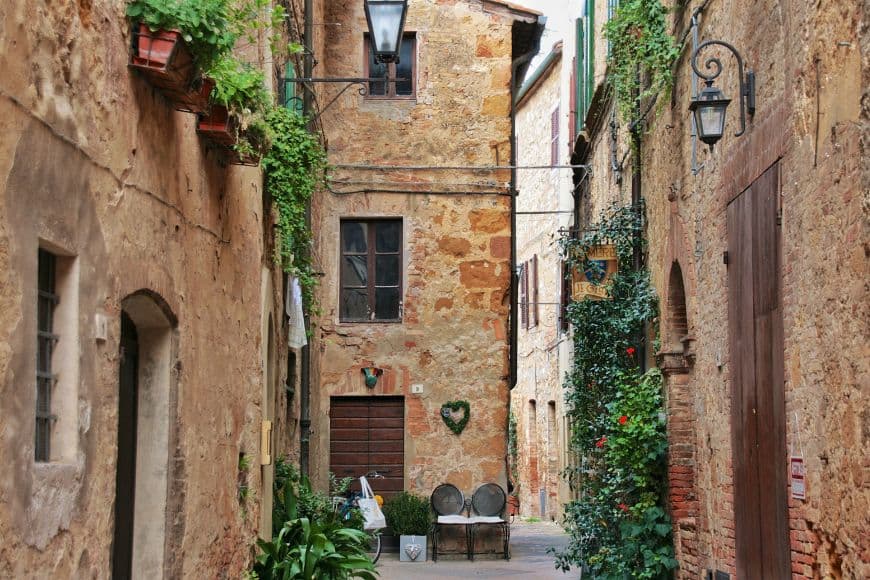
Pienza is small enough that you can walk across its historic center surprisingly quickly. I’d still resist the temptation to rush through it. Sitting above the Val d’Orcia, Pienza combines Renaissance architecture with some of the most recognizable countryside in Tuscany. The streets themselves are attractive, but the views beyond the town walls are a major part of the experience. Pienza is also closely associated with pecorino cheese, so this is one place where stopping for food isn’t merely something to fit between attractions.
What makes Pienza particularly useful for an itinerary is its location. Montepulciano, Montalcino and other Val d’Orcia destinations are relatively close, making the area ideal for a slower Tuscany road trip.
Public transport is possible but less convenient here. If you’re planning to explore several Tuscan hill towns, this is one of the parts of Italy where I’d strongly prefer having a car.
Best for: Val d’Orcia scenery, food and romantic Tuscany
How long: Half a day
Pair it with: Montepulciano, Siena and Val d’Orcia
Car needed: Recommended
8. Montepulciano, Tuscany
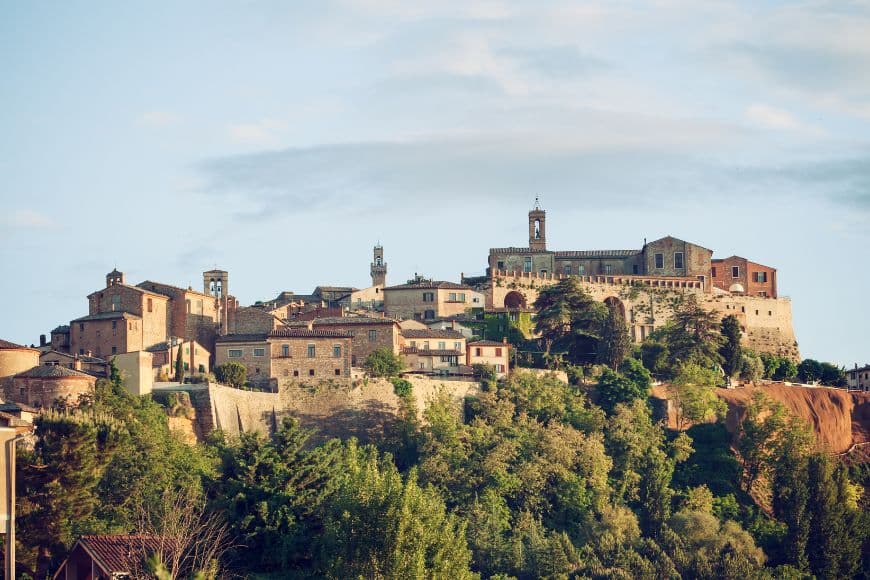
Montepulciano is the kind of town that makes you earn the views. Built along a ridge in southern Tuscany, its historic streets climb steadily toward Piazza Grande. The walk can feel considerably longer than it looks on a map, but that’s also part of the appeal—you pass Renaissance buildings, wine cellars, small squares, shops and viewpoints as you work your way upward. The surrounding countryside is closely associated with Vino Nobile di Montepulciano, making the town particularly attractive if food and wine are part of your reason for visiting Tuscany.
I’d combine Montepulciano with Pienza rather than treating the two as competing destinations. They’re different enough to justify seeing both, and together they make an excellent day or overnight stop through the Val d’Orcia area. Just don’t try to combine every famous Tuscan town into the same day. Tuscany looks compact on a map until you’ve spent the entire afternoon getting in and out of parking lots.
Best for: Wine, hill-town atmosphere and Tuscan landscapes
How long: Half a day to 1 night
Pair it with: Pienza, Val d’Orcia and Siena
Car needed: Recommended
9. Cortona, Tuscany
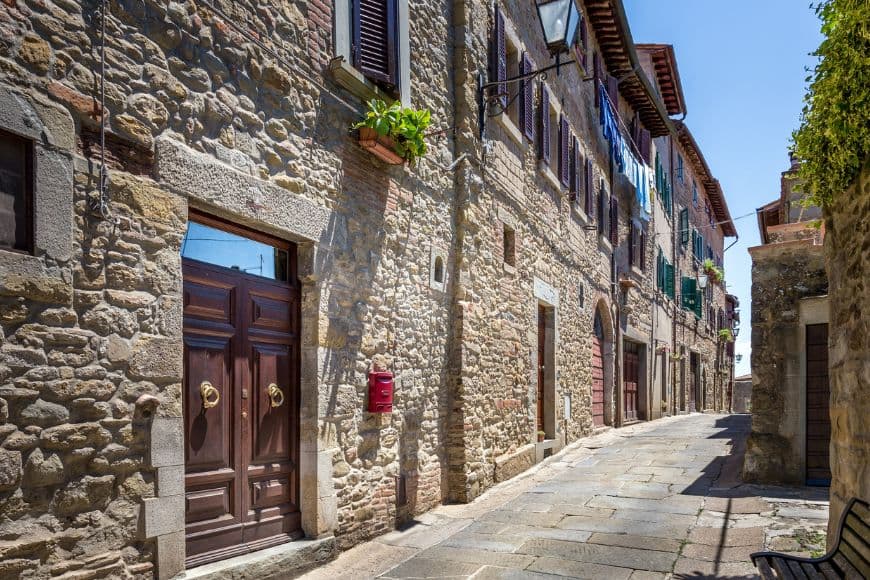
Cortona sits high above the Val di Chiana in eastern Tuscany, and its elevated position gives the town some wonderful views over the countryside below. Inside the historic center, you’ll find steep stone streets, small piazzas, churches, cafés, and buildings that retain much of the atmosphere people imagine when they picture a charming town in Italy.
Piazza della Repubblica and Piazza Signorelli make natural starting points, but Cortona rewards wandering beyond the central squares. Be prepared for hills—the town isn’t particularly large, but you’ll certainly notice the gradients. Cortona works especially well if your route takes you between Tuscany and Umbria, rather than requiring a major detour from the classic Florence–Siena itinerary.
Best for: Tuscan views, historic streets and slower travel
How long: Half a day to 1 night
Pair it with: Arezzo, Montepulciano and Umbria
Car needed: Helpful, although Cortona can be reached using train plus local transport
10. Orvieto, Umbria
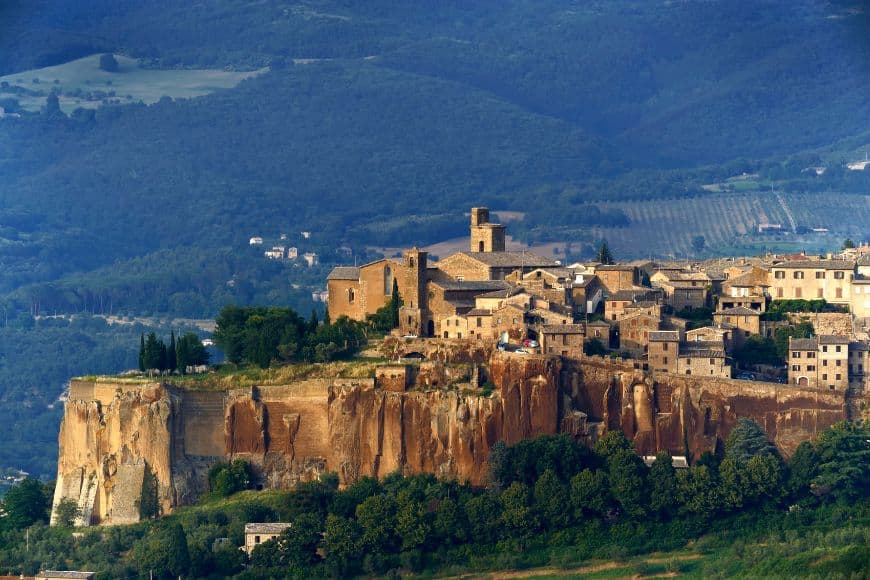
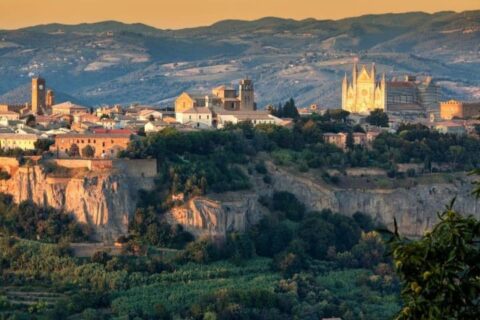
Orvieto has one of the most dramatic settings on this list. The historic town rises on a plateau of volcanic rock above the Umbrian countryside, and at its center stands the magnificent Orvieto Cathedral, whose elaborate façade is difficult to appreciate properly until you’re standing directly in front of it. But I wouldn’t visit Orvieto solely for the cathedral.
Its medieval streets, underground spaces, viewpoints and quieter corners make it easy to spend several hours exploring, while the town’s position between Rome and Florence makes it unusually practical for an Italian hill town.
That’s the big advantage here: Orvieto is one of the best small towns in Italy to visit without a car. Trains connect the lower town with Rome and Florence, with a funicular providing access toward the historic center. If you want to add a smaller Italian destination to a city-heavy itinerary without renting a car, Orvieto is one of the easiest choices on this list.
Best for: Architecture, history and train-based itineraries
How long: Day trip to 1 night
Pair it with: Rome, Florence and Umbria
Car needed: No
Orvieto is one of central Italy’s most memorable towns. Discover why Orvieto deserves a visit before adding it to your itinerary.
11. Assisi, Umbria
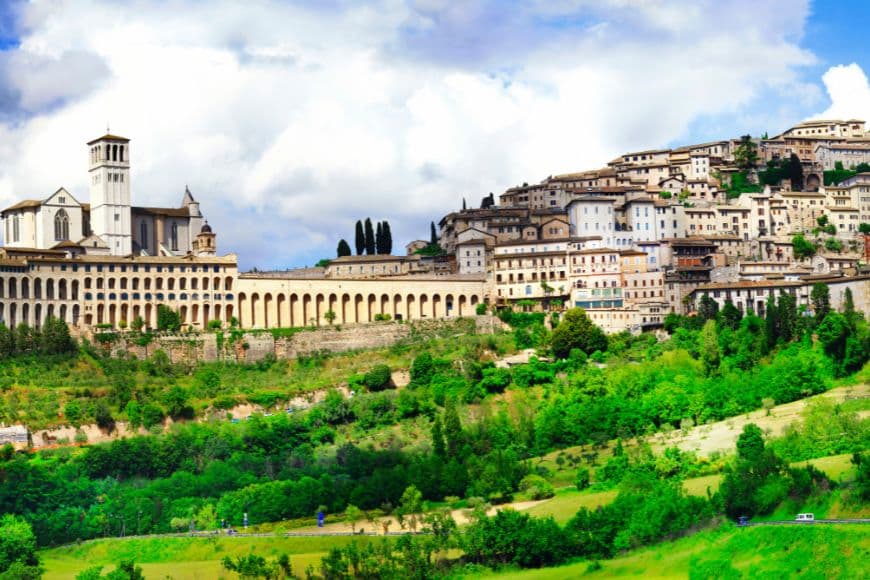
Assisi is larger and more internationally famous than some of the tiny towns on this list, but it still offers the kind of compact historic experience travelers are usually looking for when searching for beautiful towns in Italy.
The town is best known as the birthplace of St. Francis and for the Basilica of Saint Francis of Assisi, one of Italy’s most important pilgrimage sites. Even if religious history isn’t the main reason for your visit, the setting is impressive. Pale stone buildings climb the slopes of Mount Subasio, while viewpoints around the historic center open across the Umbrian countryside.
I’d allow enough time to walk beyond the basilica. Assisi receives plenty of day visitors, but reducing the town to a single landmark misses much of its character. It’s also relatively straightforward to visit without driving. The railway station is below the historic center, with local connections taking visitors uphill into town.
Best for: History, architecture and Umbrian scenery
How long: Full day to 1 night
Pair it with: Perugia, Orvieto and an Umbria itinerary
Car needed: No, although useful for exploring rural Umbria
Small Towns in Southern Italy
Southern Italy changes the scenery again. Here, the small towns in Italy to visit range from Puglia’s whitewashed hill towns to one of the country’s most extraordinary historic settlements.
This is also an excellent region for a road trip. Trains and buses can get you to many places, but having a car makes it much easier to combine several small towns in southern Italy without spending half the day working around connections.
12. Alberobello, Puglia
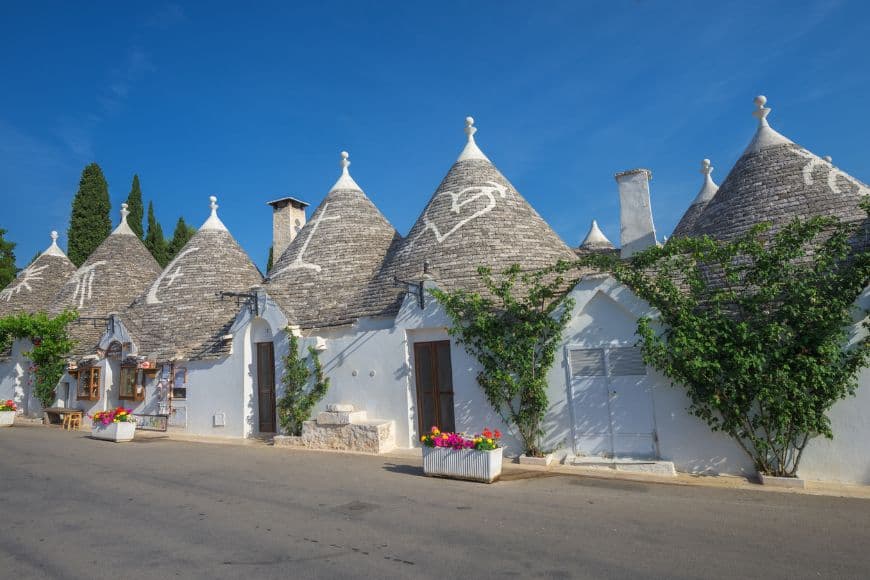
Few places in Italy look quite like Alberobello. The town is famous for its trulli, the distinctive whitewashed stone houses topped by conical roofs that have become one of the symbols of Puglia. You’ll see them elsewhere around the Valle d’Itria, but Alberobello has the largest and most famous concentration.
The Rione Monti district contains hundreds of trulli and attracts most visitors. It’s absolutely worth seeing, but I’d also cross toward Aia Piccola, where the atmosphere tends to feel more residential and less dominated by souvenir shops.
Alberobello becomes particularly busy during the middle of the day. Arriving early, staying into the evening, or spending a night here can give you a very different impression from a quick tour-bus stop. I wouldn’t build an entire Puglia trip around Alberobello alone, though. Its real strength is how easily it combines with Locorotondo, Ostuni and the rest of the Valle d’Itria.
Best for: Unique architecture, photography and first-time Puglia trips
How long: Half a day to 1 night
Pair it with: Locorotondo, Ostuni and Bari
Car needed: Helpful, particularly for exploring the Valle d’Itria
13. Locorotondo, Puglia
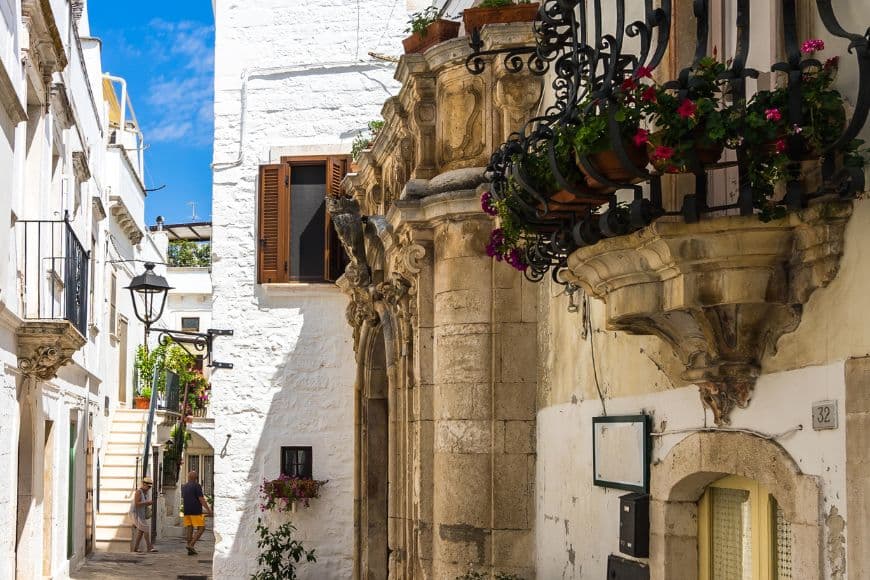
Only a short distance from Alberobello, Locorotondo offers a completely different experience. Its whitewashed historic center sits on a hill overlooking the Valle d’Itria, with narrow lanes curving between bright façades, flower-filled balconies, arches and small squares.
There isn’t one enormous attraction you need to rush toward. That’s precisely why I like including places such as Locorotondo in an itinerary. Come here to walk, explore the old streets, stop for something to eat, enjoy the views across the countryside, and allow the town itself to be the attraction.
Because Alberobello receives considerably more international attention, Locorotondo can also provide a welcome change of pace when you’re exploring this part of Puglia. The two towns are close enough to combine, although I’d avoid turning the Valle d’Itria into a race to see how many whitewashed towns you can photograph before dinner.
Best for: Slow travel, whitewashed streets and Valle d’Itria scenery
How long: A few hours to half a day
Pair it with: Alberobello, Martina Franca and Ostuni
Car needed: Recommended for a wider Puglia road trip itinerary
14. Ostuni, Puglia
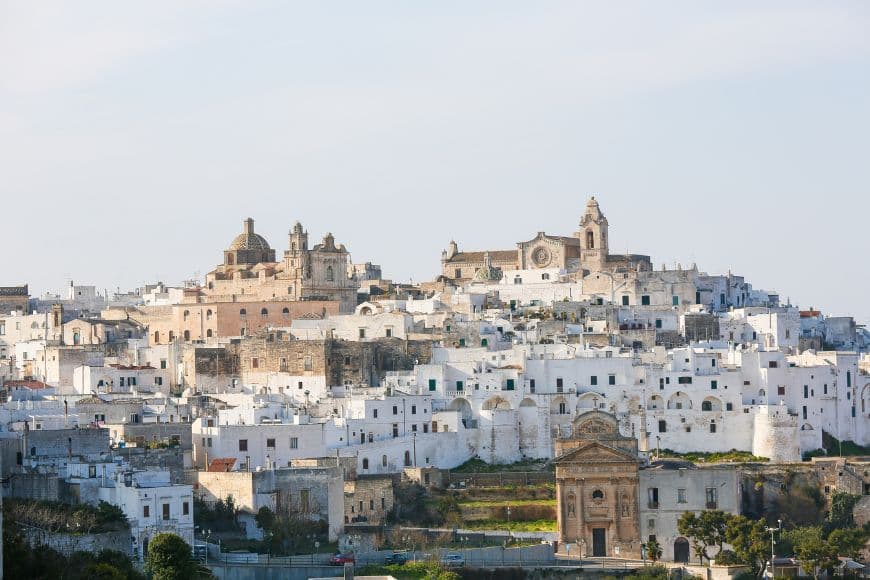
You’ll understand the nickname “White City” before you’ve even reached Ostuni’s historic center. The old town rises above the surrounding landscape in a mass of whitewashed buildings, making it particularly striking when approaching from the countryside. Inside, narrow streets, staircases and passageways climb toward the upper part of town. This is another place where I’d put the map away occasionally and simply follow whichever lane looks interesting.
Ostuni also gives you something different from Alberobello and Locorotondo. You’re still within the broader Puglia experience, but the elevated old town feels more substantial, and the Adriatic coast isn’t far away. That makes it a good overnight base if you’re combining charming towns in Italy with beaches and a wider Puglia road trip.
Best for: Historic streets, photography and Puglia road trips
How long: Half a day to 1 night
Pair it with: Alberobello, Locorotondo and the Puglia coast
Car needed: Helpful, but not essential
15. Matera, Basilicata
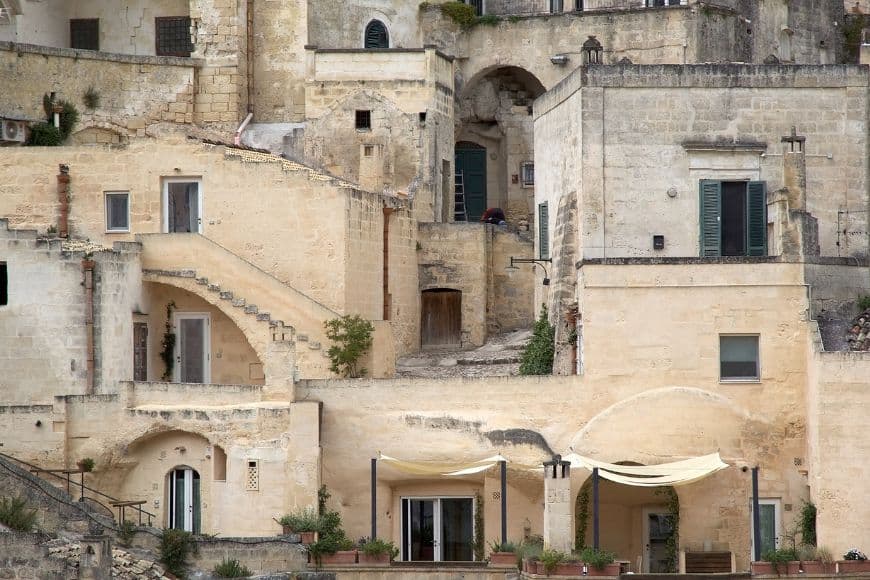
Matera stretches the definition of a “small town” more than anywhere else on this list, but leaving it out would make very little sense for travelers exploring this part of Italy. Its historic Sassi districts are unlike almost anywhere else in the country. Homes, churches, stairways, and passages have been built into and around the rock, creating a landscape that feels completely different from the hill towns of Tuscany or the whitewashed communities of Puglia.
This isn’t somewhere I’d rush through in two hours. Walk through the Sassi, explore some of the rock churches, and take time to see Matera from different viewpoints. The town changes dramatically as the light shifts, which is one reason staying overnight is worthwhile.
Matera also pairs naturally with Puglia despite technically being across the regional border in Basilicata. If you’re already visiting Bari, Alberobello or the Valle d’Itria, it’s one of the most rewarding additions you can make.
Best for: History, architecture and truly distinctive landscapes
How long: 1–2 nights
Pair it with: Bari, Alberobello and southern Italy road trips
Car needed: No, although a car makes a broader regional itinerary easier
Small Towns on the Amalfi Coast
The Amalfi Coast has no shortage of famous names, but for this list I want to focus on two places that give you very different experiences. One sits high above the coastline with extraordinary views; the other is so close to Amalfi that many visitors barely realize they’ve walked past an entirely separate town.
16. Ravello, Amalfi Coast
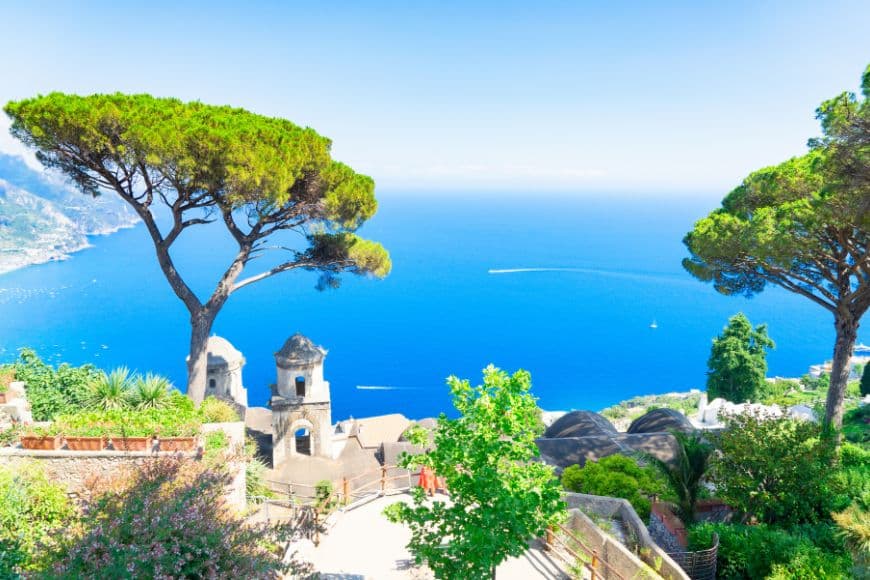
Ravello doesn’t sit directly beside the sea. Instead, it occupies a spectacular position high above the Amalfi Coast—and that elevation is exactly what makes it special. The town is best known for Villa Rufolo and Villa Cimbrone, where gardens and terraces open onto sweeping views of the coastline far below.
Ravello also feels different from the busier waterfront towns. There are still plenty of visitors, particularly during the main season, but the atmosphere away from the major sights can feel considerably calmer than the traffic and crowds closer to sea level.
I’d give Ravello at least half a day. Rushing up, taking one photograph and immediately heading back down misses much of the reason to come here.It’s particularly easy to combine with Amalfi, making it a natural addition rather than another complicated change of base.
Best for: Romantic views, gardens and Amalfi Coast scenery
How long: Half a day to 1 night
Pair it with: Amalfi and the wider Amalfi Coast
Car needed: No — buses, taxis and transfers are generally more practical, but if you prefer to drive, read first: is it worth driving the Amalfi Coast
17. Atrani, Amalfi Coast
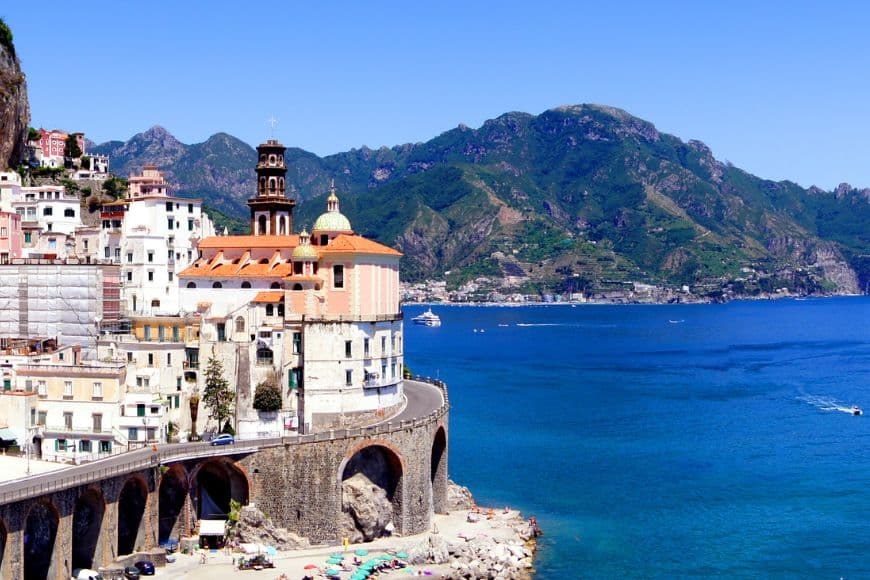
Atrani proves that you don’t need to travel far from the famous places to find something that feels completely different. It sits immediately beside Amalfi, squeezed between steep cliffs and the Mediterranean, yet many travelers spend all their time in its better-known neighbor.
Atrani is tiny. You don’t need an itinerary for it, and that’s part of the charm. Walk through the small streets, stop around Piazza Umberto I, head toward the beach, and enjoy the fact that you’re somewhere where the objective isn’t to complete a list of attractions.
I’d treat Atrani as a complement to Amalfi rather than a standalone destination requiring an entire day. You can walk between the two, making this one of the easiest coastal towns in Italy to add to an existing itinerary. And sometimes that’s exactly what a small town should be: not another destination requiring logistics, but somewhere worth turning toward when everyone else is walking the other way.
Best for: Coastal atmosphere, slow travel, and a quieter Amalfi Coast stop
How long: A few hours
Pair it with: Amalfi and Ravello
Car needed: No
Beautiful Small Towns on the Italian Islands
Italy’s islands give us yet another version of small-town travel. Sicily combines historic centers with beaches and dramatic landscapes, while Sardinia offers fortified towns overlooking some of the Mediterranean’s most beautiful coastline. These final three are particularly good if you want to build a longer island trip rather than simply add a day trip to a mainland itinerary.
18. Cefalù, Sicily
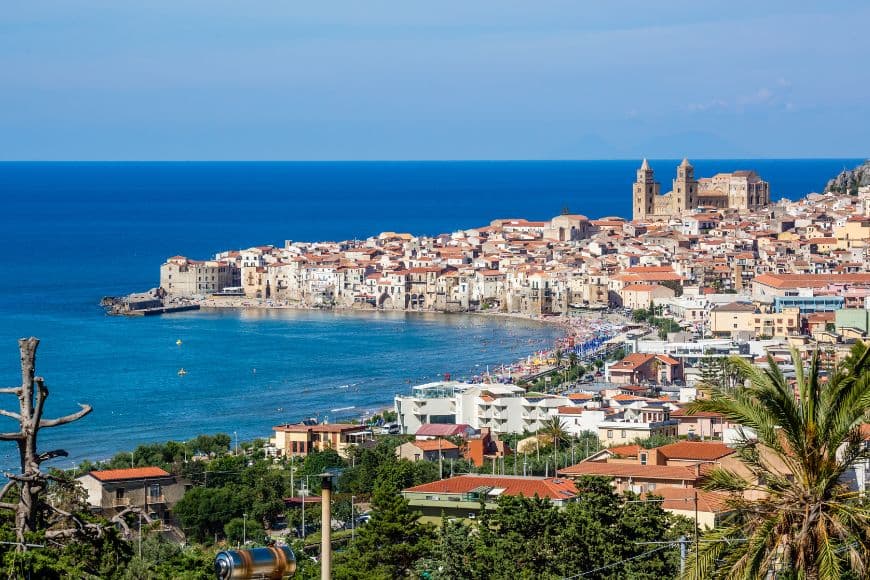
Cefalù is one of those rare places where you don’t really have to choose between a historic town and a beach destination. The old center sits directly beside the sea on Sicily’s northern coast, with narrow streets leading between stone buildings toward the waterfront. At its heart stands Cefalù Cathedral, while the enormous rocky headland of La Rocca rises behind the town.
If you have the energy, the climb up La Rocca rewards you with panoramic views over Cefalù’s terracotta rooftops and coastline. Back at sea level, you can spend the rest of the day wandering the historic streets or simply head to the beach.
That combination is what makes Cefalù so easy to recommend. You can sightsee in the morning, have a long lunch, and be swimming in the Mediterranean later without changing destinations. It’s also one of the easier small Italian towns to visit without driving. Direct trains connect Cefalù with Palermo, making it an excellent addition to a Sicily itinerary even if you’re relying on public transport.
Best for: Beaches, history and easy train travel
How long: Full day to 2 nights
Pair it with: Palermo and a Sicily road trip
Car needed: No
19. Taormina, Sicily
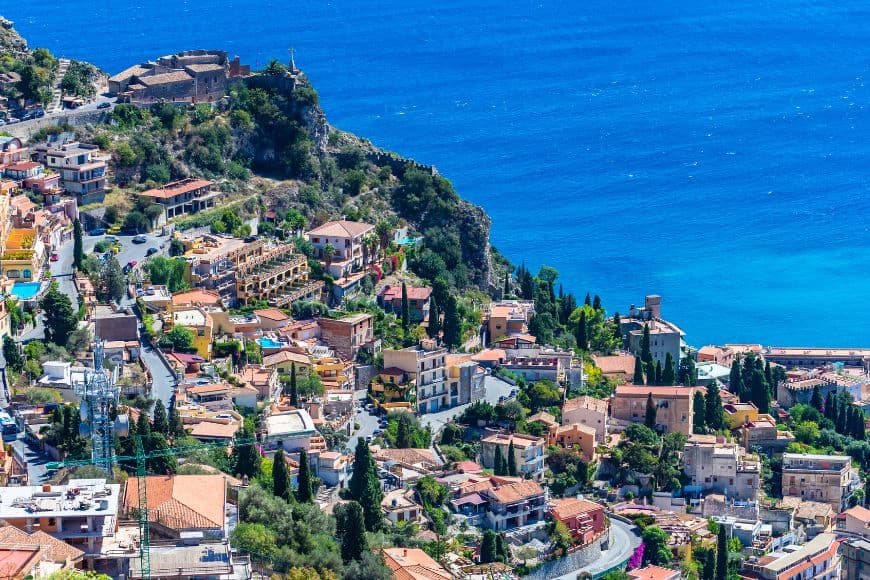
Taormina is certainly not undiscovered. During the busiest months, you won’t be wandering its main streets wondering where everybody went. But popularity alone isn’t a good reason to exclude somewhere this spectacular.
Perched high above Sicily’s eastern coastline, Taormina combines historic streets, Mediterranean views, and one of Italy’s most memorable archaeological settings. The Ancient Theatre of Taormina looks toward the surrounding landscape, with Mount Etna providing an extraordinary backdrop when conditions are clear.
After visiting the theatre, spend some time along Corso Umberto and the smaller streets branching away from it. You can also descend toward the coast and Isola Bella for a completely different perspective. I’d strongly consider staying overnight rather than treating Taormina purely as a day trip. Early morning and evening give you a chance to experience the town outside the busiest sightseeing hours.
Best for: Coastal views, history and first-time Sicily trips
How long: 1–2 nights
Pair it with: Catania, Mount Etna and eastern Sicily
Car needed: No
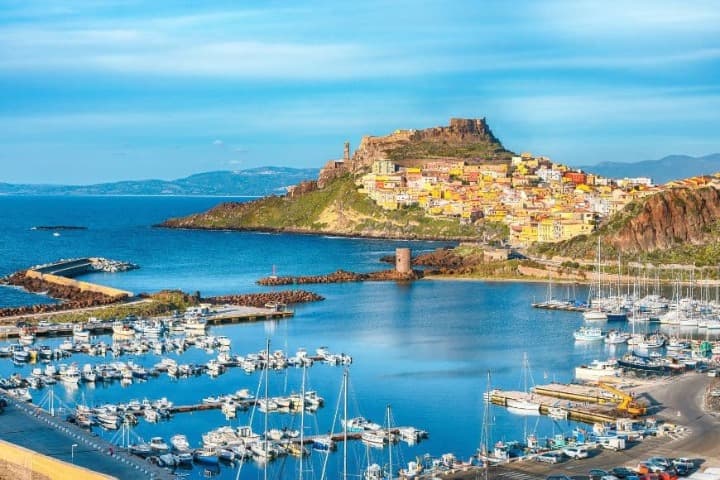
20. Castelsardo, Sardinia
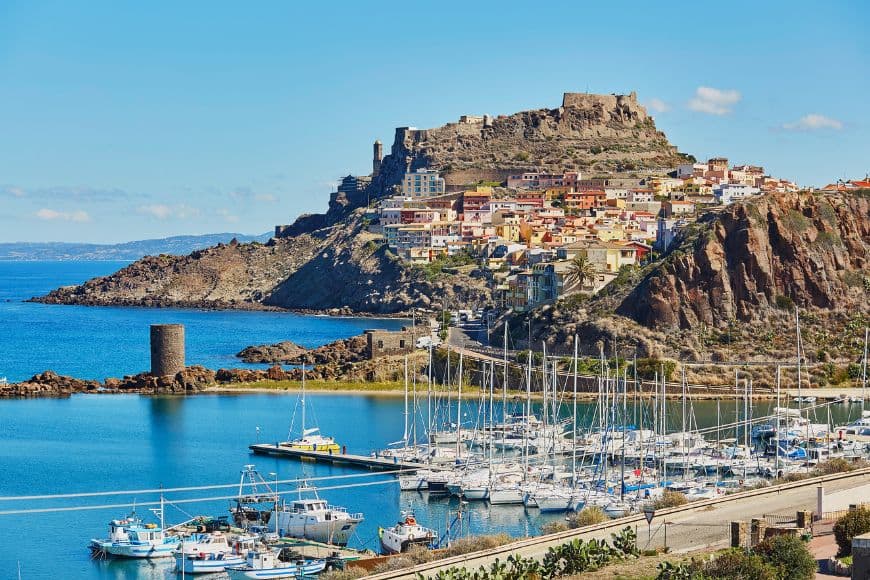
Our final stop takes us to northern Sardinia. Castelsardo rises above the coast around a medieval fortress, with colorful houses spreading down the hillside toward the sea. From a distance, the town almost seems stacked on top of itself. Once inside the historic center, narrow lanes and stairways climb toward the castle, opening occasionally onto viewpoints across the coastline and the Gulf of Asinara.
It’s considerably less about major attractions than some of the towns we’ve covered. The pleasure is in exploring the old streets, stopping at the viewpoints and enjoying the contrast between the medieval center and the surrounding Mediterranean landscape.
Castelsardo works particularly well as part of a Sardinia road trip. Public transport exists, but this is one of those destinations where having your own car makes combining the town with beaches and other parts of northern Sardinia considerably easier. I wouldn’t travel all the way to Sardinia just to see Castelsardo. But if you’re already exploring the island, it’s exactly the kind of place I’d happily build into the route.
Best for: Medieval atmosphere, coastal scenery and road trips
How long: Half a day to 1 night
Pair it with: Northern Sardinia, Alghero and the Gulf of Asinara
Car needed: Recommended
How to Choose Which Small Towns to Visit in Italy
With 20 tempting options, the difficult part isn’t finding a beautiful town—it’s deciding which ones actually belong in your itinerary. I wouldn’t choose purely from photographs. Start with the major destinations already on your route, then add small towns that fit naturally around them. If you’re visiting Florence and Siena, Pienza or San Gimignano makes sense. If you’re staying in Milan, Varenna and Bellagio are much easier additions than trying to squeeze in a town hundreds of kilometers south.
Here’s how I’d narrow the list down.
For Your First Trip to Italy
If Rome, Florence, Venice, or Milan are already taking up much of your itinerary, keep the number of smaller stops under control. For a first trip, I’d prioritize towns that add something different without creating difficult transportation days.
Good choices include:
- Varenna or Bellagio from Milan
- San Gimignano from Florence or Siena
- Orvieto between Florence and Rome
- Ravello or Atrani if you’re visiting the Amalfi Coast
- Cefalù if Sicily is part of the trip
One or two well-placed towns can add much more to a first Italy itinerary than five rushed detours.
For an Italy Road Trip
This is where the possibilities really open up. Having a car allows you to connect hill towns in Italy that can be frustrating to combine by public transport, particularly through Tuscany and Puglia.
I’d especially consider:
Pienza → Montepulciano → Val d’Orcia
Alberobello → Locorotondo → Ostuni
Sirmione → Malcesine → Lake Garda
Ortisei → Dolomites
These aren’t just collections of attractive towns. The roads and landscapes between them become part of the trip. That said, having a car doesn’t mean you should add twice as many destinations. It simply gives you more freedom to choose the ones you genuinely want to see.
If a road trip is part of your plans, you may also find our Italy Road Trip Itineraries useful for building the overall route, while the Best Scenic Drives in Italy can help you connect smaller towns through some of the country’s most beautiful landscapes. Before picking up the rental car, our Driving in Italy guide covers the practical side, including ZTLs, toll roads, parking, and driving rules.


If You’re Traveling Italy Without a Car
You still have plenty of options. Some of the best small towns in Italy without a car are actually easier to visit by train or ferry than by driving and dealing with parking. Varenna is connected to Milan by train, while ferries make Bellagio easy to reach once you’re on Lake Como. Orvieto has rail connections with Rome and Florence, and Cefalù works particularly well by train from Palermo.
Taormina and Assisi are also possible using public transport, although you’ll need to account for the connection between their railway stations and elevated historic centers. For a car-free trip, I’d choose fewer towns with straightforward connections rather than building an itinerary around complicated combinations of regional buses.
For Food and Wine
Tuscany and Puglia immediately stand out. Montepulciano is an obvious choice for wine, while Pienza is closely associated with pecorino and the food traditions of the Val d’Orcia.
In Puglia, combining Alberobello, Locorotondo and Ostuni gives you plenty of opportunities to explore regional dishes alongside the towns themselves. And this is one situation where I’d deliberately leave space in the itinerary. A long lunch in a small Italian town is considerably more enjoyable when you don’t have another three towns scheduled before sunset.
For Couples
You could make a very long list of romantic Italian small towns, but I’d narrow it to places where the setting really contributes to the experience. Varenna and Bellagio have Lake Como; Pienza and Montepulciano overlook the Tuscan countryside, while Ravello gives you those extraordinary elevated views over the Amalfi Coast.
For something more relaxed, staying overnight rather than visiting on a day trip can make an even bigger difference. Many popular towns become noticeably quieter once the daytime crowds leave.
For Beaches and Coastal Scenery
Look south—or toward the islands. Cefalù gives you perhaps the easiest combination of historic streets and an actual beach, while Taormina pairs its hilltop center with the coastline around Isola Bella. On the mainland, Atrani offers a tiny Amalfi Coast setting, while Ravello gives you coastal views from high above the sea.
If the beach itself is your priority, though, don’t choose a town simply because it overlooks beautiful water. A spectacular coastal view and an excellent swimming destination aren’t always the same thing.
Choose small towns based on the route you’re already taking, not the other way around. Italy is much more enjoyable when a beautiful town becomes a natural stop along the journey rather than a three-hour detour you added because of one photograph.
For more info, read our guide to the best beaches in Italy.
Best Small Towns in Italy by Region
If you’re building an itinerary around a particular part of the country, choosing towns by region is much easier than starting with a list of places scattered across Italy.
Here’s a quick overview of where our 20 towns fit:
| Region / Area | Small Towns to Consider |
|---|---|
| Lake Como | Varenna, Bellagio |
| Lake Garda | Sirmione, Malcesine |
| Dolomites | Ortisei |
| Tuscany | San Gimignano, Pienza, Montepulciano, Cortona |
| Umbria | Orvieto, Assisi |
| Puglia | Alberobello, Locorotondo, Ostuni |
| Basilicata | Matera |
| Amalfi Coast | Ravello, Atrani |
| Sicily | Cefalù, Taormina |
| Sardinia | Castelsardo |
This is also how I’d approach a longer trip. Rather than choosing four beautiful small towns in Italy from four different corners of the country, concentrate on one or two regions and make the journey between them part of the experience.
Tuscany is particularly good for this. San Gimignano works naturally with Florence and Siena, while Pienza and Montepulciano can be combined through the Val d’Orcia.
Puglia offers another excellent cluster with Alberobello, Locorotondo and Ostuni relatively close together. Around the lakes, Varenna and Bellagio pair naturally on Lake Como, while Sirmione and Malcesine can become part of a wider Lake Garda itinerary.
The important thing is geography. Varenna, Pienza and Alberobello may all belong on your Italy wish list, but that doesn’t mean they belong on the same one-week trip.
Travelandoo Tip: Once you’ve chosen your main region, look for two or three smaller towns that fit between destinations you’re already visiting. That’s usually much more rewarding than crossing Italy simply to collect famous names.
Plan Your Trip with Our Favorite Travel Resources
Compare tours, transportation, hotels, car rentals, travel insurance, eSIMs, and practical travel resources used by travelers around the world.
Day trips, experiences & tickets
Road trips & flexible travel
Hotels, apartments & stays
Compare transport routes
Day trips, experiences & tickets
Gear, luggage & road trip tools
Plan Your Trip with Our Favorite Travel Resources
Compare tours, transportation, hotels, car rentals, travel insurance, eSIMs, and practical travel resources used by travelers around the world.
How Many Small Towns Should You Add to an Italy Itinerary?
This is where it's very easy to get carried away. Once you start researching Italy, suddenly every medieval hill town, lakeside village, and coastal settlement looks like somewhere you absolutely cannot miss. The result can be an itinerary with far too many hotel changes and not nearly enough time to enjoy any of them.
For most trips, I'd use this as a rough guide:
| Trip Length | Small Towns to Include |
|---|---|
| 7 days | 1–2 |
| 10 days | 2–3 |
| 14 days | 3–5 |
| 3 weeks | 5–7, depending on your route |
These aren't strict limits. What matters more is where the towns are located. A 10-day Tuscany trip could comfortably include San Gimignano, Pienza and Montepulciano because they fit naturally into the same region. Trying to combine Bellagio, Pienza and Alberobello in the same 10 days would create a completely different amount of travel.
I'd also distinguish between a day-trip town and an overnight stop. Places such as Locorotondo or Atrani may only require a few hours, while Ortisei, Matera, or Taormina deserve considerably more time. For a first trip to Italy, I'd keep the major destinations as the backbone of the itinerary and use smaller towns to connect them or add contrast.
Rome → Orvieto → Florence makes sense.
Florence → San Gimignano → Siena makes sense.
Alberobello → Locorotondo → Ostuni makes sense.
Crossing half the country because three towns happened to appear on the same “must-see” list usually doesn't. When deciding whether to add another town, look at the extra travel time rather than the distance on the map. If adding a three-hour visit creates six hours of transportation, another hotel change, and an early-morning departure, I'd probably save it for the next trip.
Best Time to Visit Small Towns in Italy
For most travelers, spring and early autumn offer the best balance of pleasant weather and manageable crowds.
- Spring (April–May) is excellent for Tuscany, Umbria, Puglia and the Italian lakes, with comfortable temperatures for walking and road trips.
- Summer (June–August) works particularly well for the Dolomites and coastal towns, but famous places such as Bellagio, San Gimignano and Taormina can become very busy.
- Autumn (September–October) is one of my favorite periods, especially for Tuscany and other food-and-wine regions. Temperatures are generally comfortable, and the summer crowds begin to ease.
- Winter can bring quieter streets and lower accommodation prices, but some smaller destinations have reduced opening hours, ferry services, or seasonal businesses.
Small Towns in Italy FAQs
What are the best small towns in Italy to visit?
Some excellent choices include Varenna and Bellagio on Lake Como, San Gimignano and Pienza in Tuscany, Alberobello and Ostuni in Puglia, Ravello on the Amalfi Coast, and Cefalù in Sicily. The best choice depends on the regions already included in your itinerary.
What is the most beautiful small town in Italy?
There isn't one answer. Varenna stands out for lake scenery, Pienza for Tuscan countryside, Ravello for Amalfi Coast views, and Cefalù if you want a historic town combined with the sea.
Which small towns in Italy are easy to reach by train?
Varenna, Orvieto, and Cefalù are among the easiest options. Bellagio is also convenient without a car by combining train travel with Lake Como's ferry network.
What are the best small towns near Rome?
Orvieto is one of the easiest additions to a Rome itinerary, particularly if you're continuing north toward Florence. Several towns in Lazio and Umbria can also work as day trips or overnight stops.
What are the best small towns near Florence?
San Gimignano is a classic choice, while Cortona, Pienza, and Montepulciano are excellent if you're exploring more of Tuscany. A car becomes particularly useful once you head into the Val d'Orcia.
Continue Planning Your Italy Trip
Italy’s smaller towns work best when they fit naturally into a wider itinerary. If you're still putting your route together, these Travelandoo guides can help with the next steps:
- Complete Italy Travel Guide — Start here for the essentials before planning your route.
- Driving in Italy Guide— Practical advice on rental cars, ZTLs, toll roads, and driving rules.
- Getting Around Italy — Compare trains, buses, ferries, and rental cars.
- Italy Trip Planner — Put your destinations together into a practical itinerary.
Final Thoughts
Rome, Florence, Venice, and Milan deserve their place on an Italy itinerary, but they only show you one side of the country. Adding a few smaller towns brings something different: slower days, countryside, lake views, medieval streets and places where simply wandering around can be the main reason to visit.
The key is not trying to see as many as possible. Choose towns that fit naturally into your route and give yourself enough time to actually enjoy them. Whether that's Varenna between days in Milan, Pienza on a Tuscany road trip, or Cefalù while exploring Sicily, sometimes the smallest stop becomes one of the parts of Italy you remember most.
About Asia A.
Explore More
- Is Orvieto Worth Visiting? 7 Reasons to Visit
- Is Bergamo Worth Visiting? An Honest Traveler’s Opinion
- Where to Stay in Bergamo: Best Areas & Hotels for Every Traveler
- 15 Best Things to Do in Bergamo: Top Attractions & Hidden Gems


Book Your Tour
Rent Car

💬 We’d love to hear from you!
Have questions, tips, or personal travel stories to share? Drop them in the comments below — your insights help fellow travelers plan their adventures too.