Best Day Trips from Split, Croatia: Islands, Waterfalls & Historic Towns

by Asia A. | Last Updated October 25, 2026
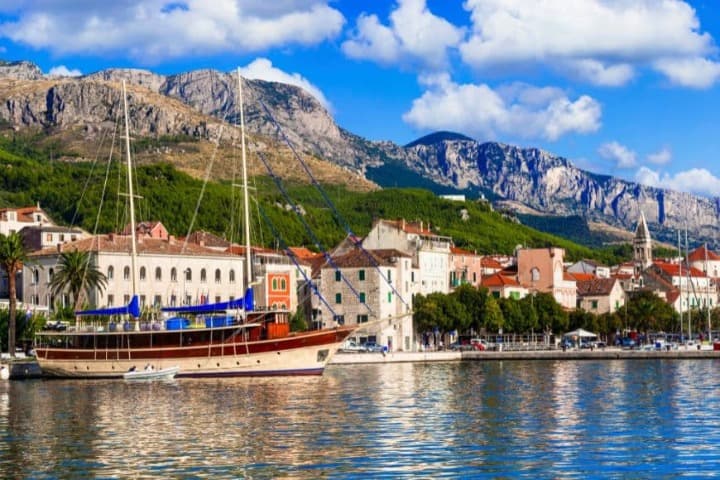
Split is one of those Croatian cities where you could happily spend several days exploring ancient streets, enjoying the waterfront, and relaxing by the Adriatic Sea. But what makes it even more appealing is how many incredible places you can discover just beyond the city.
From the beautiful waterfalls of Krka National Park and the medieval streets of Trogir to the turquoise waters of Hvar and Brač, some of the best day trips from Split offer a completely different experience without requiring you to change accommodation.
What I particularly like about using Split as a base is the variety. One day, you could be wandering through a UNESCO-listed historic town, and the next, exploring a spectacular national park or enjoying a boat trip between Croatian islands. Whether you’re interested in history, nature, beaches, or outdoor adventures, there’s something worth adding to your itinerary.
Of course, not every destination is equally easy to reach. Some places are just a short bus ride away, while others require a ferry, rental car, or organized excursion. Ferry schedules and seasonal connections can also make a difference, especially when planning island day trips.
In this guide, I’ll share 12 of my favorite day trips from Split, including what makes each destination special, how to get there, and practical tips to help you choose the right excursions for your Croatia itinerary.
If you’re planning a longer holiday, our Full Croatia Travel Guide covers the country’s main destinations, transportation options, and practical tips to help you organize your trip.
Planning Your Split Day Trips at the Last Minute
Planning your day trips from Split at the last minute? Whether you’re heading to the Croatian islands, exploring historic coastal towns, or visiting beautiful national parks, these useful resources can help you organize your excursions.
- 🚢 Ferries & Transport: Compare available routes and tickets with Omio, and check local ferry operators for island connections.
- 🎟️ Tours & Activities: Find guided excursions, island-hopping boat trips, and national park tours on Viator.
- 🚗 Car Rentals: Compare rental cars through DiscoverCars if you’re planning to explore Krka National Park, the Dalmatian coast, or several destinations in one day.
- 🏨 Accommodation: Find convenient places to stay in Split through Booking.com or Hotels.com.
My tip: If you’re planning to visit Hvar, Brač, Vis, or the Blue Cave, check ferry schedules and boat tour availability before finalizing your itinerary. Some routes operate less frequently outside summer, while excursions can be affected by weather and sea conditions.
Quick Comparison: Best Day Trips from Split
Before choosing your excursions, I recommend comparing travel times, transportation options, and how much time each destination deserves. Some of the best places to visit near Split are easily accessible by bus, while island destinations require more careful planning around ferry schedules and boat departures.
This quick comparison will help you decide which trips fit your itinerary, whether you’re looking for a relaxed half-day excursion or a full-day adventure.
| Destination | Travel Time (One Way) | Best Transport | Time Needed |
|---|---|---|---|
| Trogir | 30–60 minutes | Bus or car | Half day |
| Krka National Park | 1–1.5 hours | Car or guided tour | Full day |
| Hvar Town | 1–1.5 hours | Passenger catamaran | Full day |
| Brač Island | 50–60 minutes to Supetar | Ferry | Full day |
| Omiš | 30–45 minutes | Bus or car | Half to full day |
| Šibenik | 1–1.5 hours | Bus or car | Half to full day |
| Blue Cave (Biševo) | 1.5–2.5+ hours by boat | Organized boat tour | Full day |
| Solin (Salona) | 15–30 minutes | Bus or car | Half day |
| Klis Fortress | 20–40 minutes | Bus or car | Half day |
| Makarska | 1–1.5 hours | Bus or car | Full day |
| Primošten | 1–1.5 hours | Bus or car | Half to full day |
| Vis Island | 1.5–2.5 hours | Ferry or catamaran | Full day |
ravel times are approximate and depend on traffic, ferry routes, seasonal schedules, and departure points. Island travel times refer to the relevant arrival port, not necessarily the final attraction. The Blue Cave requires an additional boat transfer, and access depends on sea conditions.
My recommendation: For easy independent excursions, I’d prioritize Trogir, Omiš, and Šibenik. If you prefer nature, Krka National Park is an excellent full-day option. For island experiences, Hvar and Brač are particularly appealing, but I’d check the return ferry schedule before booking anything else.
1. Trogir – A Beautiful UNESCO-Listed Medieval Town
Best for: Medieval architecture, historic streets, waterfront views, and relaxed sightseeing
Time needed: Half day (3–5 hours)
If you’re looking for one of the easiest and most rewarding day trips from Split, Trogir is an excellent place to start. Located just west of Split, this beautiful coastal town offers a wonderful combination of medieval architecture, narrow stone streets, and a picturesque waterfront. It’s particularly appealing if you want to experience another side of Dalmatia without spending hours traveling.
What I find most interesting about Trogir is its remarkably preserved historic center, which sits on a small island connected to the mainland by bridges. The entire old town is recognized as a UNESCO World Heritage Site, and wandering through its maze of cobbled streets feels like discovering a little piece of history around every corner.
Among the main attractions is the magnificent Cathedral of St. Lawrence, famous for its Romanesque architecture and impressive Radovan’s Portal. I’d also recommend visiting Kamerlengo Fortress, strolling along the waterfront promenade, and exploring the charming squares surrounded by Venetian-style buildings. One of the nicest things about Trogir is that you don’t need a strict sightseeing itinerary to appreciate its atmosphere.
Unlike some of the more demanding excursions along the Dalmatian coast, Trogir is compact enough to explore comfortably on foot. You can spend the morning discovering its historic landmarks, stop for lunch at a waterfront restaurant, and still have plenty of time to return to Split. For travelers interested in historic towns near Split, it’s one of the most convenient options.
How to Get to Trogir from Split
- By bus: Regular bus services connect Split and Trogir, generally taking around 40–60 minutes depending on the route and traffic. Some local services make additional stops along the coast.
- By car: Approximately 30–45 minutes via the coastal road, although traffic can increase considerably during summer. Parking is available outside the historic center.
- By boat: Seasonal passenger boat services may operate between Split and Trogir. Check current routes and schedules before relying on this option.
- Best option: Bus for convenience and affordability. A rental car is useful if you’re combining Trogir with other destinations.
I’d recommend visiting Trogir in the morning or later in the afternoon, particularly during July and August when the historic center can become crowded. If you have extra time, you could combine your visit with nearby Čiovo Island for beaches and coastal scenery.
For me, Trogir is one of the best places to visit near Split because it delivers beautiful architecture, fascinating history, and a relaxed Mediterranean atmosphere without requiring a complicated journey. It’s an ideal choice if you want a memorable Croatian day trip while keeping your itinerary flexible.
2. Krka National Park – Spectacular Waterfalls and Natural Beauty
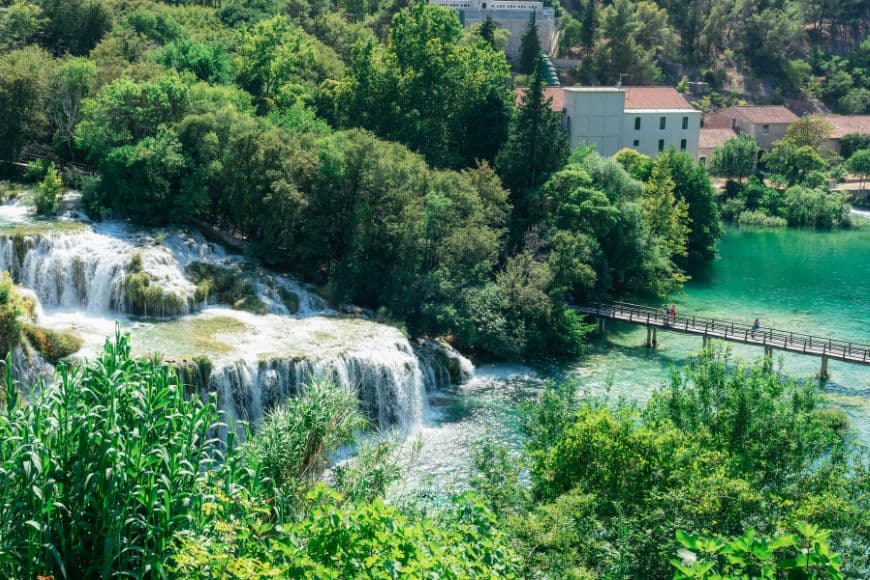
Best for: Waterfalls, nature, scenic walking trails, and photography
Time needed: Full day (5–7 hours, including travel)
If you’re looking for day trips from Split that take you away from the busy coastal towns and into Croatia’s beautiful natural landscapes, Krka National Park should be high on your list. Located inland near Šibenik, this remarkable national park is famous for its cascading waterfalls, lush greenery, and peaceful walking trails along the Krka River.
What I find particularly appealing about Krka is how different the experience feels from exploring Split’s historic streets or relaxing on the Adriatic coast. Instead of medieval buildings and busy waterfront promenades, you’ll discover wooden boardwalks winding through forests, flowing streams, and impressive waterfalls surrounded by vegetation.
The park’s most famous attraction is Skradinski Buk, a spectacular series of waterfalls and natural pools connected by wooden walkways and viewing platforms. It’s one of the most photographed natural landmarks in Croatia, and I’d recommend allowing enough time to enjoy the scenery rather than rushing through the walking circuit.
Another interesting area is Roški Slap, known for its smaller cascades and picturesque surroundings. You can also discover Visovac Island, home to a historic Franciscan monastery set in the middle of the river. However, these attractions are spread across different parts of the park, so visiting everything in one day requires careful planning.
For travelers interested in nature excursions from Split, Krka offers an excellent combination of accessible walking trails, beautiful landscapes, and opportunities to learn about Croatia’s natural heritage. Keep in mind that swimming is not permitted at Skradinski Buk, so I’d approach this trip as a sightseeing and hiking experience rather than a swimming excursion.
How to Get to Krka National Park from Split
- By car: Approximately 1–1.5 hours to the Lozovac or Skradin entrance, depending on traffic. Driving gives you flexibility over your arrival time and the areas you want to explore.
- By bus: Take a bus from Split toward Skradin, where available, and continue to the park entrance. Services and connections vary by season, so check schedules in advance.
- By organized tour: Guided excursions from Split are a convenient option if you’d rather avoid arranging transportation yourself. Some tours also include additional stops in Šibenik or nearby coastal towns.
- Best option: Rental car for flexibility or an organized tour for a straightforward day trip.
My tip: I’d recommend arriving early, particularly between June and September when Krka National Park attracts large numbers of visitors. Book your entrance tickets in advance when possible, bring comfortable walking shoes, and carry water during the warmer months. Also, check which park entrance your ticket or tour uses, as transportation arrangements can differ.
If you’re planning several day trips from Split, Croatia, I’d make Krka your main nature-focused excursion and save the islands for another day. Trying to combine too many attractions can turn a beautiful experience into a rushed itinerary.
Krka isn’t Croatia’s only spectacular waterfall destination. If your itinerary also includes Plitvice Lakes, our guide to driving from Plitvice to Split can help you plan that part of your journey.
3. Hvar Town – Beautiful Island Scenery and Historic Charm
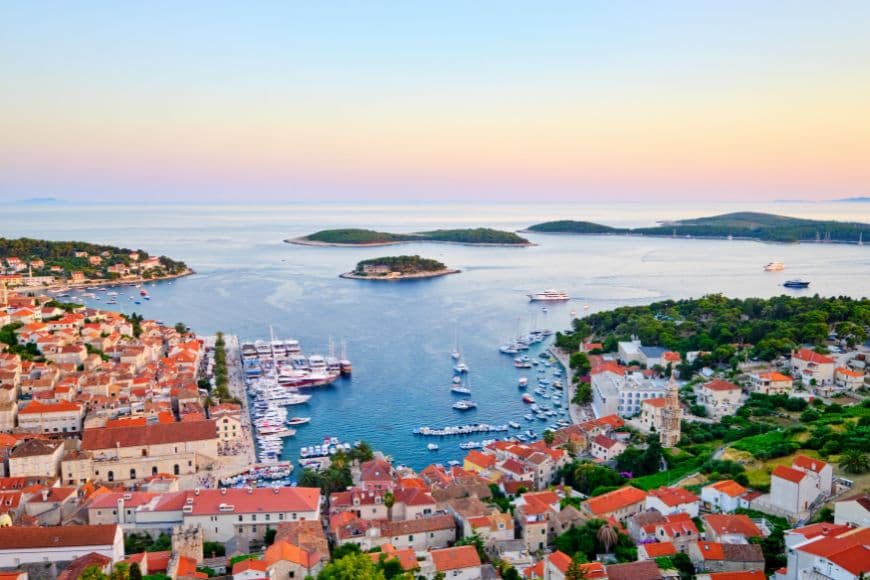
Best for: Island atmosphere, historic architecture, waterfront views, and Mediterranean scenery
Time needed: Full day (6–8 hours, including ferry travel)
Among the best day trips from Split, Hvar Town stands out for its beautiful harbor, elegant Venetian architecture, and lively Mediterranean atmosphere. Located on the western side of Hvar Island, it’s one of Croatia’s most recognizable coastal destinations and an excellent choice if you want to experience island life without changing accommodation.
Although Hvar has a reputation for luxury yachts and nightlife, there’s much more to discover beyond its fashionable waterfront. The historic center is filled with narrow stone streets, attractive squares, and centuries-old buildings that reflect the island’s rich maritime history. I’d recommend spending some time exploring these quieter corners before heading toward the harbor.
One of the town’s highlights is St. Stephen’s Square, an impressive open space surrounded by historic buildings, cafés, and the beautiful Cathedral of St. Stephen. Nearby, the picturesque waterfront promenade offers lovely views of fishing boats, sailing yachts, and the surrounding Adriatic coastline.
For an even better perspective, consider walking up to Fortica Fortress, also known as the Spanish Fortress. The climb takes some effort, particularly during summer, but the panoramic views over Hvar Town, its harbor, and the nearby Pakleni Islands are well worth it.
If you’d prefer a more relaxing afternoon, you could visit one of the beaches within walking distance of town or take a short boat excursion toward the Pakleni Islands. These small islands are known for their clear waters, sheltered bays, and attractive swimming spots. However, I’d avoid trying to fit too many activities into a single visit, especially if your return ferry departs in the late afternoon.
Hvar is particularly appealing for travelers searching for island day trips from Split because it combines cultural sightseeing with beautiful coastal scenery. You can enjoy the atmosphere of a historic Dalmatian town while still leaving time for a swim, a leisurely lunch, or simply relaxing beside the sea.
How to Get to Hvar Town from Split
- By passenger catamaran: Direct services connect Split with Hvar Town, typically taking around 1–1.5 hours, depending on the operator and route. Frequencies vary throughout the year, with more departures generally available during the warmer months.
- By car ferry: Vehicle ferries operate between Split and Stari Grad on Hvar Island. From there, Hvar Town is approximately 20–25 minutes away by road. This is less convenient for a simple day trip unless you’re planning to explore other parts of the island.
- By organized boat tour: Some excursions from Split include Hvar Town alongside other islands or swimming stops. Check how much free time is actually allocated to Hvar before booking.
- Best option: A direct passenger catamaran for independent travelers who want to explore Hvar Town.
Book your outbound and return catamaran tickets together, particularly during July and August. Not every departure operates daily or year-round, and the last suitable return service may leave earlier than expected. I’d also recommend arriving at the port ahead of departure and checking the operator’s latest schedule.
Is Hvar Worth Visiting on a Day Trip?
Absolutely, especially if you’re interested in beautiful coastal towns, historic architecture, and a taste of Croatia’s island atmosphere. A day trip gives you enough time to explore Hvar Town, visit the fortress, and enjoy the waterfront without feeling overly rushed, provided your ferry connections allow a reasonable stay.
However, if your plans include exploring Hvar’s vineyards, smaller villages, secluded beaches, or the eastern part of the island, I’d recommend staying overnight instead. Hvar is much larger than its famous harbor town, and a single day barely scratches the surface.
For a first visit, though, Hvar from Split is one of the most rewarding island excursions along the Dalmatian coast, combining beautiful scenery, cultural attractions, and the pleasure of spending a day surrounded by the Adriatic Sea.
4. Brač Island – Beautiful Beaches and Authentic Dalmatian Villages
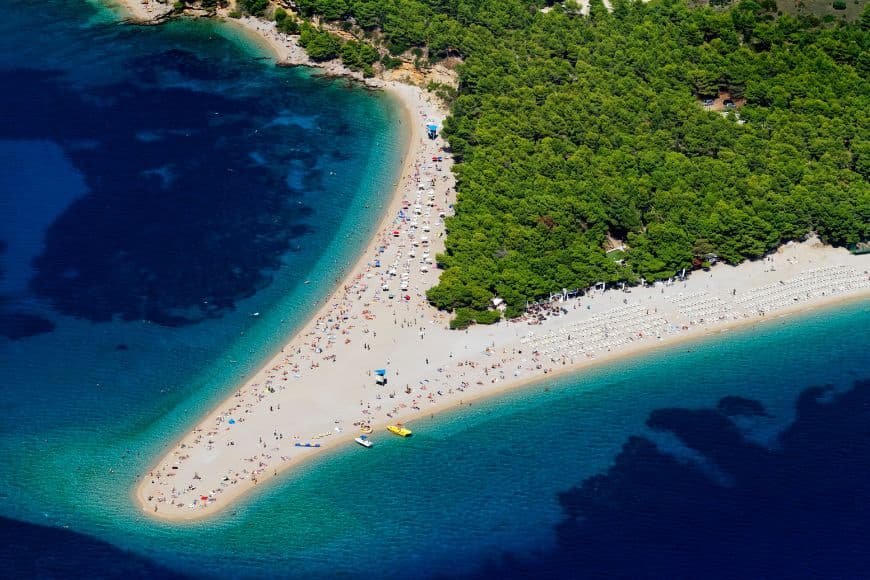
Best for: Beaches, swimming, island villages, coastal scenery, and outdoor activities
Time needed: Full day (6–8 hours, including ferry travel)
If you’re dreaming of turquoise waters, picturesque fishing villages, and a relaxing escape from the city, Brač Island is one of the most appealing day trips from Split. Located just across the Adriatic Sea, Brač offers a wonderful combination of beautiful beaches, traditional Dalmatian towns, and landscapes that feel surprisingly different from the busy streets of Split.
Unlike Hvar, which attracts plenty of attention for its glamorous harbor and lively atmosphere, Brač has a more varied character. You’ll find peaceful coastal villages, olive groves, stone houses, and attractive beaches scattered around the island. It’s the kind of destination where I’d recommend choosing one or two places to explore rather than trying to see everything in a single day.
The island’s most famous attraction is definitely Zlatni Rat Beach, near the town of Bol. Often called the Golden Horn, this distinctive pebble beach stretches into the Adriatic Sea, with its shape subtly changing depending on currents, waves, and wind. Surrounded by clear water and backed by pine trees, it’s one of Croatia’s most recognizable coastal landmarks.
However, Zlatni Rat isn’t the only reason to visit Brač. Supetar, the island’s main ferry port, has a charming waterfront, traditional stone buildings, and several nearby beaches. It’s an excellent choice if you want a straightforward island excursion without spending too much time arranging transportation.
For a quieter experience, I’d also consider Pučišća, a beautiful village known for its white limestone buildings and traditional stone-carving heritage. The sheltered harbor, attractive waterfront, and surrounding hills make it particularly appealing for travelers who enjoy discovering smaller Croatian towns.
If you prefer outdoor adventures, Brač also offers hiking opportunities, including Vidova Gora, the highest peak among the Adriatic islands. Its viewpoints provide spectacular panoramas over the southern coast and Zlatni Rat, although reaching the summit and exploring the island’s interior requires additional planning.
For travelers interested in island day trips from Split, Brač is a particularly versatile destination. You can spend the day swimming, explore a charming coastal town, or venture inland to discover a quieter side of Croatia.
If you’re considering taking a rental car onto Brač or another island, our guide to exploring Croatian islands by car ferry explains the practical considerations before you travel.
How to Get to Brač Island from Split
- By ferry to Supetar: Regular car ferries connect Split with Supetar, usually taking around 50 minutes. This is one of the most practical options for an independent day trip, particularly if you’re planning to stay around Supetar.
- By passenger catamaran to Bol: Direct passenger services to Bol may be available depending on the season and operator. These are convenient for visiting Zlatni Rat, but schedules should be checked carefully.
- By car: You can take a vehicle aboard the Split–Supetar ferry and explore different parts of Brač. Keep in mind that driving from Supetar to Bol takes approximately 40–50 minutes, depending on traffic.
- By organized boat tour: Some excursions from Split include Brač’s beaches and swimming spots, occasionally combining the island with other destinations.
- Best option: Ferry to Supetar for a relaxed independent visit, or a suitable passenger catamaran or organized excursion if Zlatni Rat is your main priority.
Before booking your ferry, decide which part of Brač you actually want to visit. Supetar and Bol are on different sides of the island, and arriving in Supetar doesn’t mean you’ll be immediately close to Zlatni Rat. If your goal is a beach day, I’d prioritize a direct connection to Bol when available or arrange onward transportation in advance.
Is Brač or Hvar Better for a Day Trip from Split?
Both islands are worth visiting, but they offer slightly different experiences. I’d choose Hvar if you’re more interested in historic architecture, a beautiful harbor, lively waterfront cafés, and panoramic viewpoints. Hvar Town is particularly enjoyable for sightseeing, and a direct passenger catamaran makes it relatively convenient to explore on foot.
On the other hand, Brač would be my choice for a more relaxed beach-focused excursion. Zlatni Rat is a major attraction, while Supetar and the island’s smaller villages offer opportunities to experience a quieter side of Dalmatian life.
5. Omiš – Adventure, Beaches, and the Beautiful Cetina Canyon
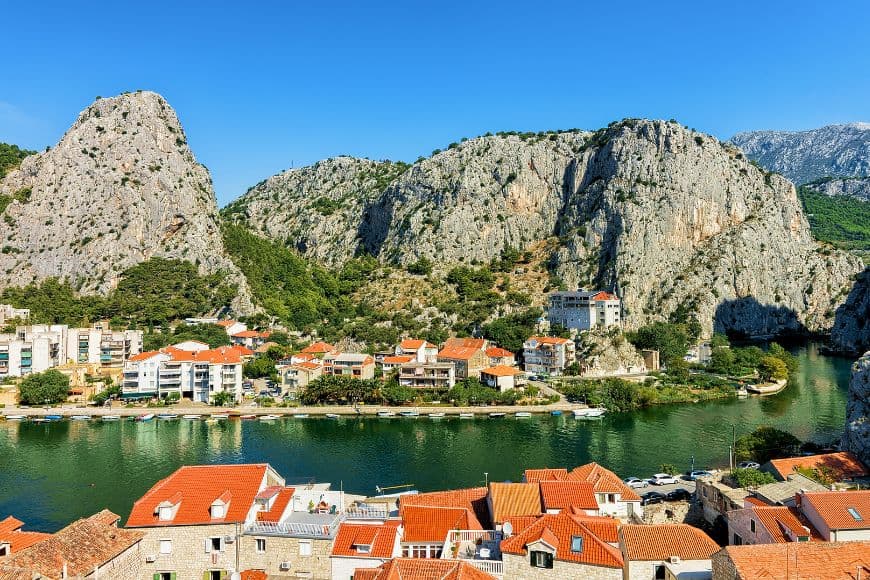
Best for: Outdoor adventures, river rafting, beaches, and mountain scenery
Time needed: Half to full day (4–7 hours)
Just south of Split, where the Cetina River meets the Adriatic Sea, lies Omiš, a charming coastal town surrounded by dramatic limestone mountains. If you’re looking for something more adventurous than historic sightseeing or relaxing on an island, Omiš is one of the most exciting day trips from Split.
What makes Omiš particularly special is its setting. The old town sits between towering cliffs, while the emerald-green Cetina River winds through a spectacular canyon before reaching the sea. It’s a destination where you can explore medieval streets in the morning, enjoy an outdoor adventure in the afternoon, and finish your visit with a swim at the beach.
One of the main attractions is Cetina River rafting, a popular activity that takes visitors through beautiful river scenery, gentle rapids, and forested stretches of the canyon. Guided kayaking and canyoning excursions are also available, although the difficulty and suitability vary depending on the activity and conditions.
If you’d rather stay on dry land, I recommend exploring Omiš Old Town, where narrow stone streets and historic buildings reveal the town’s fascinating past as a stronghold of medieval pirates. You can also climb toward Mirabella Fortress for impressive views over the rooftops, river mouth, and Adriatic coastline.
For more adventurous travelers, Fortica Fortress, also known as Starigrad Fortress, offers an even more spectacular panorama. However, reaching it involves a demanding uphill hike, so I’d only recommend attempting it with suitable footwear, enough water, and comfortable weather conditions.
Another reason Omiš deserves a place on your Croatia itinerary is its beaches. Unlike many of Dalmatia’s pebble beaches, the town has sandy stretches near the river mouth, making it particularly appealing for families and travelers looking for a relaxing afternoon.
How to Get to Omiš from Split
- By bus: Regular coastal bus services connect Split with Omiš, generally taking around 40–60 minutes, depending on traffic and the number of stops.
- By car: Approximately 30–45 minutes via the coastal road. During summer, congestion can significantly increase travel times.
- By organized tour: Rafting, canyoning, and kayaking excursions often include transportation or meeting-point arrangements. Check what’s included before booking.
- Best option: Bus for exploring the town and beaches; organized excursion for river activities.
If you’re planning a rafting or canyoning experience, book your activity first and organize the rest of your day around it. Tours may begin outside the town center, and reaching the starting point independently isn’t always straightforward.
For travelers searching for outdoor activities near Split, Omiš offers a refreshing alternative to the usual island excursions. I’d particularly recommend it if you enjoy combining beautiful landscapes with a little adventure rather than spending the entire day sightseeing.
6. Šibenik – Medieval Streets and Remarkable UNESCO Architecture
Best for: Historic architecture, cultural sightseeing, waterfront walks, and photography
Time needed: Half to full day (4–6 hours)
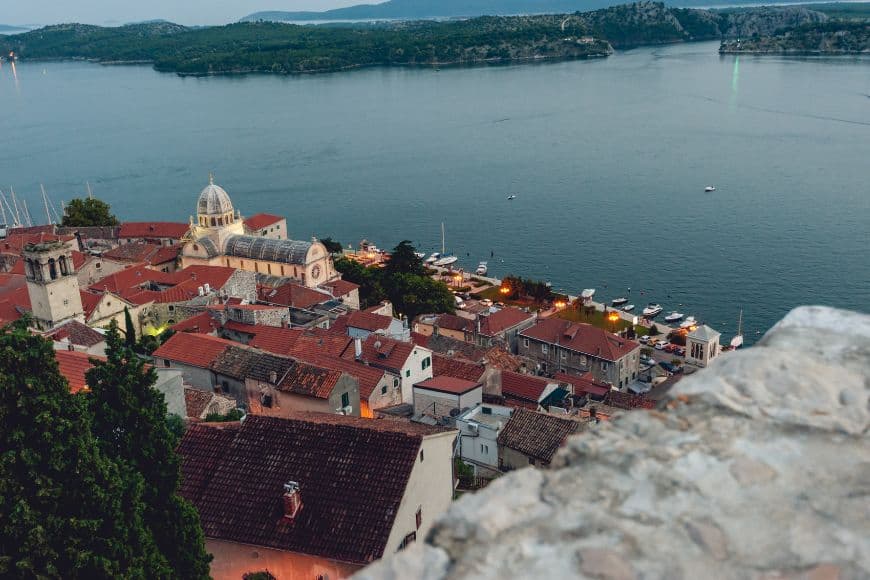
While Dubrovnik and Split attract much of the attention along Croatia’s Dalmatian coast, Šibenik offers an equally fascinating historical atmosphere on a smaller, more relaxed scale. Located north of Split, this beautiful coastal city is known for its stone buildings, winding medieval streets, and impressive fortifications overlooking the Adriatic.
I’d recommend Šibenik to travelers who enjoy discovering historic cities without feeling pressured to rush between major attractions. Its old town is compact enough to explore on foot, yet there’s plenty to see if you enjoy architecture, local history, and panoramic viewpoints.
The city’s most famous landmark is the magnificent Cathedral of St. James, a UNESCO World Heritage Site celebrated for its remarkable stone construction and distinctive Renaissance and Gothic features. The cathedral’s exterior is particularly impressive, with its unusual decorative details and sculpted human faces.
Beyond the cathedral, Šibenik’s historic center is filled with narrow stairways, atmospheric squares, and attractive stone buildings. Wandering through these streets is one of the nicest ways to experience the city, especially if you leave yourself time to stop at a café or explore the quieter corners away from the main waterfront.
For beautiful views, consider visiting St. Michael’s Fortress, which rises above the old town and offers sweeping panoramas across Šibenik, the harbor, and nearby islands. The city also has other historic fortifications, including St. John’s Fortress and the UNESCO-listed St. Nicholas Fortress, although visiting arrangements differ between sites.
One thing I particularly like about Šibenik is its location. It’s close enough to Krka National Park that travelers with a rental car can potentially combine both destinations, although I’d recommend prioritizing one main attraction rather than trying to fit everything into a rushed schedule.
For anyone interested in historic towns near Split, Šibenik is an excellent addition to a Dalmatian coast road trip, offering impressive architecture and a different perspective on Croatia’s coastal heritage.
How to Get to Šibenik from Split
- By bus: Intercity buses generally take around 1–1.5 hours, depending on the service and traffic. The bus station is conveniently located near the historic center.
- By car: Approximately 1–1.5 hours, depending on the route. Driving is useful if you want to combine Šibenik with Krka National Park or nearby coastal destinations.
- By organized tour: Some Krka excursions include a stop in Šibenik, although the time available for sightseeing may be limited.
- Best option: Bus for an independent city visit; car if you’re planning several stops.
My Tip: I’d begin with the Cathedral of St. James and explore the surrounding old town before climbing toward St. Michael’s Fortress. This gives you a wonderful introduction to Šibenik’s architecture, followed by panoramic views over the city.
If you’re choosing between several places to visit near Split, Šibenik is particularly rewarding for travelers who appreciate history and architecture but prefer a slower sightseeing experience.
7. Blue Cave (Biševo) – A Spectacular Adriatic Boat Excursion
Best for: Boat trips, natural wonders, island scenery, and photography
Time needed: Full day (approximately 9–12 hours, depending on the tour)
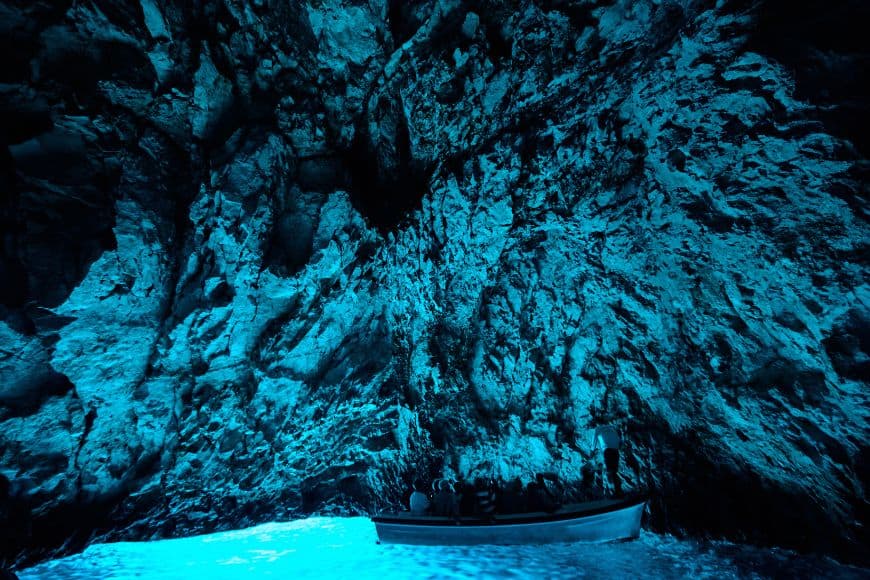
Few experiences along the Croatian coast are quite as unusual as visiting the Blue Cave on Biševo Island. Hidden inside a small rocky island southwest of Vis, this remarkable sea cave is famous for the brilliant blue light that illuminates its interior when sunlight enters through an underwater opening.
It’s one of the most popular boat trips from Split, particularly among travelers who want to discover the smaller islands and natural wonders of the Adriatic Sea.
What makes the cave so fascinating is the way sunlight interacts with the water. Under suitable conditions, reflected light creates an almost surreal blue glow inside the cavern, making the water appear luminous. The effect is especially impressive when the sun is positioned favorably, although visibility and intensity depend on the weather and sea conditions.
Unlike Hvar or Brač, which you can explore independently using regular ferries, the Blue Cave is generally visited as part of an organized speedboat excursion from Split. These tours often include additional destinations around Vis and the Pakleni Islands, sometimes with swimming stops and free time in coastal villages.
However, I wouldn’t choose this excursion solely for the cave itself. The visit inside is usually brief, and access is controlled using small authorized boats. The wider experience of traveling between beautiful Adriatic islands, discovering sheltered bays, and enjoying the coastal scenery is a major part of the attraction.
It’s also important to understand that this is a long day on the water. The journey from Split can involve extended speedboat travel across open sea, and rough conditions may make the trip uncomfortable or result in changes to the itinerary.
How to Get to the Blue Cave from Split
- By organized speedboat tour: The most practical option. Full-day excursions generally depart from Split and travel toward Biševo, often including Vis, Hvar, or other island stops.
- By independent travel: You can travel to Vis Island by ferry and arrange onward transport toward Biševo, but connections are more complicated and are generally better suited to travelers staying overnight on Vis.
- Cave entrance: Access is managed locally, with visitors transferring to authorized small boats when conditions permit. Check whether the entrance fee is included in your tour price.
- Best option: A reputable organized boat excursion with a clearly explained itinerary and cancellation policy.
I’d book a Blue Cave excursion early in your stay in Split rather than leaving it until your final day. That gives you more flexibility if rough seas or unfavorable weather force the operator to cancel or reschedule.
Before booking, I’d also check how much time the tour spends traveling versus sightseeing, whether swimming stops are included, and what happens if the cave itself is closed.
Is the Blue Cave Worth Visiting from Split?
I think it can be, particularly if you enjoy boat excursions and want to experience several Croatian islands in one day. The cave’s unusual blue illumination is memorable, and the surrounding Adriatic scenery adds considerably to the experience.
However, I’d hesitate to recommend it to travelers who dislike long speedboat journeys or prefer exploring destinations independently. If your main priority is spending time on an island, a direct ferry to Hvar or Brač may be a more comfortable choice.
Among the island excursions from Split, the Blue Cave is one of the most distinctive, but it’s also one of the most dependent on favorable weather.
8. Solin (Salona) – Discover the Ruins of an Ancient Roman City
Best for: Roman history, archaeology, ancient ruins, and quieter sightseeing
Time needed: Half day (2–4 hours)
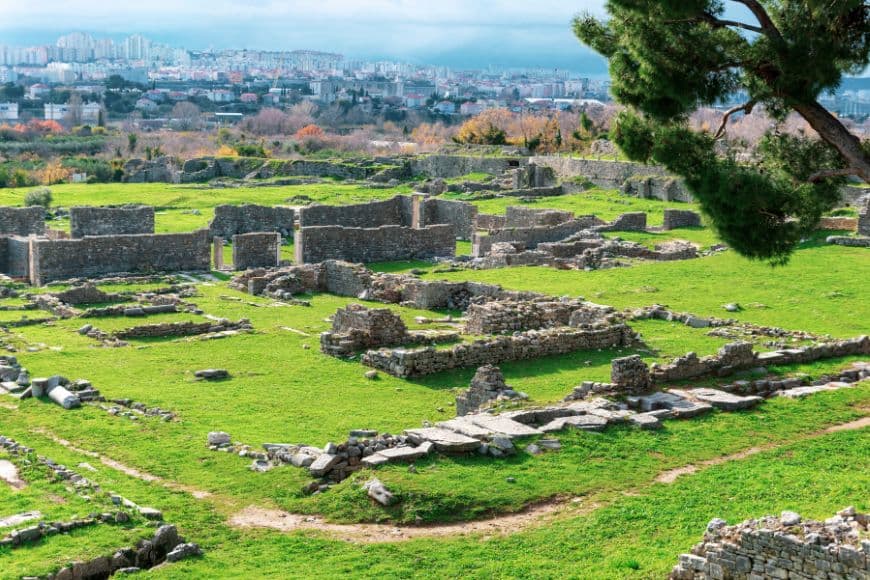
You don’t have to travel far from Split to discover one of Croatia’s most fascinating archaeological sites. Just a short distance inland lies Solin, home to the remains of ancient Salona, once the capital of the Roman province of Dalmatia.
For travelers interested in history, this is one of the most rewarding short trips from Split, offering a chance to explore impressive Roman ruins without committing to a full day of travel.
Salona was an important urban center during the Roman Empire, with public buildings, temples, baths, and an extensive network of streets. Today, its archaeological remains are spread across a large open-air site, providing a fascinating glimpse into the city’s former importance.
One of the most recognizable attractions is the Roman amphitheater, which once hosted public spectacles and could accommodate thousands of spectators. Although much of the structure has disappeared over the centuries, the surviving remains help illustrate the scale of the ancient settlement.
You’ll also find early Christian basilicas, burial areas, and other archaeological features that reveal how Salona developed from a Roman provincial capital into an important center of early Christianity.
What I find particularly interesting is the connection between Salona and Split itself. The Roman emperor Diocletian was associated with this region, and his famous palace in Split became an important refuge as Salona declined during late antiquity.
Visiting both locations gives you a broader understanding of the area’s Roman heritage. After exploring Diocletian’s Palace in Split, seeing the ruins of Salona helps put the city’s ancient history into a wider context.
Unlike some of Croatia’s more crowded attractions, Salona often offers a quieter sightseeing experience. However, the archaeological remains are exposed to the elements, so I’d recommend comfortable shoes, sun protection, and water during warmer months.
How to Get to Solin from Split
- By bus: Local buses connect Split with Solin, generally taking around 20–40 minutes depending on the route and traffic. Check the stop closest to the archaeological site, as not every service stops directly beside the ruins.
- By car: Approximately 15–25 minutes from central Split, depending on traffic. Driving makes it easier to reach different parts of the archaeological area.
- By taxi: A practical option if you’re short on time or prefer a direct journey to the entrance.
- Best option: Local bus for budget-conscious travelers; car or taxi for convenience.
I’d visit Salona in the morning, particularly during summer when the exposed archaeological site can become very hot. Allow enough time to explore the main ruins and read the information panels rather than treating it as a quick photo stop.
If you’re interested in Roman ruins near Split, Salona is a natural addition to your itinerary. It’s also easy to combine with nearby Klis Fortress if you have a car and want to enjoy both ancient history and spectacular views in a single day.
9. Klis Fortress – Spectacular Views and Medieval History
Best for: Medieval fortresses, panoramic views, photography, and history
Time needed: Half day (2–3 hours)
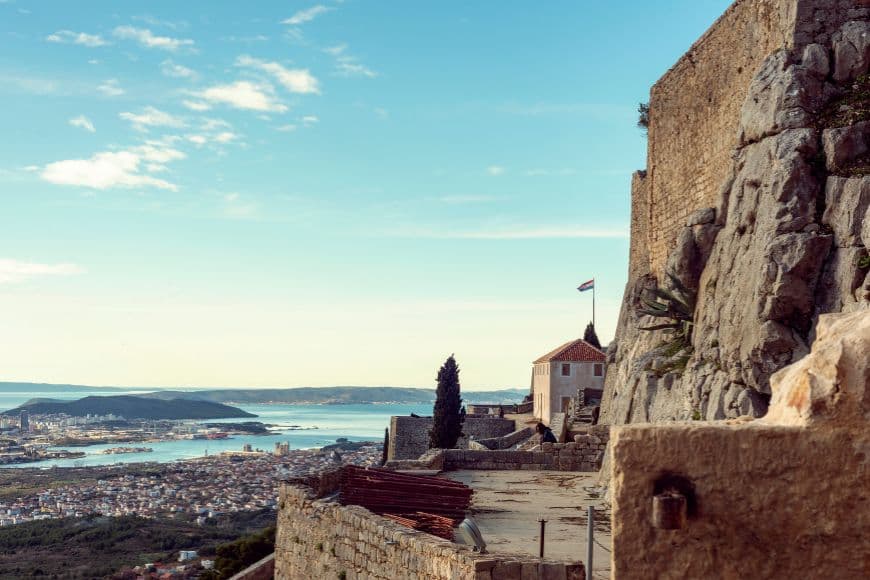
Perched high on a rocky ridge between the mountains of Kozjak and Mosor, Klis Fortress is one of the most impressive historical landmarks near Split. Its dramatic location immediately catches your attention, with ancient stone walls rising above the surrounding landscape and sweeping views stretching toward the Adriatic Sea.
What makes Klis particularly fascinating is its strategic importance. For centuries, the fortress controlled an important passage between the Dalmatian coast and the inland regions. It played a significant role in defending the area against invading armies, particularly during conflicts involving the Ottoman Empire.
Today, visitors can explore its fortified walls, stone passageways, defensive structures, and viewpoints overlooking Split and the nearby islands. I’d recommend allowing enough time to wander through the different levels of the fortress, as some of the best views appear when you least expect them.
Fans of Game of Thrones might also recognize Klis as one of the filming locations used to represent Meereen. However, even if you’ve never watched the series, the fortress is worth visiting for its history and extraordinary setting.
Unlike larger archaeological attractions, Klis doesn’t require an entire day. Its proximity to Split makes it an excellent choice for a short excursion, particularly if you want to combine cultural sightseeing with beautiful coastal scenery.
How to Get to Klis Fortress from Split
- By bus: Local bus services connect Split with the Klis area, although routes and stops vary. Check the closest stop to the fortress and allow time for an uphill walk.
- By car: Approximately 20–30 minutes, depending on traffic. Parking is available near the fortress.
- By taxi: A convenient option if you’re traveling with limited time or prefer to avoid arranging local bus connections.
- Best option: Car or taxi for convenience, especially if you’re combining Klis with another nearby attraction.
I’d visit Klis early in the morning or later in the afternoon during summer. Much of the fortress is exposed to the sun, and exploring the uneven stone paths can become uncomfortable during the hottest hours. Comfortable footwear is essential.
If you have a rental car, consider combining Klis Fortress with the ancient ruins of Salona. The two attractions complement each other beautifully, offering a fascinating look at different periods of Dalmatian history without requiring a long drive.
10. Makarska – Beautiful Beaches Beneath the Biokovo Mountains
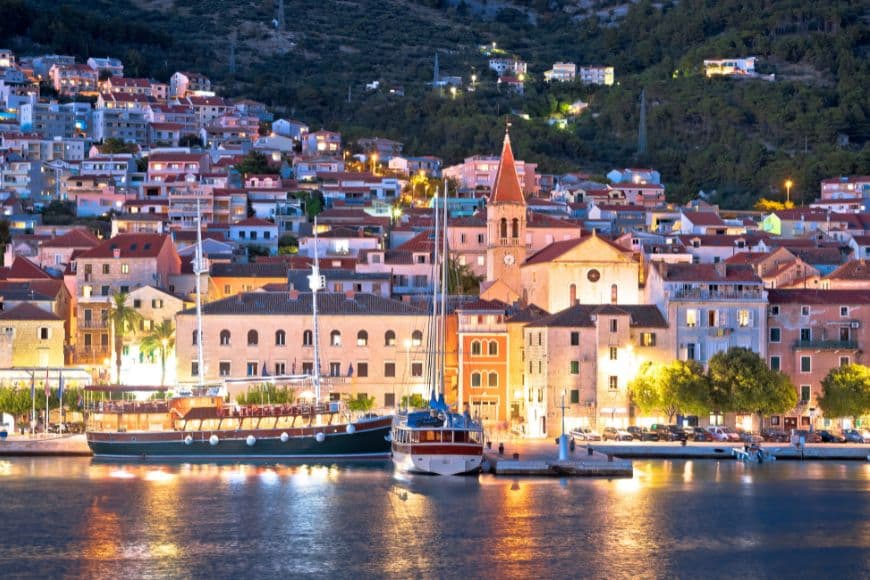
Best for: Beaches, coastal scenery, swimming, waterfront restaurants, and mountain views
Time needed: Full day (6–8 hours)
Few places along the Dalmatian coast combine mountains and sea quite as dramatically as Makarska. This attractive seaside town sits beneath the towering Biokovo mountain range, creating a spectacular backdrop of rugged limestone peaks above the turquoise Adriatic waters.
If you’re hoping to escape the busy streets of Split and spend a day enjoying Croatia’s coastline, Makarska offers a wonderful change of pace. The town has a lively waterfront, beautiful beaches, and a compact historic center that’s pleasant to explore without a strict itinerary.
One of the main attractions is Makarska Beach, a long stretch of pebbles bordered by pine trees, cafés, and restaurants. The clear water makes it particularly appealing for swimming, while the surrounding mountains give the coastline a distinctive appearance.
Beyond the beach, I’d recommend walking along the harbor toward the old town. Kačić Square, surrounded by traditional buildings and outdoor cafés, is a lovely place to stop for a coffee or a relaxed lunch. Nearby, the Franciscan Monastery reflects the town’s historical and cultural heritage.
For a different perspective, you could explore the wooded Sveti Petar Peninsula, where walking paths and viewpoints offer beautiful views of the harbor and coastline. It’s a pleasant option if you want a short scenic walk between swimming and sightseeing.
Adventure lovers might also be interested in Biokovo Nature Park, particularly the famous Skywalk viewpoint. However, reaching the mountain attractions requires separate transportation and careful planning. I’d treat Biokovo as an additional excursion rather than automatically including it in a relaxed beach day.
Makarska is particularly appealing if you’re looking for beach destinations near Split that combine swimming with a lively seaside atmosphere. Although the town becomes busy during the summer, its beautiful setting makes it worth considering.
How to Get to Makarska from Split
- By bus: Intercity buses generally take around 1–1.5 hours, depending on traffic and the service. The bus station is within walking distance of the town center.
- By car: Approximately 1–1.5 hours along the coastal route or via the motorway, depending on traffic and your chosen route.
- By organized tour: Some coastal excursions include Makarska or nearby Riviera destinations, although independent travel is usually straightforward.
- Best option: Bus for a relaxed town and beach visit; car if you want to explore several places along the Makarska Riviera.
During July and August, I’d leave Split early to avoid the busiest coastal traffic and secure a good spot on the beach. If you’re traveling by bus, check the return departure before settling in for the afternoon.
11. Primošten – A Picturesque Peninsula Town with Beautiful Beaches
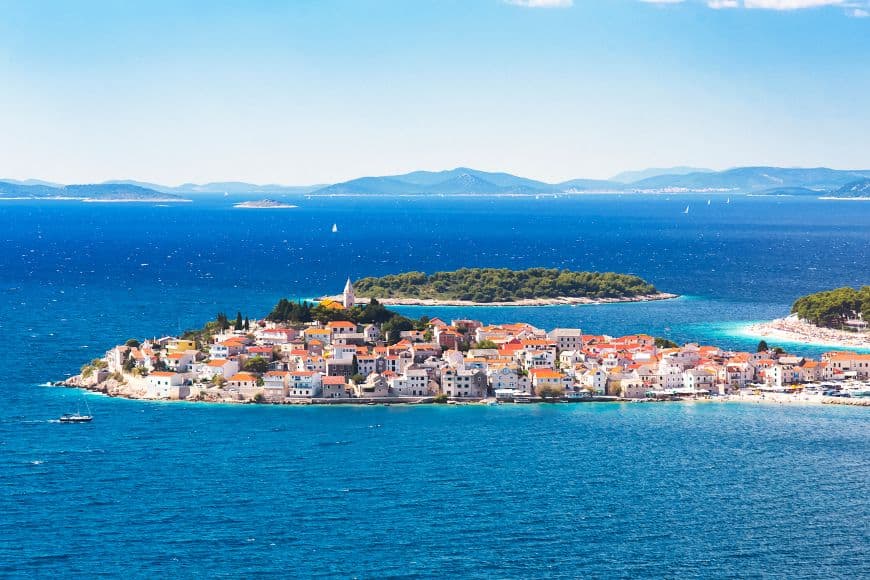
Best for: Coastal photography, historic streets, beaches, and relaxed sightseeing
Time needed: Half to full day (4–6 hours)
Some Croatian coastal towns are memorable because of their architecture, while others stand out for their natural setting. Primošten manages to combine both, with a beautiful old town occupying a small peninsula surrounded by clear Adriatic waters.
Located between Split and Šibenik, Primošten is one of the most picturesque coastal towns near Split. Its tightly packed stone houses, narrow streets, and distinctive waterfront create the kind of Mediterranean scenery that makes you want to slow down and explore without a particular destination in mind.
The historic center was originally built on a small island before being connected to the mainland. Today, you can wander through its winding lanes, discover charming squares, and enjoy beautiful sea views from different points around the peninsula.
I’d recommend walking uphill toward the Church of St. George, which stands at one of the highest points in the old town. From here, you’ll find panoramic views over the rooftops, coastline, and surrounding islands. The climb isn’t particularly long, but the stone streets can be steep and slippery in places.
Primošten is also known for its attractive beaches, particularly Mala Raduča Beach, which sits close to the historic center. Its clear water and convenient location make it a popular place for swimming during the warmer months.
If you’re interested in local traditions, the surrounding area is famous for its vineyards and the indigenous Babić grape variety. The distinctive stone-walled vineyards are an important part of the region’s agricultural landscape, although visiting individual wineries requires advance planning.
What I like about Primošten is that it doesn’t demand a complicated itinerary. You can spend a few hours exploring the old town, enjoy lunch overlooking the sea, and relax at the beach before returning to Split.
How to Get to Primošten from Split
- By bus: Intercity buses traveling toward Šibenik may stop in Primošten. Journey times are generally around 1–1.5 hours, depending on the service and traffic.
- By car: Approximately 1–1.25 hours, depending on traffic. Parking is available outside the historic center, although spaces can be limited during summer.
- By organized tour: Some coastal excursions include Primošten alongside Šibenik or other nearby destinations.
- Best option: Car for flexibility, although the bus is practical when suitable connections are available.
I’d consider visiting Primošten in the late afternoon, when the light becomes softer and the peninsula looks particularly beautiful. It’s an excellent destination for photography, especially from viewpoints outside the historic center.
If you’re exploring the coast by car, you could combine Primošten and Šibenik in one day. However, I’d leave enough time to enjoy both places rather than treating them as quick stops.
For anyone interested in beautiful villages in Croatia, Primošten is a lovely example of the country’s coastal charm, combining historic architecture, scenic views, and inviting beaches.
12. Vis Island – A Peaceful Escape to Croatia’s Quieter Side
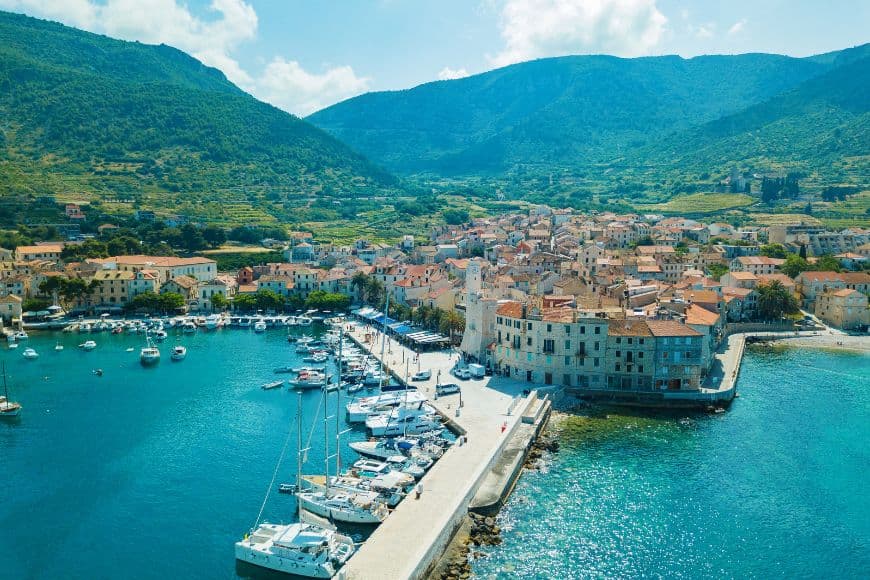
Best for: Island scenery, traditional fishing villages, beaches, and relaxed exploration
Time needed: Full day, although an overnight stay is preferable
If you’re looking for an island experience that feels a little less developed than some of Croatia’s busiest destinations, Vis Island deserves serious consideration. Located farther from the mainland than Brač and Hvar, Vis is known for its beautiful bays, traditional villages, and relatively peaceful atmosphere.
For decades, the island’s military importance limited tourism development, helping preserve much of its natural landscape and traditional character. Today, Vis attracts visitors who appreciate quieter coastal destinations, clear waters, and a slower pace of travel.
The island has two main towns worth exploring. Vis Town, where most ferries arrive, features an attractive waterfront, historic stone buildings, and restaurants overlooking the harbor. It’s a pleasant place to wander, particularly if you enjoy discovering local cafés and traditional Dalmatian architecture.
On the opposite side of the island lies Komiža, a picturesque fishing town surrounded by hills and beautiful coastal scenery. Its narrow streets, colorful fishing boats, and relaxed waterfront make it one of the most charming places on Vis.
If beaches are your priority, Stiniva Beach is among the island’s most famous natural attractions. Hidden between steep cliffs, this small pebble cove is known for its dramatic entrance and turquoise water. However, reaching it involves a steep, uneven path or arriving by boat, and access may be affected by conditions.
Another popular attraction is Srebrna Beach, known for its smooth pale pebbles and clear water. It’s a beautiful place to swim, although visiting several beaches independently requires transportation around the island.
Vis also provides access to Biševo and the famous Blue Cave, but I’d avoid assuming you can comfortably combine the cave, Komiža, several beaches, and a return ferry to Split in one day. The distances and transportation connections make that itinerary more demanding than it might appear.
How to Get to Vis Island from Split
- By ferry: Regular ferry services connect Split with Vis Town, generally taking around 2–2.5 hours. Departures vary by season and day of the week.
- By passenger catamaran: Faster passenger connections may be available depending on the operating schedule and route. Check whether the service allows enough time for a same-day return.
- By organized boat tour: Some full-day speedboat excursions include stops around Vis or Komiža, often alongside the Blue Cave or other islands.
- Getting around Vis: Local buses, taxis, and rental vehicles connect the island’s main settlements, but services may not align conveniently with every ferry arrival.
- Best option: An organized excursion for a short visit, or an overnight stay if you want to explore the island independently.
Before choosing Vis as a day trip, check both ferry directions and calculate how much time you’ll actually have on the island. A two-hour journey each way can leave limited time for sightseeing, particularly outside the peak summer season.
Is Vis Island Worth a Day Trip from Split?
Vis is absolutely worth visiting, but I’d be selective about how you plan the experience. If you find suitable ferry connections and are happy exploring Vis Town or one nearby area, a day trip can work.
However, if you want to discover Komiža, visit secluded beaches, explore the island’s interior, and enjoy its peaceful atmosphere, staying for at least one night makes considerably more sense.
Compared with the busier islands, Vis offers a quieter and more traditional experience. For travelers interested in Croatian island hopping, it’s a beautiful destination that rewards those willing to spend a little more time exploring.
If you’re exploring more of the country, our ten-day Croatia itinerary shows how to combine Split with Dubrovnik, Hvar, Plitvice Lakes, Zagreb, and other highlights.
Day Trips from Split by Ferry, Bus, or Car: Which Is Better?
Choosing the right transportation can make a significant difference when exploring the Dalmatian coast. While Split is an excellent base for discovering nearby islands, historic towns, and national parks, not every destination is equally convenient to reach.
The best option depends on where you’re going, how much time you have, and whether you prefer traveling independently or joining an organized excursion.
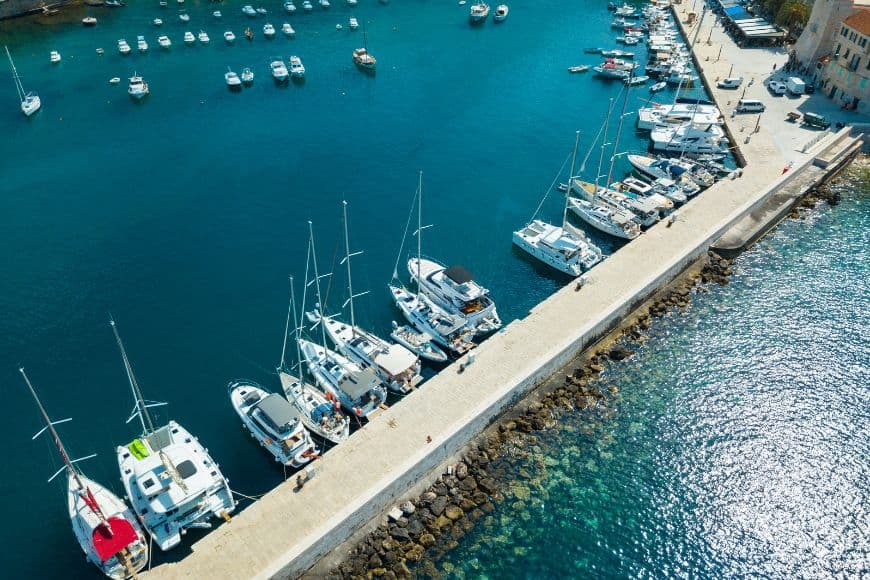
Exploring the Croatian Islands by Ferry
For destinations such as Hvar, Brač, and Vis, ferries and passenger catamarans are usually the most practical way to travel independently.
Split has one of Croatia’s busiest passenger ports, with connections to numerous Adriatic islands. However, it’s important to distinguish between car ferries and passenger catamarans, as they often serve different ports.
For example, the ferry to Brač usually arrives in Supetar, while some passenger services connect directly with Bol. Similarly, ferries carrying vehicles to Hvar arrive at Stari Grad rather than Hvar Town.
I’d recommend checking three things before booking: the arrival port, the return departure, and how much time you’ll actually have at your destination.
Visiting Coastal Towns by Bus
If you’re planning to explore Trogir, Omiš, Šibenik, or Makarska, public buses can be a convenient and affordable alternative to renting a car.
Many coastal destinations have connections from Split, making it possible to organize excursions without worrying about parking or driving unfamiliar roads.
However, travel times can increase during summer, particularly along the coastal highway. I’d also check the return timetable before leaving Split, especially when visiting smaller towns with less frequent services.
Buses are particularly suitable when your main goal is exploring a historic center, enjoying a waterfront promenade, or spending a few hours at the beach.
When Renting a Car Makes Sense
A rental car becomes more useful when you want to explore several destinations in one day or visit places that aren’t conveniently connected by public transportation.
For example, driving gives you greater flexibility when visiting Krka National Park, combining Šibenik with Primošten, or exploring Klis Fortress and the archaeological ruins of Salona. It also allows you to stop at scenic viewpoints, smaller villages, and beaches that might otherwise be difficult to reach.
However, I’d avoid renting a car simply to explore central Split or visit islands where you plan to stay near the ferry port. Parking costs, ferry vehicle fees, and summer traffic can make driving less convenient than expected.
If you’re arriving from southern Croatia, our guide to driving from Dubrovnik to Split covers the route, travel considerations, and interesting stops along the way.
Are Organized Tours Worth It?
Organized excursions are particularly useful for destinations that involve complicated transportation or activities requiring local guides.
The Blue Cave is a good example, as visiting independently requires multiple connections and local boat arrangements. Guided rafting excursions on the Cetina River are another situation where a tour can simplify the experience.
Tours to Krka National Park can also be convenient if you prefer not to drive.
My preference would be to travel independently whenever the connections are straightforward and consider organized excursions when they provide access to places that would otherwise require considerable planning.
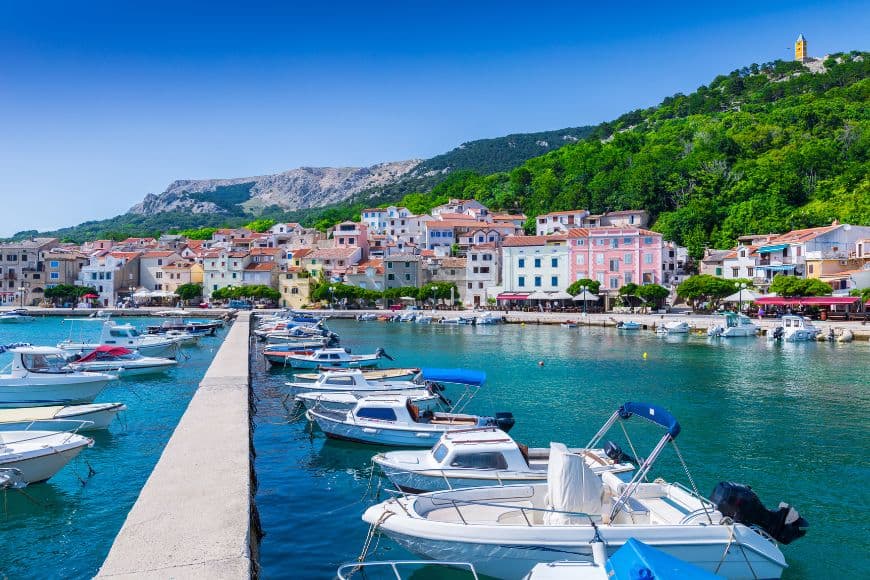
How to Choose the Right Excursion from Split
With so many attractive destinations nearby, deciding where to go can be more difficult than organizing the actual journey. Rather than trying to visit as many places as possible, I’d recommend choosing excursions that match your interests and complement the rest of your Croatia itinerary.
If You Love History and Architecture
Trogir and Šibenik are excellent choices for discovering medieval streets, historic churches, and beautiful coastal architecture. Trogir is particularly convenient for a shorter visit, while Šibenik offers more opportunities to explore fortresses and panoramic viewpoints.
For Roman history, Salona provides a fascinating contrast to Diocletian’s Palace in Split. Klis Fortress is another rewarding option if you’re interested in military history and dramatic landscapes.
If You Prefer Beaches and Island Scenery
I’d prioritize Brač or Hvar for a classic Croatian island experience. Brač is particularly appealing if swimming and beaches are your main interests, while Hvar Town offers a beautiful combination of architecture, waterfront atmosphere, and coastal views.
Makarska and Primošten are also excellent alternatives if you’d rather avoid ferry schedules. Both destinations offer attractive beaches and picturesque surroundings along the mainland coast.
If You Enjoy Nature and Outdoor Adventures
Krka National Park would be my first choice for waterfalls, riverside scenery, and walking trails. Omiš is better suited to travelers who want something more active, particularly rafting, kayaking, or exploring the Cetina Canyon. For a longer maritime adventure, the Blue Cave excursion combines unusual natural scenery with a boat journey through the Adriatic islands.
If You Only Have One Free Day
I’d choose based on the experience you haven’t already included in your itinerary. If you’ve spent several days exploring Croatian historic towns, a trip to Krka or Brač offers a welcome change of scenery.
On the other hand, if your itinerary already includes beaches and islands, Trogir or Šibenik would add more cultural variety. For travelers who want a memorable excursion without complicated logistics, Trogir is probably the easiest all-around choice. It’s close to Split, compact enough to explore on foot, and doesn’t require an entire day.
Practical Tips for Planning Your Excursions from Split
A little preparation can make your travels along the Dalmatian coast considerably more enjoyable. Here are a few things I’d keep in mind before organizing your itinerary.
Check Ferry Schedules Before Choosing Your Dates
Island connections vary throughout the year, and some routes operate primarily during the warmer months. Don’t assume that a ferry arriving at your chosen destination will have a convenient return departure later that day. Check both directions, particularly when planning visits to Hvar, Brač, or Vis.
Start Early During the Summer Months
July and August are among the busiest periods along the Croatian coast. Popular attractions, beaches, ferry terminals, and roads can become crowded. I’d recommend leaving Split early when visiting Krka National Park, taking a long coastal drive, or joining a full-day boat excursion. Earlier departures also give you more flexibility if unexpected delays occur.
Consider the Weather, Especially for Boat Trips
The Adriatic Sea can look calm from the waterfront while conditions farther offshore are less comfortable. Strong winds and rough seas may affect catamaran services, speedboat excursions, and access to attractions such as the Blue Cave. Check the forecast and your operator’s cancellation policy, particularly if you’re booking a long excursion involving several islands.
Don’t Underestimate Travel Times
Distances along the Dalmatian coast may look short on a map, but traffic, ferry boarding, parking, and onward connections can add considerable time. For example, arriving at Supetar on Brač doesn’t mean you’ve reached Zlatni Rat Beach. You’ll still need to travel across the island to Bol. I’d always calculate the complete journey rather than looking only at the ferry or driving time.
Book Popular Activities in Advance
During peak season, boat excursions, national park visits, and adventure activities can fill up quickly. If you’re interested in visiting the Blue Cave, rafting on the Cetina River, or taking a guided excursion to Krka, booking ahead can help secure your preferred date. For more flexible outings, such as exploring Trogir or Šibenik independently, advance reservations are usually less important.
Plan Your Trip with Our Favorite Travel Resources
Compare tours, transportation, hotels, car rentals, travel insurance, eSIMs, and practical travel resources used by travelers around the world.
Day trips, experiences & tickets
Road trips & flexible travel
Hotels, apartments & stays
Compare transport routes
Day trips, experiences & tickets
Gear, luggage & road trip tools
Plan Your Trip with Our Favorite Travel Resources
Compare tours, transportation, hotels, car rentals, travel insurance, eSIMs, and practical travel resources used by travelers around the world.
Pack According to Your Destination
A beach excursion requires different preparation from a visit to an archaeological site or mountain fortress. For island trips, I'd bring swimwear, sunscreen, water, and a lightweight layer for windy boat journeys.
For Klis Fortress, Salona, and Krka National Park, comfortable walking shoes are especially important. During summer, a hat and sufficient drinking water are essential for exposed sightseeing areas.
Leave Some Flexibility in Your Croatia Itinerary
It's tempting to schedule an excursion every day, especially when there are so many beautiful places within reach of Split. However, I'd avoid filling every available day with long journeys. Split itself deserves time for exploring Diocletian's Palace, enjoying the waterfront, and discovering its beaches and neighborhoods.
If you're staying for four or five days, I'd generally choose two or three excursions and leave the remaining time for enjoying the city.
That balance allows you to experience the variety of the Dalmatian coast without turning your holiday into a constant race between buses, ferries, and sightseeing stops.
FAQs About Day Trips from Split
What are the best day trips from Split, Croatia?
Some of the best options include Trogir for medieval architecture, Krka National Park for waterfalls, Hvar and Brač for island scenery, and Omiš for outdoor adventures. Šibenik is another excellent choice for history lovers, while the Blue Cave offers a memorable boat excursion. The right destination depends on your interests, available time, and preferred transportation.
Can you visit Krka National Park from Split in one day?
Yes, Krka National Park is easily accessible as a full-day excursion from Split. Driving to the main entrances generally takes around 1–1.5 hours, and organized tours are also available. Allow several hours to explore Skradinski Buk and the surrounding walking trails. If you want to visit more distant areas of the park, plan your route carefully.
Which Croatian islands can you visit from Split in one day?
Hvar and Brač are among the most practical islands to visit in one day, thanks to their ferry and passenger catamaran connections. Vis is another possibility, although longer travel times and limited return departures can make an overnight stay preferable. Always check seasonal schedules and the arrival port before booking.
Is it better to rent a car or use public transport in Split?
Public transport is usually sufficient for visiting nearby towns such as Trogir, Omiš, and Šibenik. Renting a car is more useful for exploring several destinations in one day, reaching less accessible attractions, or traveling around the mainland countryside. For island visits, passenger ferries are often more convenient than taking a vehicle.
Can you visit the Blue Cave from Split without a tour?
It's possible to reach the Blue Cave independently by traveling to Vis Island and arranging onward transportation toward Biševo, but doing so as a same-day return from Split is complicated. Most visitors choose an organized speedboat excursion that handles the boat connections and local cave access arrangements. Visits depend on sea conditions.
How many days should you spend in Split to include day trips?
I'd recommend spending at least three to five days in Split if you want to explore the city and enjoy nearby excursions. Three days allow time for the main attractions and one day trip, while five days give you more flexibility to visit an island, explore a historic coastal town, and discover a natural attraction such as Krka National Park.
Final Thoughts: Exploring Beyond Split
Split is much more than a destination for exploring Diocletian's Palace and enjoying the Adriatic waterfront. Its location makes it one of the most convenient bases for discovering the variety of landscapes, historic towns, and beautiful islands that define Croatia's Dalmatian coast.
Whether you're wandering through the medieval streets of Trogir, admiring the waterfalls of Krka National Park, relaxing on the beaches of Brač, or enjoying the mountain scenery around Omiš, each excursion offers something different.
If I had to narrow down the choices, I'd recommend Trogir for an easy cultural escape, Krka for natural beauty, and Hvar or Brač for a classic island experience. Together, these destinations provide a wonderful introduction to the region without requiring you to move between hotels.
Of course, you don't need to visit all 12 places to have a memorable trip. I'd rather choose a few destinations that genuinely interest me and allow enough time to appreciate them than spend every day rushing between attractions.
If you're planning a longer journey, these excursions also fit naturally into a Croatia road trip itinerary, especially when traveling between Dubrovnik and Split, Šibenik, and the northern Dalmatian coast.
With a little planning and some flexibility around ferry schedules and weather conditions, you'll discover that some of Croatia's most beautiful experiences are just a short journey beyond Split.
About Asia A.
Explore More
-
 10 Day Croatia Itinerary: The Perfect Route for First-Time Visitors
-
 Croatia Travel Guide: Where to Go, When to Visit & What to Know
-
 Montenegro Itinerary: Perfect 5, 7 & 10 Day Routes for First-Time Visitors
-
 Montenegro Travel Guide: Everything You Need to Plan an Unforgettable Trip
Book Your Tour
Rent Car

💬 We’d love to hear from you!
Have questions, tips, or personal travel stories to share? Drop them in the comments below — your insights help fellow travelers plan their adventures too.