
Things to Do in Rome: What’s Truly Worth Your Time

by Asia A. | Last Updated February 5, 2026

I travel to Rome often, and every time I arrive from Milan, I feel the contrast immediately. Milan is efficient, structured, and almost logical. Rome is the opposite. It’s louder, slower, more chaotic—and far more layered. That difference is exactly why people fall in love with it… and also why many feel overwhelmed.
If this is your first time in Rome, you’ll quickly realize something: there are too many things to do. Every corner has history, every street seems important, and every guide tells you that everything is unmissable. The truth is simpler—and more useful.
Rome isn’t about doing everything.
It’s about choosing well.
This guide focuses on what to do in Rome that’s actually worth your time, especially if you don’t want to rush from one landmark to the next. I’ll cover the classic attractions you really should see, the neighborhoods that show Rome’s everyday life, and the quieter moments that often become the most memorable. I’ll also be honest about what can feel overrated, exhausting, or poorly timed.
Coming from Milan, I’ve learned to slow down on purpose here. To group sights by area. To walk more than I plan. And to accept that Rome doesn’t reward efficiency—it rewards presence.
Whether you’re visiting Rome for the first time or coming back with more confidence, this list of things to do in Rome will help you experience the city without burning out—and without feeling like you missed what really matters.
Let’s start with the essentials.
Is Rome Worth Visiting? What Makes Rome Different
Coming from Milan, I get why people hesitate before choosing Rome. Milan is efficient. You move fast, plans work, and distances make sense. Rome doesn’t play by those rules. It’s louder, messier, and slower—and that contrast is exactly the point.
So, is Rome worth visiting?
Yes—but only if you know what you’re signing up for.
Rome isn’t a city you “optimize.” It’s a city you experience. If you arrive expecting smooth logistics and perfectly timed plans, you’ll get frustrated. If you arrive curious and flexible, Rome gives you depth that few cities can match.
What Makes Rome Feel So Different
Rome isn’t just historic; it’s layered. Ancient ruins sit next to cafés, churches hide masterpieces behind unassuming doors, and everyday life unfolds on top of centuries of history. You don’t visit history here—you walk through it on your way to lunch.
That density can feel overwhelming at first. Distances are bigger than they look, crowds can be heavy around major sights, and the city doesn’t always move on your schedule. But once you adjust your pace, Rome starts to make sense.
Why People Fall in Love with Rome
- The sheer scale of its history (there’s nothing quite like it)
- Neighborhoods that feel alive, not staged
- Food that’s simple, bold, and satisfying
- Moments of quiet that appear when you least expect them
Rome rewards wandering. Some of the best experiences come from turning down the wrong street or sitting longer than planned in a piazza.
When Rome Might Not Be the Best Choice
Rome may not be ideal if you:
- Prefer calm, compact cities
- Dislike crowds entirely
- Want a tightly scheduled, efficient trip
In those cases, Florence or smaller Italian cities can feel easier. Rome asks for patience—and gives depth in return.
My Milanese Perspective
Every time I come to Rome from Milan, I consciously slow myself down. I plan fewer sights per day. I walk more. I accept delays. And once I do, the city opens up.
Up next, let’s talk about the must-see attractions in Rome—the ones that really deserve your time, and how to experience them without burning out.
📍 How This Guide Fits Into Planning Your Rome Trip
This list of things to do in Rome works best when paired with a broader understanding of the city — including neighborhoods, transport, timing, and realistic pacing.
👉 Start with the complete overview of visiting the Eternal City → Rome Travel Guide: What to See & Do
Top Attractions in Rome You Should See at Least Once
Every time I arrive in Rome from Milan, I have to reset my mindset. In Milan, I’m used to efficiency: see something, move on, stay on schedule. Rome doesn’t work like that—and its most famous attractions suffer the most if you treat them that way.
These are the places I think you should see at least once in Rome—but more importantly, how I’ve learned to experience them without exhaustion or disappointment.
The Colosseum & Roman Forum – Where Rome Finally Feels Real

The first time I saw the Colosseum, I remember stopping mid-conversation. No photo prepares you for how dominant it feels in real life. Even now, after multiple visits, I still slow down when I walk past it.
That said, I don’t always go inside anymore.
What I’ve learned:
- The exterior, especially early in the morning, is often the most powerful moment
- Going inside is worth it once—but only if you book ahead and don’t rush
- The goal isn’t to see every corridor; it’s to understand what this place represented
Right next to it, the Roman Forum requires a different mindset. On my first visit, I didn’t “get it.” It felt chaotic and confusing. On later visits, once I slowed down and gave myself context, it became one of my favorite places in Rome.

My advice:
- Don’t treat the Forum like a checklist
- Pause, look around, imagine daily life here
- Accept that it’s more about atmosphere than perfect understanding
This area is intense. I always plan something lighter afterward.
Vatican Museums & Sistine Chapel – Incredible, but Demanding

The Vatican Museums are one of the most overwhelming museum experiences in Europe—and I don’t say that lightly.
From Milan, where museums are structured and calm, the Vatican feels like controlled chaos. Crowds move fast, rooms blur together, and it’s easy to feel rushed if you’re not prepared.
What makes the difference:
- Booking tickets in advance (non-negotiable)
- Going early in the morning or late in the day
- Accepting that you won’t see everything
The Sistine Chapel still stops me every time. Even packed, even noisy, it has a weight that’s hard to explain. But I’ve learned not to plan anything demanding after this visit. The Vatican drains your mental energy more than you expect.
St Peter’s Basilica – The Moment I Always Slow Down

I never rush through St Peter’s Basilica. Even if you’re not religious, the scale is impossible to ignore. What surprises me most—every time—is how quiet it can feel once you step inside, especially compared to the chaos outside.
My personal routine:
- Enter slowly
- Walk less, sit more
- Look up, then stop looking altogether
This is one of the rare places in Rome where standing still feels like the right thing to do. And the fact that entry is free still feels unreal for what you’re seeing.
The Pantheon – Rome at Its Most Balanced

If there’s one place I never skip, it’s the Pantheon.
It doesn’t overwhelm you like the Colosseum or exhaust you like the Vatican. It simply works. The proportions, the light, the silence—it’s Rome at its most confident.
I usually pop in without planning, often in between walks. It’s one of the few places in Rome where even a five-minute visit feels complete.
Capitoline Hill – When Everything Clicked for Me
The Capitoline Hill was a late discovery for me, and it completely changed how I see Rome.
Standing here, overlooking the Forum, you finally understand the city’s layout and logic—or as close to logic as Rome gets. It’s less crowded, more reflective, and often overlooked by first-time visitors rushing between bigger names.
If you want a moment where Rome suddenly makes sense, this is it.
How I Personally Structure Big Attractions
This rule saved my Rome trips:
One major attraction per half-day. No exceptions.
Trying to combine the Vatican and Colosseum in the same morning is a mistake I made once—and never again. Rome’s attractions aren’t difficult because they’re complicated; they’re difficult because they’re heavy.
My Milan-Based Perspective
In Milan, you can be efficient and still enjoy the city. In Rome, efficiency works against you.
The more I stopped trying to “see everything,” the more these attractions started to mean something. Rome’s famous sights aren’t about quantity—they’re about presence.
Choose a few. Give them time. Let the rest go.
Next, let’s step outside ticketed attractions and into the streets themselves.
🗺️ Things to Do in Rome: Map of Top Attractions & Experiences
Rome isn’t a city you experience in a straight line — its landmarks, neighborhoods, viewpoints, and food spots are spread across layers of history. To make planning easier, I’ve put together a visual map of the best things to do in Rome, showing where the city’s top attractions and experiences are actually located.
This map helps you understand how Rome fits together geographically, spot clusters of sights you can explore on foot, and plan your days without zigzagging across the city. Whether you’re visiting for a short stay or building a longer itinerary, it’s a practical way to see what deserves your time.
Historic Rome: Walking Through the City’s Living Museum
After the big-ticket sights, this is where Rome finally relaxes—and where I do too. Coming from Milan, I’m used to cities that reward planning and efficiency. Rome rewards something else entirely: time on your feet, a loose sense of direction, and the willingness to pause when the city pulls you in.
Historic Rome isn’t a route you “do.” It’s a stretch of the city you inhabit for a few hours, letting one place lead naturally to the next.
Begin With a Direction, Not an Itinerary
I usually start near the Pantheon and let the walk unfold toward a neighborhood rather than a monument. The mistake I see most often is trying to connect dots too precisely. Rome’s historic center works best when you allow small detours—those are often where the city feels most alive.
The Pantheon: A Perfect Pause, Not a Performance
The Pantheon is one of those rare places that never loses its impact. From the outside, it blends into the streets; inside, it’s all balance and quiet confidence. The proportions are so right that even a short visit feels complete. I often step in for just a few minutes, look up at the oculus, and step back out—refreshed, not overwhelmed.
It’s central, calm, and grounding, which is why it makes such a good anchor point for walking the historic center.
Piazza Navona: Rome on Display

A short walk brings you to Piazza Navona, a place I no longer “visit” so much as use. This is where I sit, observe, and recalibrate. The baroque scale, the fountains, the constant flow of people—it’s Rome performing for itself.
I don’t rush through here. A coffee, a bench, ten minutes of watching the city move—this is often where the pace of the day resets.
Trevi Fountain: Choose the Moment Carefully

The Trevi Fountain is undeniably beautiful, but timing is everything. Midday crowds flatten the experience; the sound and scale disappear behind phones and elbows.
Late evening or early morning, though, the fountain feels theatrical again. The water, the light, the stone—it finally has room to breathe. You don’t need long here. One quiet moment is far better than fighting for space.
Campo de’ Fiori: Where the City Shifts Gears

Walking toward Campo de’ Fiori, Rome subtly changes tone. This square is less about monuments and more about rhythm. By late afternoon, stalls close, locals pass through, and the space resets before the evening crowd arrives.
I like it in that in-between moment, when the square feels functional rather than staged. It’s a reminder that Rome is lived in, not preserved behind glass.
Why Walking Historic Rome Matters
This part of Rome doesn’t demand tickets or explanations. It asks you to slow down enough to notice details—the worn stone at street level, the sudden quiet of a side street, the way light moves across façades.
Some of my strongest Rome memories came from walking without a plan, stopping when I felt like it, and ending the day somewhere completely different from where I started. None of that shows up on must-see lists, but it’s what makes the city feel personal.
In Milan, efficiency is a virtue. In Rome, it’s often a mistake. The historic center isn’t something to optimize—it’s something to absorb.
Walk with intention, but not urgency. Let the city interrupt you. That’s when Rome starts to feel less like a museum and more like a place you’re temporarily part of.
Next, let’s step into the neighborhoods where everyday life becomes even clearer.
Plan Your Trip with Our Favorite Booking Tools
Which Neighborhoods Are Worth Exploring in Rome?
The best neighborhoods to explore in Rome are Trastevere, Monti, and Testaccio. Each area shows a different side of the city, from lively evenings and historic streets to local food culture and everyday Roman life.
Best neighborhoods to visit in Rome:
- Trastevere – atmospheric streets, restaurants, nightlife
- Monti – central, stylish, and relaxed
- Testaccio – local food scene and everyday Rome
If Rome’s landmarks show you its history, its neighborhoods show you its daily life. This is where the city becomes personal. Over time, I’ve learned that spending real time in just two or three neighborhoods does more for your Rome experience than rushing between monuments all day.
Each area has a distinct rhythm, a different energy, and its own reasons to linger. These are the neighborhoods I think are genuinely worth exploring—and why.
Trastevere – Rome at Its Most Atmospheric

Trastevere is the neighborhood most people imagine when they think of Rome—and for good reason. Narrow streets, ivy-covered buildings, laundry lines overhead, and a constant hum of life make it feel instantly cinematic.
During the day, Trastevere is surprisingly calm. Locals go about their routines, cafés feel unhurried, and it’s a pleasant place to wander without an agenda. In the evening, everything changes. Restaurants fill up, piazzas buzz with conversation, and the neighborhood becomes one of the best places in Rome to simply be out and about.
Trastevere is ideal if you:
- Enjoy evening strolls and late dinners
- Like lively but informal atmospheres
- Want Rome to feel social and spontaneous
It can get crowded, especially at night, but even then it rarely feels staged. It still feels lived-in.
Monti – Central, Stylish, and Surprisingly Relaxed

Monti is one of those neighborhoods that quietly grows on you. It sits close to major sights like the Colosseum, yet feels far removed from the chaos.
The streets are small and elegant, dotted with independent boutiques, relaxed wine bars, and cafés where people linger. Monti doesn’t shout for attention—it rewards curiosity. I like it most in the late afternoon, when the light softens, and the neighborhood feels almost village-like.
Why Monti works so well:
- Central without being overwhelming
- Easy to combine with sightseeing
- A strong local feel despite the location
If you want a base—or an area to explore—that balances convenience with character, Monti is one of Rome’s best choices.
Testaccio – Food, Markets, and Everyday Rome
Testaccio feels unapologetically Roman. This is not a postcard neighborhood, and that’s exactly why it’s special.
It’s best known for its food culture. The local market is lively and practical, and many of Rome’s most traditional dishes are deeply rooted here. Walking around Testaccio, you’re unlikely to hear much English—and that’s part of the appeal.
This neighborhood is ideal if:
- Food is a major reason you’re in Rome
- You enjoy places that feel genuinely local
- You’re curious about Rome beyond the historic center
It’s not where I’d send someone with only one or two days in the city—but for longer stays, it’s incredibly rewarding.
The Jewish Ghetto – Quiet, Historic, and Deeply Atmospheric
The Jewish Ghetto is one of Rome’s most understated areas. It’s compact, calm, and layered with history that isn’t immediately obvious.
Walking here feels different. Streets are quieter, the pace slows, and the city feels more reflective. Food plays a big role, especially traditional Jewish-Roman dishes you won’t easily find elsewhere.
I often pass through this area when I want a break from crowds. It’s close to major sights, yet emotionally removed from the noise. A short visit is enough to feel its weight and importance.
Prati – Order, Space, and Comfort

Prati feels different from most of Rome—and intentionally so. Streets are wider, buildings are more uniform, and everything feels more organized.
It’s less atmospheric than Trastevere or Monti, but very practical. This is where Rome feels almost modern. It’s especially convenient if you plan to visit the Vatican early or want quieter evenings after busy sightseeing days.
Prati works well if you:
- Prefer calm over charm
- Value comfort and space
- Want good transport connections
It’s not the most romantic part of Rome—but it’s one of the easiest to live in.
How to Choose Which Neighborhoods to Explore
You don’t need to see them all. In fact, trying to will dilute the experience.
I usually recommend:
- One atmospheric neighborhood (like Trastevere or Monti)
- One local-feeling area (like Testaccio or the Jewish Ghetto)
Spend time walking, sitting, eating, and observing. Neighborhoods reveal themselves slowly.
Why Neighborhood Time Matters in Rome
Rome isn’t just a collection of sights—it’s a living city. Neighborhoods are where you notice rhythms: when people eat, how streets change from day to night, and where locals actually spend time.
Some of the most memorable moments come from:
- Sitting in a small piazza without a plan
- Returning to the same café twice
- Watching a neighborhood wake up or wind down
These moments don’t need tickets—and they’re often what people remember most.
A Final Thought on Exploring Rome
Rome makes more sense when you stop trying to cover it all. Neighborhoods reward patience and curiosity far more than efficiency.
Choose a few. Walk slowly. Let the city show itself.
Next, let’s talk about one of Rome’s most debated topics.
Which Museums Are Worth Visiting in Rome?
The best museums in Rome are the Vatican Museums, Capitoline Museums, and Galleria Borghese. Most travelers only need one major museum per day, as Rome’s museums are large and mentally demanding.
Best museums in Rome:
- Vatican Museums (Sistine Chapel, Raphael Rooms)
- Capitoline Museums (ancient Roman statues and Forum views)
- Galleria Borghese (Bernini sculptures, timed entry)
Rome’s museums aren’t difficult because they’re boring—they’re difficult because they’re dense. There’s a lot to absorb, often in crowded spaces, and without context, it can all blur together. Over time, I’ve learned that museum visits in Rome work best when you know why you’re going in and what you want to focus on.
You don’t need many museums in Rome.
You need the right ones.
Vatican Museums – A Journey Through Power, Art, and Excess

The Vatican Museums are not one museum, but a massive complex of galleries built to showcase centuries of papal power, wealth, and ambition.
Inside, you’ll move through a vast classical sculpture collections, tapestry and map galleries (the Gallery of Maps is a standout), rooms filled with Renaissance frescoes and religious art, and the Raphael Rooms, which many people rush past but are genuinely remarkable.
The experience builds gradually, culminating in the Sistine Chapel, where Michelangelo’s ceiling and altar wall finally bring everything to a halt. Even crowded, the scale and intensity are undeniable.
This museum is:
- Visually overwhelming
- Emotionally heavy
- Historically unmatched
It’s worth seeing once, but it’s not a place to improvise. Go in prepared, accept that you’ll miss things, and don’t plan anything demanding afterward.
Capitoline Museums – Rome Explaining Itself
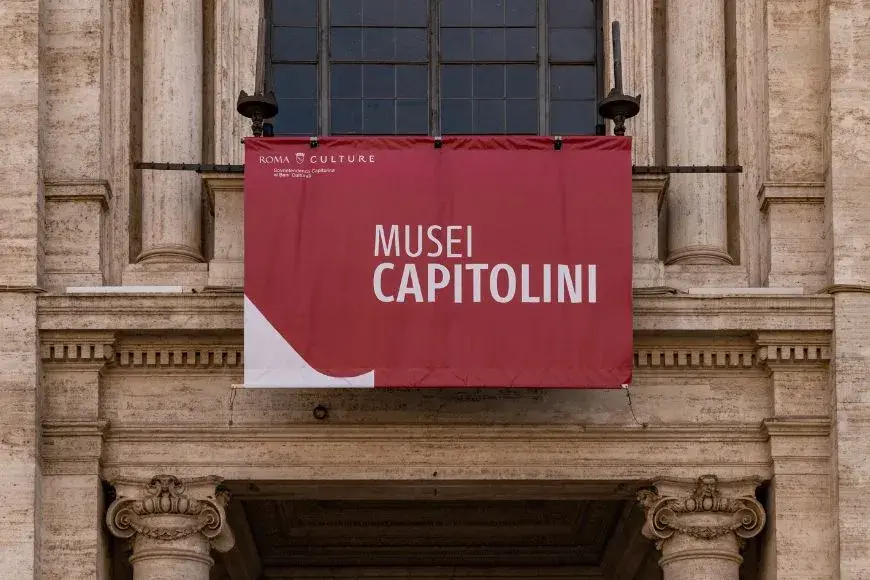
The Capitoline Museums feel completely different.
Instead of endless corridors, you get a clear narrative of Rome’s history, from ancient foundations to Renaissance reinterpretations. Highlights include:
- Iconic Roman statues like the Capitoline Wolf
- Busts of emperors and philosophers
- Ancient inscriptions that make everyday Roman life feel tangible
One of the most rewarding moments is stepping onto the museum’s terrace, overlooking the Roman Forum. Suddenly, the ruins below aren’t abstract anymore—they have faces, stories, and continuity.
This museum works because it’s:
- Manageable in size
- Thoughtfully curated
- Deeply connected to the city outside
If you want one museum that actually helps you understand Rome, this is it.
Galleria Borghese – Small, Intimate, and Time-Controlled

The Borghese Gallery is the opposite of the Vatican: compact, focused, and beautifully paced.
Entry is strictly timed, which completely changes the experience. You move through calmly, without being pushed along by crowds. The art—especially the sculptures—is stunning, and the surrounding park offers a welcome break afterward.
Important to know:
- Advance booking is essential
- Visits are time-limited
- It works best as a half-day experience
If you appreciate art but dislike chaos, this is one of the most satisfying museum visits in Rome.
Smaller Museums in Rome – Only If You Have a Specific Interest

Rome has dozens of smaller museums that rarely make “top things to do” lists. Many of them are excellent—but they’re not essential unless they match a personal interest. I’ve learned that these museums work best when chosen deliberately, not added to fill time.
Here are a few worth considering, only if the theme genuinely appeals to you:
- Palazzo Massimo: One of the best places in Rome for ancient Roman art in context. Inside, you’ll find beautifully preserved frescoes, mosaics, coins, and sculptures from Roman villas. It’s calm, well laid out, and ideal if you want to understand how Romans actually lived—not just how they built monuments.
- Baths of Diocletian: Part of the National Roman Museum, this site combines massive ancient bath structures with museum spaces and a quiet cloister designed by Michelangelo. It’s fascinating if you’re interested in Roman engineering or architecture, but too abstract for a casual visit.
- MAXXI: Rome’s contemporary art museum, housed in a striking modern building. This is a good choice if you need a complete break from ancient Rome and enjoy modern architecture, installations, and design. It feels like a different city altogether.
- Museo Nazionale Etrusco di Villa Giulia: Excellent if you’re curious about pre-Roman Italy. The Etruscan artifacts provide context for everything Rome later became, but it’s a niche interest and best appreciated if you already enjoy archaeology.
- Capuchin Crypt: Not a traditional museum, but often mentioned. It’s brief, unusual, and thought-provoking, made from the bones of Capuchin monks. Visit only if you’re genuinely curious—it’s memorable, but not for everyone.
How I Decide Whether to Add a Smaller Museum
I ask myself three simple questions:
- Does this museum connect to something I already care about?
- Am I using it to replace time outdoors—or complement it?
- Would I regret skipping a walk or long lunch for this?
If the answer isn’t clear, I skip it.
Rome gives you so much for free—streets, churches, neighborhoods—that smaller museums should feel like a choice, not an obligation.
Museums vs Churches: An Important Balance
One thing people forget: Rome’s churches function like free museums.
You’ll see:
- Caravaggio paintings
- Renaissance sculptures
- Architectural masterpieces
All without tickets or queues. I often balance one paid museum with several churches—it keeps the trip lighter and more varied.
Book Rome Museum Tickets (Only for the Ones That Matter)
Rome museums can mean long lines and sold-out time slots—especially the Vatican and Borghese Gallery. When I decide a museum is truly worth my time, I always book in advance.
Check skip-the-line tickets for Rome’s top museums here
This helps you:
- Avoid queues
- Choose better time slots
- Plan museum days without stress
My rule: book no more than one major museum per day. Rome is too intense to rush.
What I Often Skip (And Don’t Regret)
I no longer feel guilty about skipping museums in Rome.
On many trips, I choose:
- One major museum
- One neighborhood walk
- One long meal
That balance leaves me energized instead of drained.
Rome is not a museum city in the traditional sense, it’s an open-air archive. Museums should add context, not dominate your itinerary.
Choose carefully. Go slow. And remember: if you leave Rome wishing you’d seen less, you probably did it right.
Next, let’s step away from interiors and look outward.
Hidden Gems in Rome (Quiet Places When the Crowds Get Too Much)
Rome can feel relentless at peak hours. When that happens, the city’s quieter layers matter even more. Over time, I’ve learned that stepping a few minutes away from the obvious routes is often enough to find space, silence, and perspective. These places aren’t secret—but they’re easy to miss if you’re only following must-see lists.
Think of them as pressure valves: moments that reset your energy and make the famous sights feel enjoyable again.
Aventine Hill & the Keyhole – A Short Detour with a Big Payoff

The Aventine Hill is one of the calmest corners of central Rome. The walk itself is part of the pleasure—wide streets, little traffic, and a noticeable drop in noise.
Most people come for the Aventine Keyhole, where a perfectly framed view lines up St. Peter’s dome through a garden gate. It takes seconds, but the moment is oddly memorable. Stay a bit longer for the nearby orange garden; the benches and shade make it an ideal pause.
Why it works: easy to reach, low effort, high contrast with the city below.
San Clemente – Rome in Vertical Layers
If you want to understand Rome rather than just admire it, Basilica di San Clemente is exceptional.
From the street, it’s a modest basilica. Inside, you descend through time: a medieval church beneath the current one, then a Roman house and a Mithraeum below that. The temperature drops, the crowds thin, and suddenly the idea of “layers” stops being abstract.
Why it works: compact, explanatory, and genuinely eye-opening—without taking half a day.
Quartiere Coppedè – Rome’s Unexpected Fantasy

Quartiere Coppedè feels like it belongs to a different city entirely. A small cluster of early-20th-century buildings mixes Art Nouveau, medieval references, and pure imagination. It’s whimsical, slightly surreal, and refreshingly quiet.
You don’t need a plan here. Walk slowly, look up, and enjoy the surprise of finding something so unlike classical Rome.
Why it works: short visit, no crowds, total change of tone.
Janiculum Hill – The Best View with the Least Effort
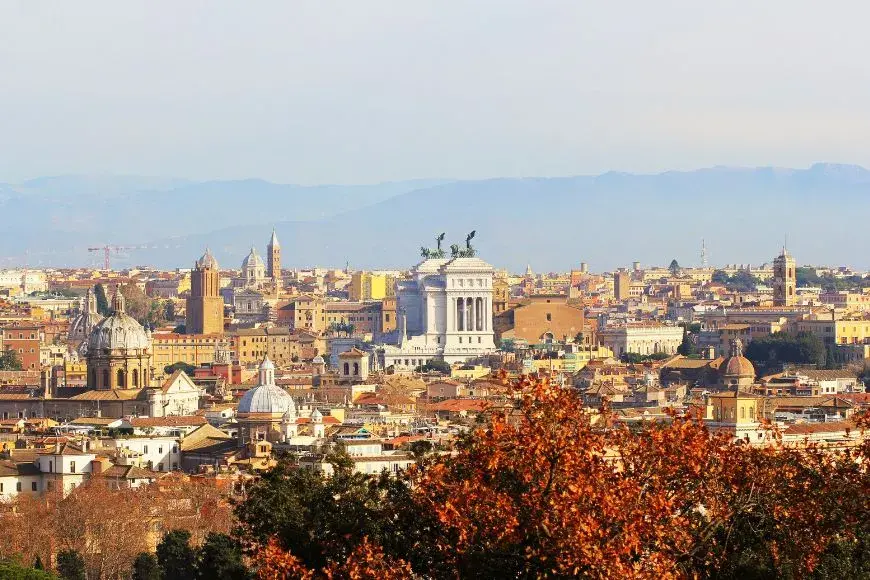
For wide views without the chaos, head to the Janiculum Hill. It’s not one of the seven ancient hills, which may be why it stays calmer.
I like it in the late afternoon, when the light softens, and the city stretches out quietly below. The walk is gentle, the space is generous, and it’s a perfect place to end a day that started busy.
Why it works: space, silence, and perspective—especially at sunset.
Trastevere’s Backstreets (Away from the Main Drag)
Trastevere gets busy for good reasons, but the magic returns the moment you leave the main lanes. A few turns inland and the noise drops; laundry lines reappear, small churches open quietly, and the neighborhood feels residential again.
I often use this as a transition: dinner plans later, wandering now. Ten minutes of aimless walking here can be more restorative than another attraction.
Why it works: familiar area, different experience—no extra planning.
How I Use Hidden Gems in a Rome Day
I don’t schedule these tightly. I keep one or two in mind and deploy them when needed—after a crowded museum, between major sights, or before dinner.
They’re not replacements for Rome’s icons. They’re buffers that keep the trip enjoyable.
A Final Thought on Finding Quiet in Rome
Rome isn’t short on crowds, but it’s generous with alternatives. When the city feels too loud, step aside rather than pushing through. The reward is often a moment that feels personal—and those are the moments that last.
Next, let’s look up and slow down.
Where Are the Best Views in Rome?
The best views in Rome are from Pincian Hill, Janiculum Hill, and the Aventine Orange Garden.
These viewpoints are free, easy to access, and offer panoramic city views without tickets, especially early in the morning or around sunset.
Best viewpoints in Rome:
- Pincian Hill (Terrazza del Pincio)
- Janiculum Hill
- Aventine Orange Garden
- Capitoline Hill viewpoint
Rome rewards those who look up—and those who know when to stop. After busy streets and crowded sights, these viewpoints give the city back to you in wide angles and quiet moments. I don’t rush these places. I treat them as pauses, often timed for softer light or a natural break in the day.
Pincian Hill (Terrazza del Pincio)

The terrace above Piazza del Popolo is one of the most accessible panoramic views in Rome. It’s easy to reach and generous with space, so even at popular times it rarely feels overwhelming.
From here, the city unfolds in layers: domes, rooftops, distant hills. I like it mid-morning or early evening, when the light adds depth without the full sunset crowd. Pair it with a walk through the Borghese gardens afterward to keep the calm going.
Aventine Orange Garden

Tucked behind the Aventine, the Giardino degli Aranci is one of the most peaceful viewpoints in Rome. The view is composed rather than sweeping, with St. Peter’s dome anchoring the horizon.
Benches and shade invite you to slow down rather than rush through. It’s a place that naturally encourages sitting, observing, and letting the city fade into the background.
Janiculum Hill
For the widest sense of Rome, head to the Janiculum Hill. Slightly removed from the historic core, it feels open and unhurried.
Late afternoon into sunset is ideal. The city stretches out below, traffic noise softens, and the view becomes a natural way to end a busy day.
Capitoline Hill Viewpoint

The viewpoint on the Capitoline Hill offers perspective rather than drama. Looking down over the Roman Forum, the city’s ancient layout becomes easier to read.
It’s a short stop, but one that adds context to nearby sights and helps connect the ruins into a coherent whole.
Rooftops & Terraces
Rooftop views can be enjoyable if chosen carefully. I prefer terraces that emphasize space and timing over spectacle. Late afternoon or early evening tends to be the most pleasant, before crowds or loud music take over.
Treat rooftop stops as a pause with a drink rather than a major event. One is more than enough.
How to Use Scenic Stops in Your Day
I don’t stack viewpoints. One per day is usually enough, often paired naturally with a walk beforehand or a relaxed meal afterward. These places work best as transitions rather than destinations.
Rome reveals itself in fragments. Viewpoints help connect those fragments into something whole. When the city feels intense, stepping back and looking out is often all it takes to reset the pace.
Next, let’s move from views to flavors.
Food Experiences You Shouldn’t Miss in Rome
Rome makes food feel uncomplicated—and that’s exactly the point. Meals here aren’t about presentation or trends; they’re about rhythm, tradition, and doing a few things extremely well. Once you understand how Romans eat, everything becomes easier: what to order, where to sit, and when to slow down.
This isn’t a list of restaurants. It’s about experiences—the moments that define eating well in Rome.
Roman Pasta: Simple, Precise, Non-Negotiable

If there’s one rule, it’s this: order Roman pasta in Rome. These dishes look simple on the menu, but they’re unforgiving when done poorly—and unforgettable when done right.
The core classics are:
- Carbonara – eggs, pecorino, guanciale, black pepper (no cream, ever)
- Cacio e pepe – cheese, pepper, and technique
- Amatriciana – tomato, guanciale, pecorino
What matters most isn’t variety—it’s execution. I look for places with short menus and locals at nearby tables. Lunch is often calmer than dinner and just as good.
Trattorias vs Tourist Restaurants (How to Tell the Difference)
A real Roman trattoria doesn’t try to impress you. It’s usually:
- Loud
- Slightly chaotic
- Focused on a handful of dishes
If someone is aggressively inviting you inside or the menu has photos and dozens of options, keep walking. The best meals often happen where you sit down without high expectations—and leave very satisfied.
Street Food: Fast, Casual, and Deeply Roman
Rome’s street food culture fills the gaps between meals—and sometimes replaces them entirely.
Two essentials:
- Supplì – fried rice balls with tomato and mozzarella
- Pizza al taglio – rectangular pizza sold by weight
This is food you eat standing up, often without planning. A supplì in the afternoon or a slice of pizza between walks feels very Roman—and very practical.
Markets & Bakeries: Everyday Eating

Local markets and bakeries show how Romans actually eat day to day. Fresh bread, simple pastries, seasonal produce—nothing flashy, everything functional.
If you’re staying nearby, this is an easy way to:
- Start the day without a sit-down breakfast
- Pick up something quick before sightseeing
- Experience food outside restaurant settings
Even a simple focaccia eaten on a bench can feel like a highlight.
Aperitivo in Rome (Different from Milan)
Aperitivo exists in Rome, but it’s more understated than in northern Italy. Don’t expect elaborate buffets. Here, it’s about a drink, maybe a small plate, and conversation.
Treat aperitivo as a pause, not a meal replacement. A glass of wine or a spritz before dinner helps slow the day down and ease into the evening.
Dinner: Late, Relaxed, Unrushed
Romans eat dinner late, and there’s no reason to rush it. Kitchens usually open around 7:30 pm, but the city really settles into dinner closer to 8:30 or 9.
Once seated:
- Meals unfold slowly
- Courses aren’t rushed
- Lingering is expected
This is not the time to squeeze in another attraction. Dinner is the attraction.
Dessert, Coffee, and Ending the Meal
Dessert in Rome is optional—and often skipped. If you do have something sweet, keep it simple.
Coffee, however, matters. Espresso at the bar after dinner is normal. Cappuccino is not. Ending a meal this way feels like punctuation rather than a finale.
How to Eat Well in Rome Without Overthinking It
You don’t need reservations for every meal or a list of “must-try” places. The best approach is balance:
- One sit-down meal per day
- One casual or spontaneous option
- Space to walk and digest
Food in Rome works best when it fits naturally into your day, not when it dominates the schedule.
A Final Thought on Eating in Rome
Rome’s food culture isn’t about chasing perfection—it’s about consistency. When you stop trying to optimize every bite, meals become something else entirely: part of the rhythm of the city.
Eat simply. Eat slowly. And don’t be afraid to repeat what works.
Next, let’s shift from taste to atmosphere.

Rome at Night: What to Do After Dark
Rome changes after dark. The crowds thin, the light softens, and the city feels less like a checklist and more like a place to inhabit. Nights here aren’t about rushing from one thing to the next—they’re about walking, sitting, talking, and letting the day settle. In Rome, evenings often end up being the most memorable part.
Evening Walks Through the Historic Center
One of the simplest—and best—things to do at night is walk. Major landmarks look completely different after sunset: quieter, more theatrical, and far less crowded.
A loose loop that works well:
- Pantheon area → Piazza Navona → Campo de’ Fiori
- Trevi Fountain, late, when the chaos fades
- Colosseum exterior, softly lit and surprisingly calm
I don’t aim to “see” everything again. I let the city repeat itself more gently.
Trastevere After Dark (Lively, Social, Unscripted)
Trastevere comes alive at night. Streets fill with voices, tables spill outdoors, and the neighborhood hums until late. It can be busy, but it rarely feels stiff or formal.
What works best:
- Arrive a bit before peak dinner time
- Walk first, eat later
- Don’t over-plan where you’ll end up
Some nights are loud and crowded; others feel effortlessly social. Either way, Trastevere is about atmosphere more than agenda.
Dinner Is the Main Event
Nighttime in Rome revolves around dinner. Meals start late and stretch comfortably, often with long pauses between courses and no pressure to leave.
Once you sit down, the evening slows naturally. This is why I never schedule anything important after dinner. Rome nights aren’t built for efficiency—they’re built for lingering.
Wine Bars, Not Clubs
Rome’s nightlife leans toward conversation rather than spectacle. Wine bars and casual bars are more common than big clubs, especially near the historic center.
A typical evening drink is:
- One glass, not several
- Shared conversation, not loud music
- Standing or sitting informally
If you’re looking for a big party scene, Rome isn’t the strongest choice. If you like low-key evenings that stretch naturally, it’s excellent.
Night Views Without the Crowds
Some viewpoints are even better at night. Hills and river walks offer cooler air and open space after busy days.
I often end the evening:
- Walking along the Tiber
- Passing through quieter piazzas
- Sitting briefly somewhere elevated, just to look out
It’s a calm way to close the day without feeling like you need a plan.
Safety and Getting Around at Night in Rome
Rome is generally safe at night, especially in central areas. Streets stay lively late, and walking is often the easiest way to move around.
A few simple habits go a long way:
- Stick to well-lit streets
- Keep bags close in crowded areas
- Use taxis late if you’re tired rather than pushing on
Most evenings end quietly rather than abruptly.

How I Think About Nights in Rome
I don’t “do” nights in Rome. I let them happen. Some evenings are social, others reflective. The city doesn’t demand energy—it responds to it.
If you leave space after dark, Rome usually fills it better than any plan could.
Next, let’s slow things down even more.
Free Things to Do in Rome (Why the City Is So Generous)
One of the best surprises about Rome is how much it gives you without asking for a ticket. You can spend a full day here—walking, seeing masterpieces, sitting in beautiful spaces—and barely spend anything. The trick is knowing where free experiences feel meaningful, not just economical.
Churches That Feel Like Museums (Without the Lines)
Rome’s churches are quietly extraordinary. Many houses have world-class art, stunning architecture, and centuries of history—and most are completely free to enter.
Step inside a few as you wander, and you’ll encounter:
- Caravaggio paintings in side chapels
- Marble floors worn smooth by centuries of footsteps
- Baroque ceilings that stop you mid-stride
You don’t need to plan a route. Let churches appear naturally as pauses during walks. A few minutes inside often refreshes you more than another crowded attraction.
Piazzas: Rome’s Living Rooms
Rome’s piazzas aren’t sights to “do”; they’re places to be. Sitting in one place for ten minutes tells you more about daily life than rushing between landmarks.
Some are lively and theatrical, others quiet and local. What matters is the act of stopping—watching people pass, hearing the city’s background noise, letting the pace reset. A bench or a low wall is all you need.
The Pantheon (Exterior Experience Still Counts)
Even if you don’t go inside, the area around the Pantheon is worth time. The building’s presence anchors the neighborhood, and the square around it pulses with life throughout the day.
I often pass through without entering, using it as a reference point while walking between neighborhoods. It’s a reminder that some of Rome’s most powerful architecture doesn’t require a ticket to appreciate.
Neighborhood Wandering Without a Goal
Some of my favorite Rome moments came from aimless walking—especially in areas slightly removed from the main tourist flow. Quiet streets, small courtyards, unexpected views, and everyday routines appear when you stop following a map too closely.
This is Rome at its most generous: no queues, no schedules, no expectations.
Public Viewpoints and Overlooks
Rome’s hills and elevated spots are often free and open. A short climb or a gentle walk can reward you with wide views and a sense of scale that helps everything else make sense.
These moments don’t need commentary. A few minutes looking out is enough.
Markets, Bakeries, and Everyday Scenes
Even without buying much, markets and local bakeries offer insight into daily rhythms—when people shop, what’s seasonal, how food fits into the day. Observing these routines is a free cultural experience in itself.
Why Free Experiences Matter in Rome
Rome can be intense. Free moments act as balance points—spaces where you slow down, absorb, and recover. They’re not fillers between paid attractions; they’re essential parts of the experience.
If you build your days around a mix of one major sight and several free experiences, the city feels lighter, more human, and far more enjoyable.
A Final Thought on Cost and Value
Rome proves that value isn’t always tied to price. Some of the most memorable moments here happen when you stop spending and start noticing.
Next, let’s bring it all together.

How Many Days Do You Really Need in Rome? (A Realistic Breakdown)
This is one of the most common questions—and the answer depends less on ambition and more on pace. Rome rewards time, not speed. You can see highlights quickly, but you’ll enjoy the city far more if you give it room to breathe.
Here’s what actually works, based on how Rome feels on the ground.
1 Day in Rome: Only If You Have No Choice
One day in Rome is possible—but it’s not ideal. Think of it as an introduction, not a visit.
What works:
- A focused walk through the historic center
- One major sight (Pantheon area works best)
- An evening stroll and dinner
What doesn’t:
- Trying to see the Vatican and the Colosseum
- Rushing between distant landmarks
- Expecting depth
If you have just one day, prioritize walking and atmosphere over tickets.
2 Days in Rome: Highlights with Discipline
Two days allow you to see Rome’s icons, but only if you’re selective.
A realistic pace:
- Day 1: Historic center + Pantheon + piazzas
- Day 2: One major attraction (Vatican or Colosseum/Forum)
You’ll see the essentials, but the city will still feel intense. Evenings matter here—don’t overpack the daytime.
3 Days in Rome: The Sweet Spot for First-Timers
Three days is where Rome starts to feel enjoyable rather than overwhelming. This is what I usually recommend for a first visit.
What changes in three days:
- You can space out big attractions
- Walking feels intentional, not rushed
- You have time for neighborhoods and food
A balanced approach:
- One major attraction per day
- One neighborhood walk
- One long meal
This rhythm works exceptionally well in Rome.
4–5 Days in Rome: Slow, Comfortable, Rewarding
With four or five days, Rome opens up. You stop planning defensively and start choosing based on mood and energy.
This is ideal if you:
- Want to explore neighborhoods properly
- Enjoy museums without fatigue
- Value unplanned time
You’ll notice patterns, return to places you liked, and feel less pressure to “do it all.” Rome becomes familiar—and that’s when it’s at its best.
More Than 5 Days: Only If You Truly Slow Down
Staying longer makes sense if:
- You enjoy slow travel
- You plan rest days
- You want to explore lesser-known areas
At this point, Rome becomes less about sightseeing and more about daily life—markets, routines, favorite cafés.
Why Rushing Rome Doesn’t Work
Rome is physically demanding. Distances are larger than they look, crowds slow everything down, and the city carries a lot of visual and historical weight. Trying to compress too much into short stays often leads to frustration.
A simple rule I follow:
If every day feels full, you’ve planned too much.
My Honest Recommendation
- First-time visitors: 3 days
- Relaxed travelers: 4–5 days
- Quick stopovers: 2 days max, with discipline
Rome doesn’t reward efficiency—it rewards presence. Give it the time it deserves, and it gives something back.
Next, we’ll cover what not to do.
Plan Your Trip with Our Favorite Booking Tools
Common Mistakes People Make in Rome (and How to Avoid Them)
Rome is generous, but it’s not forgiving if you approach it the wrong way. Most disappointments I hear about don’t come from bad luck—they come from expectations that don’t match how the city actually works. Avoid these common mistakes, and your time in Rome will feel far lighter and far more rewarding.
Trying to See Too Much in One Day
This is the biggest mistake by far. Rome’s sights look close on a map, but walking distances, crowds, and sheer scale add up quickly.
What works better:
- One major attraction per day
- Everything else is built around walking and meals
If you finish a day tired but curious for more, you did it right.
Overbooking Museums and Tickets
Rome’s museums are powerful—and draining. Stacking multiple museums in one day often leads to rushing, fatigue, and blurred memories.
A better approach:
- Choose one museum that truly interests you
- Balance it with outdoor time, neighborhoods, or a long lunch
Remember: Rome itself is an open-air museum.
Ignoring Timing (Heat, Crowds, and Light)
Midday is Rome at its most difficult—especially in warmer months. Many people plan days backwards, saving walking for the hottest, busiest hours.
What helps:
- Walk early morning or late afternoon
- Use midday for indoor stops or rest
- Save iconic spots for quieter hours
Timing can completely change how a place feels.
Eating Near Major Attractions Without Looking Twice
Not all tourist-area restaurants are bad—but many rely on location rather than quality. Sitting down without a quick glance at the menu or surroundings often leads to overpriced, forgettable meals.
Signs to pause before sitting:
- Very large menus
- Photos of dishes everywhere
- Staff are actively pulling people inside
Walking five minutes away usually makes a huge difference.
Expecting Rome to Be Efficient
Rome doesn’t move on strict schedules. Delays happen. Lines take longer than expected. Things don’t always run smoothly.
The mistake isn’t the delay—it’s fighting it.
Once you stop expecting efficiency, frustration drops, and the city feels more generous.
Underestimating How Tiring Rome Is
Rome is physically demanding: cobblestones, hills, long walks, and standing time. Many people plan days as if the city were flat and compact.
Small adjustments help a lot:
- Comfortable shoes (non-negotiable)
- Regular pauses
- Fewer “must-sees”
Energy management matters here.

Skipping Neighborhood Time Entirely
It’s easy to focus only on famous landmarks and miss the everyday city. That’s when Rome can start to feel like a theme park.
Neighborhood walks, local markets, and quiet streets are what balance the big sights and make the trip feel real.
Leaving No Space for Spontaneity
Some of Rome’s best moments can’t be scheduled: a quiet church you didn’t plan to enter, a piazza you linger in, a meal you didn’t research.
If every hour is booked, those moments never happen.
The One Mindset Shift That Changes Everything
Instead of asking: “How much can I fit in?”
Ask: “What do I want to remember?”
Rome rewards travelers who leave space for rest, for curiosity, for detours.
Next, let’s tie everything together with practical planning.
How to Plan Your Time in Rome (Simple, Realistic, and Stress-Free)
At this point, you know what Rome offers—and what it demands. Planning your time well isn’t about squeezing more in; it’s about ordering your days so the city feels manageable. These are the principles I use every time, and they work whether you’re here for two days or five.
Build Each Day Around One Anchor
Start by choosing one anchor per day. An anchor is a single, energy-heavy commitment:
- A major attraction (Vatican Museums or Colosseum/Forum)
- A long neighborhood walk
- A half-day museum
Everything else that day should be flexible. When you plan more than one anchor, the day becomes rigid—and Rome pushes back.
Group by Area, Not by Importance
Rome is deceptively large. The fastest way to waste time and energy is bouncing across the city because something feels “unmissable.”
A better approach:
- Pick one area per morning
- Let lunch happen nearby
- Use the afternoon for walking or rest
- Keep evenings close to where you already are
This alone cuts fatigue in half.
Respect the City’s Daily Rhythm
Rome has a natural flow. Work with it.
- Morning: walking, outdoor sights, big landmarks
- Midday: indoor visits, lunch, rest
- Late afternoon: neighborhoods, viewpoints
- Evening: dinner, strolling, slow exploration
Trying to reverse this rhythm usually leads to frustration.
Get our FREE Italy
Travel Guide
E-Book
This printable guide is your ultimate companion for exploring Italy, with insider tips, detailed itineraries, transportation advice, must-see attractions, and more.

Plan Less Than You Think You Need
This sounds counterintuitive, but it’s the single most effective Rome tip.
If your plan feels “full” on paper, it will feel overwhelming in reality. Crowds, queues, heat, and walking time always add friction.
A good Rome plan leaves:
- At least one open afternoon
- At least one unscheduled evening
- Space to repeat what you enjoyed
Decide Tickets Early—Days Later
Book major tickets in advance, but don’t structure entire days around them.
I usually:
- Lock one major ticket per day (max)
- Leave the rest of the day open
- Adjust based on energy and weather
Rome changes mood quickly. Flexibility matters.
Balance Paid and Free Experiences
Rome works best when you alternate:
- Paid: museums, attractions, exhibitions
- Free: walking, churches, piazzas, viewpoints
This keeps days lighter and avoids mental overload. Some of Rome’s most memorable moments cost nothing at all.
Use Walking as the Default
Public transport is useful, but walking is often faster—and far more rewarding—within central areas. Walking helps you:
- Discover quiet streets
- Find good places to eat
- Understand how neighborhoods connect
When tired, use transport strategically. When curious, walk.
A Simple Planning Formula That Works
If you want a rule you can follow without thinking:
Morning anchor + open afternoon + relaxed evening
Repeat that rhythm, and Rome stays enjoyable.
Final Planning Thought
Rome doesn’t reward perfection. It rewards awareness. When you stop trying to control every hour, the city becomes easier, kinder, and far more memorable.
Next, we’ll move into the practical wrap-up.
Plan Your Rome Trip with Travelandoo (Simple Tools That Actually Help)
Now that you know what to do and how to pace it, the last step is booking smart—without overplanning. These are the tools I use (and recommend) to keep Rome flexible and stress-free.
🚆 Getting to Rome & Moving Between Cities
For trains, buses, and even short flights, I always compare options in one place.
👉 Book transport with Omio
- Compare train vs bus vs flight times
- See real schedules and prices
- Ideal for Rome ↔ Florence, Naples, Milan
🚗 Car Rental (Only After Rome)
You don’t need a car in the city—but it’s perfect once you leave.
👉 Compare rentals with DiscoverCars
- Transparent pricing
- Easy comparisons
- Great for Tuscany, Umbria, Amalfi Coast road trips
📱 Stay Connected Without Hassle
Skip airport SIM lines and roaming surprises.
👉 Get an Italy eSIM from Airalo
- Activate before landing
- Works instantly on arrival
- Perfect for maps, tickets, and transport apps
🏨 Choose the Right Area to Stay
Location matters more than hotel stars in Rome. Staying central saves energy and time.
👉 Find well-located hotels by neighborhood
Focus on Centro Storico, Monti, Trastevere, or Prati.
🎟️ Book Only the Tickets That Matter
Rome doesn’t require constant bookings—just a few key ones.
👉 Reserve skip-the-line tickets for major sights
Colosseum and Vatican Museums are the priorities.
Things to Do in Rome FAQs (Quick Answers)
Is Rome walkable?
Yes—especially the historic center. Expect cobblestones and long distances; good shoes are essential.
Do I need to book attractions in advance?
For the Vatican and Colosseum, yes. Everything else can stay flexible.
Is Rome expensive?
It can be, but mixing free experiences with one paid sight per day keeps costs reasonable.
Can you enjoy Rome without tours?
Absolutely. Walking, churches, neighborhoods, and food experiences don’t require tours.
How many days is enough for Rome?
Three days is ideal for first-timers; four to five days feels relaxed.
Final Words: Enjoy Rome the Way It’s Meant to Be
Rome isn’t a city you conquer—it’s a city you settle into.
If you arrive expecting efficiency, Rome will test your patience. If you arrive curious and flexible, it gives back generously. Plan the essentials, then leave space. Walk more than you schedule. Sit longer than you think you should. Repeat what you enjoyed and skip what drained you.
Some of the best moments won’t be planned at all—a quiet church, an unhurried meal, a street you didn’t mean to take. That’s not lost time in Rome. That’s the point.
Buon viaggio!
Explore More
- Bari Travel Guide: Best Things to Do, Where to Stay & Local Tips
- Southern Italy Travel Guide: Best Places, Coastal Towns & Itinerary
- Siena Travel Guide: Best Things to Do, Where to Stay, and Travel Tips
- Tuscany Travel Guide: Best Places to Visit, Things to Do & Travel Tips


Book Your Tour
Rent Car

💬 We’d love to hear from you!
Have questions, tips, or personal travel stories to share? Drop them in the comments below — your insights help fellow travelers plan their adventures too.